John Ternus Takes Apple’s CEO Job as Tim Cook Moves Upstairs for a New Chapter
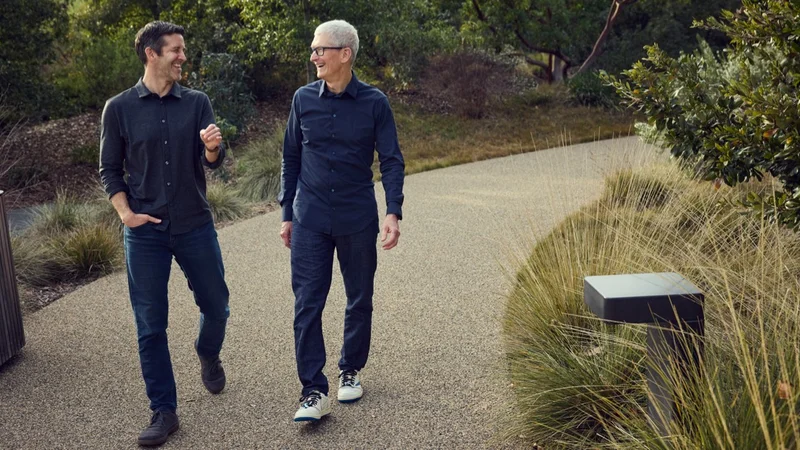
Image: Apple
Main Takeaway
Apple will name hardware chief John Ternus CEO on September 1, while Tim Cook becomes executive chairman after 15 years leading the company.
Jump to Key PointsSummary
Apple’s planned leadership handoff
Apple will appoint John Ternus as chief executive on September 1, ending Tim Cook’s 15-year run in the role. Cook will become executive chairman of Apple’s board, keeping a formal leadership position at the company rather than retiring outright. Apple announced the transition on April 20, and coverage from the BBC, NPR and The Guardian placed it among the company’s most significant leadership changes since Steve Jobs left the CEO role.
Ternus currently serves as Apple’s senior vice president of Hardware Engineering. His promotion gives operational control to an executive closely associated with the company’s product development organization. Cook told employees he would miss the CEO role but expressed “enormous comfort” with Ternus’s leadership, according to Bloomberg AI.
Cook’s lasting Apple record
Tim Cook leaves the CEO job after overseeing Apple’s expansion into a far larger and more profitable company. He succeeded Steve Jobs in 2011, when Apple’s market value stood below $350 billion, and presided over its growth to roughly $4 trillion, according to M.dailyhunt. The Guardian described his tenure as a period that extended the smartphone revolution globally while turning Apple into one of the world’s most powerful public companies.
Cook’s Apple was defined by scale, supply-chain discipline, services growth and sustained iPhone performance. His executive chairman role gives the board continuity during the transition and keeps his experience available to the company. AppleMagazine, Hindustan Times and The Independent coverage carried by Yahoo Finance framed the move as a carefully prepared succession rather than a sudden departure.
Why Apple chose a hardware leader
John Ternus brings an engineering background to a company confronting a new competitive test in artificial intelligence. Coverage from Themeridiem and Yahoo Finance’s Singapore edition connects his appointment with pressure on Apple to strengthen AI integration while continuing to build differentiated consumer hardware. Ternus has worked across major product programs, including Apple silicon and Vision Pro, giving him credibility inside the organization’s hardware-led product culture.
The appointment also places product judgment at the center of Apple’s next phase. Apple’s competitors have made AI assistants, cloud services and generative software central to their strategies, while Apple has tied AI features to its devices, operating systems and privacy model. Ternus will have to turn that approach into visible products without weakening Apple’s traditional emphasis on polish, integration and controlled releases.
The AI test ahead
Apple’s new CEO inherits a company under pressure to show that its AI strategy can match the pace set by Google, Microsoft and other technology rivals. Ternus’s central challenge is to connect artificial intelligence with products customers already buy, rather than treat AI as a separate research effort. Yahoo Finance’s contributor coverage described the task as redefining Apple for the AI era, while Themeridiem emphasized the gap between Apple’s hardware strength and competitors’ AI momentum.
That pressure reaches across software, chips and services. Apple controls its processors and operating systems, which gives Ternus a strong base for on-device features, but the company must still deliver useful assistants and applications at a competitive pace. Batamnewsasia also linked the succession with hardware innovation and expansion in Southeast Asia, though those priorities will compete for executive attention with AI investment and product execution.
Continuity with a different emphasis
The transition combines continuity at the board level with a change in the person running day-to-day operations. Cook remains connected as executive chairman, while Ternus takes responsibility for Apple’s products, workforce and competitive strategy. That arrangement gives Apple institutional memory during a leadership change that has been planned for months, according to coverage from Spreaker and Dailyhunt.
The structure also places the new CEO under immediate scrutiny. Investors and customers will look for evidence that Ternus can preserve Apple’s financial discipline while increasing the pace of innovation. A hardware executive leading the company doesn't guarantee a product pivot, but it signals that engineering and product development will carry significant weight in decisions about AI, spatial computing and future devices.
What happens after September 1
Ternus will begin his tenure with Apple’s existing strengths intact: a huge installed base, tightly integrated hardware and software, and a global services business. His early performance will be judged against the company’s ability to release compelling products while making AI feel practical across its ecosystem. Cook’s continued presence should smooth the institutional transition, but it won't shield the new CEO from market expectations.
Apple’s leadership change therefore marks both an ending and a test of succession planning. Cook’s move preserves a link to the company’s recent era, while Ternus must establish an identity of his own through product decisions and execution. Bloomberg AI described the incoming CEO as facing a substantial agenda, and Bloomberg AI also reported Cook’s confidence in his successor. The next phase will show whether Apple’s hardware expertise can define its answer to the AI competition.
Key Points
John Ternus becomes Apple CEO on September 1, replacing Tim Cook after 15 years.
Tim Cook becomes executive chairman and remains connected to Apple’s board leadership.
Ternus brings hardware engineering experience tied to Apple silicon and Vision Pro.
Apple’s new CEO faces pressure to accelerate artificial intelligence across devices and services.
The succession preserves continuity while shifting daily leadership toward product engineering.
Questions Answered
John Ternus becomes Apple CEO on September 1, 2026. He succeeds Tim Cook, who has led Apple since 2011.
Tim Cook becomes executive chairman of Apple’s board. He remains involved with the company after leaving the CEO position.
John Ternus brings a hardware engineering background to Apple’s top operational role. His appointment comes as Apple faces pressure to improve artificial intelligence integration and product innovation.
John Ternus must accelerate Apple’s AI strategy while maintaining product quality, financial discipline and ecosystem integration. He also faces competition from Google and Microsoft in AI software and assistants.
Tim Cook does not leave Apple entirely after stepping down as CEO. He becomes executive chairman, preserving continuity during John Ternus’s transition.
Source Reliability
35% of sources are highly trusted · Avg reliability: 72
Go deeper with Organic Intel
Simple AI systems for your life, work, and business. Each one includes copyable prompts, guides, and downloadable resources.
Explore Systems