John Ternus Recasts Apple’s Vision Pro Bet as Meta Pushes Cheaper Smart Glasses
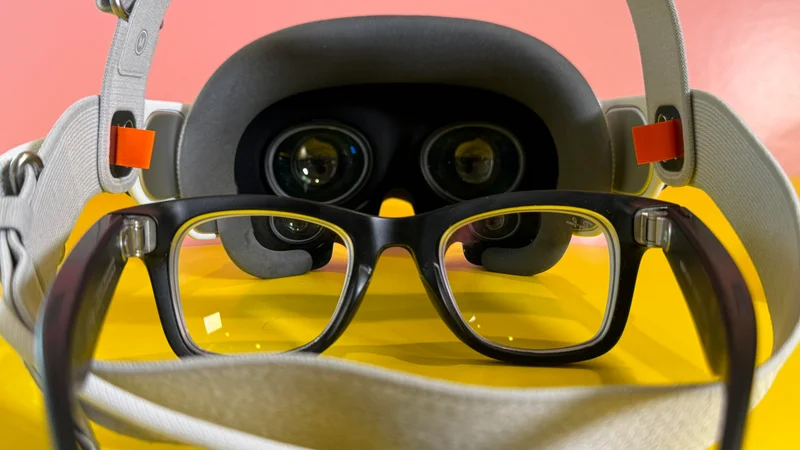
Image: Cnet
Main Takeaway
Apple CEO John Ternus is defending Vision Pro as a long-term platform while Meta’s cheaper glasses expose the price and usability gap facing Apple’s spatial-computing strategy.
Jump to Key PointsSummary
Ternus inherits a difficult product bet
John Ternus has taken over Apple while Vision Pro remains technologically ambitious but commercially constrained by its price, weight and limited everyday use. Bloomberg’s Power On coverage frames his first month as a push toward a leaner, faster Apple, with Vision Pro and Meta’s competing glasses serving as an early test of that approach. AppleInsider says Ternus calls the headset an amazing device that is gaining users, while acknowledging that the product remains in its earliest stage.
The leadership transition gives Ternus two jobs: defend the company’s investment in spatial computing and decide where that investment should go next. His public comments emphasize a long journey rather than immediate mass adoption. That message preserves room for Apple to improve the hardware while shifting attention toward applications in medicine, enterprise work and other specialized settings.
Vision Pro faces a daily-use problem
Vision Pro’s central weakness is practical adoption. The headset delivers high-end displays, eye and hand tracking and a distinctive mixed-reality interface, but its bulk and price make routine use difficult. Bloomberg’s coverage says even senior Apple executives don’t regularly use the device, a detail that sharpens the gap between the product’s technical achievement and its place in ordinary life.
Pricing makes that gap harder to close. A 2026 comparison places the Vision Pro at $3,699 for the 256GB model, compared with $599.99 for Meta’s Quest 3 after a price increase. The comparison also describes Apple’s micro-OLED displays and M5 processor against Meta’s lower-cost hardware. Those specifications support Apple’s premium positioning, but consumers still have to justify wearing a heavy computer on their face for tasks that phones, laptops and televisions already handle well.
Meta’s glasses attack the weak spot
Meta’s $1,299 VR Glasses give the market a product positioned closer to everyday eyewear than Apple’s headset. The price remains substantial, but it sits far below Vision Pro’s cost and presents a simpler consumer proposition: glasses that fit into daily routines rather than a headset reserved for demonstrations, entertainment or specialized work.
That contrast explains why Meta has become the reference point in Apple’s spatial-computing debate. CNET describes Apple’s missing smart-glasses category as the next major product frontier and compares the challenge with AirPods, which moved from social awkwardness to commonplace hardware. Meta’s lower-priced glasses put pressure on Apple to solve comfort, battery life, social acceptability and usefulness at once. The competitive threat is therefore about product shape and habit formation, not display specifications alone.
Apple’s roadmap points toward glasses
Apple’s longer-term direction is disputed, but one June report attributed a major Vision roadmap overhaul to Ternus. The report said Apple removed every Vision headset successor and retained 2 smart-glasses products. Its account has low reliability, so it should be treated as an unconfirmed roadmap claim rather than an established corporate decision.
The reported shift nevertheless fits Ternus’ public framing. In interviews, he has described spatial computing as being in its early innings and pointed to surgeons and enterprise users as important use cases. Virtual.reality characterizes his defense of Vision Pro as a defense of a platform, not proof that the current hardware has become a mainstream product. Apple can maintain the headset as a development base while directing its most consumer-focused ambitions toward lighter glasses.
Enterprise offers Apple a bridge
Apple’s strongest near-term case for Vision Pro is specialized work, where the headset’s cost can be measured against training, visualization or medical outcomes rather than against a game console. Ternus has pointed to surgeons and medicine, while describing the broader category as a long journey. That framing gives Apple a credible path to continued investment even as consumer sales remain limited.
Enterprise adoption also buys Apple time to refine the technology. Developers can build visionOS applications, companies can test spatial workflows and Apple can learn which features survive repeated use. VisionOS 27’s ability to turn panoramic photographs into spatial scenes shows the company continuing to add software value. The risk is that a platform strategy becomes an excuse for hardware that users rarely wear. Apple still needs a lighter, cheaper device that turns experimentation into habit.
What happens next for Apple
Ternus’ early Apple strategy will be judged by whether the company converts Vision Pro’s technical foundation into a product family people use regularly. The immediate signals are product weight, pricing, software updates and the arrival of smart glasses, alongside evidence that developers and businesses are returning to the platform after initial demonstrations.
Meta has already made the comparison uncomfortable by offering a cheaper path into face-worn computing. Apple’s advantage remains its control over hardware, software and services, but that advantage matters only if it produces a device that fits daily life. Ternus is defending Vision Pro as the beginning of a platform, while the market is asking for the next practical form of that platform.
Key Points
John Ternus is defending Vision Pro as a long-term platform despite weak mainstream adoption.
Apple Vision Pro costs far more than Meta’s competing headset and glasses products.
Meta’s $1,299 VR Glasses target daily wear and expose Apple’s comfort challenge.
Apple’s strongest near-term Vision Pro opportunities are medicine, enterprise work and specialized visualization.
A disputed roadmap report says Apple retained smart-glasses projects while cutting headset successors.
Questions Answered
Apple Vision Pro is struggling because its high price, weight and limited daily-use cases restrict mainstream adoption. Meta’s glasses offer a cheaper, more familiar form factor that is easier to position as everyday technology.
John Ternus has called Apple Vision Pro an extraordinary device and described spatial computing as the early days of a long journey. He has highlighted medicine, surgeons and enterprise applications as important areas for growth.
Apple Vision Pro is reported at $3,699 for the 256GB model, while Meta Quest 3 is listed at $599.99 and Meta’s 2026 VR Glasses at $1,299. The price gap makes Apple’s headset a premium product rather than a mass-market accessory.
A low-reliability report attributed to analyst Ming-Chi Kuo said Apple removed Vision headset successors from its roadmap and retained 2 smart-glasses projects. That roadmap claim remains unconfirmed.
Apple’s next step is to show that Vision Pro’s software and hardware foundation can lead to lighter, cheaper smart glasses. The company also needs enterprise and medical use cases to sustain the platform while consumer hardware evolves.
Source Reliability
57% of sources are low credibility · Avg reliability: 47
Go deeper with Organic Intel
Simple AI systems for your life, work, and business. Each one includes copyable prompts, guides, and downloadable resources.
Explore Systems