HSBC CEO Georges Elhedery Backs AI Expansion While Insisting Human Judgment Remains Irreplaceable
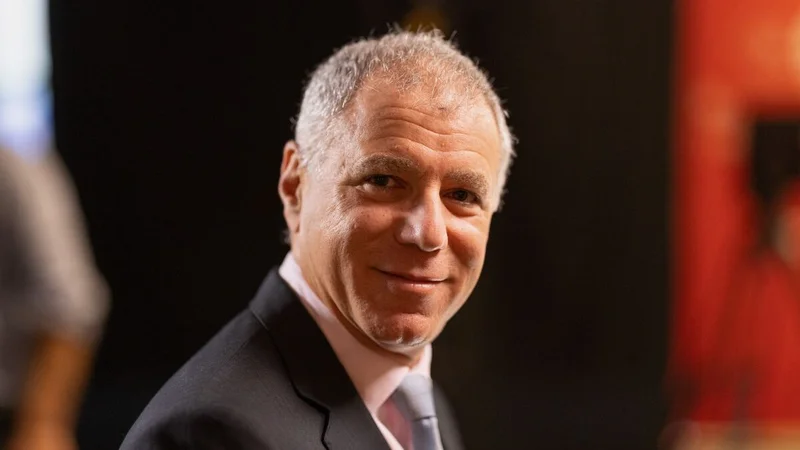
Image: Bloomberg AI
Main Takeaway
HSBC CEO Georges Elhedery commits to retraining 200,000 staff for AI-driven banking while declaring human judgment vital to the bank's future operations.
Jump to Key PointsSummary
Why HSBC is betting big on workforce retraining
HSBC plans to retrain its entire workforce of 200,000 employees as artificial intelligence reshapes banking operations. CEO Georges Elhedery made the commitment during an investor day event in May 2026, framing the initiative as essential preparation rather than optional adaptation. The bank is making generative AI tools available to all colleagues to simplify internal processes and equipping customer-facing staff with AI capabilities for more personalized service delivery.
This retraining push sits alongside reported plans for significant workforce restructuring. Disruptionbanking reports HSBC has considered cuts of up to 20,000 roles as part of its AI-driven overhaul. Elhedery's message to staff has been consistent: embrace the technology rather than resist it. The bank's earliest machine learning models date back a decade, giving HSBC longer institutional experience with AI deployment than many competitors.
What Elhedery means by irreplaceable human judgment
Georges Elhedery has drawn a sharp distinction between AI automation and human decision-making, telling investors and staff that people remain central to banking even as artificial intelligence becomes ubiquitous. According to Bloomberg, Elhedery stated that "human judgment" is vital even as HSBC expands its AI use across operations. This framing positions AI as an amplifier of human capability rather than a replacement for it.
The CEO's comments arrive as banking peers take harder lines on workforce reduction. Standard Chartered has announced major workforce reductions tied directly to automation and AI adoption, while JPMorgan's digital expansion continues apace. Elhedery's insistence on human judgment reflects both practical risk management, financial services regulators increasingly scrutinize automated decision-making, and a differentiation strategy in a sector rushing toward full automation. His stance suggests HSBC sees competitive advantage in maintaining human oversight at critical decision points where competitors might eliminate it.
How AI is already changing who banks hire
The transformation Elhedery describes is already visible in entry-level recruitment patterns across global finance. Fortune reports that banks are cutting junior analyst classes by as much as two-thirds while simultaneously sourcing roughly 62% of their AI talent from those same reduced cohorts. This squeeze creates a paradox for new graduates: fewer traditional openings, but disproportionate opportunity for those who can bridge finance and technology skills.
The hiring pipeline itself has changed. Candidates at universities like Warwick now report preparing for AI-powered screening tools before ever reaching human interviewers. This shift means the human judgment Elhedery champions applies later in the selection process, if at all. For HSBC's retraining investment to succeed, it must address workers at every career stage, from new entrants facing automated gatekeeping to senior staff whose experiential knowledge Elhedery frames as irreplaceable.
Where the research on human-AI collaboration stands
Academic research supports Elhedery's emphasis on human judgment while revealing its limits. A study by Harvard Business School and UC Berkeley, highlighted by Harvard's Institute for Business in Global Society, found that AI tools do not deliver uniform benefits across users. The research showed that human experience and judgment remain critical to distinguishing good ideas from bad ones, particularly in strategic and creative domains where pattern recognition alone proves insufficient.
However, the same research notes that effective human-AI collaboration requires specific skills that many workers have not developed. HSBC's challenge is not merely preserving jobs but redesigning them so that human judgment operates at its highest value. The bank's decade of machine learning experience provides some foundation, but generative AI's sudden leap in capability has compressed the timeline for organizational adaptation from years to months.
What happens next for banking employment
Elhedery has indicated that productivity gains from AI deployment will be reinvested into accelerating HSBC's strategic ambitions rather than returned as simple cost savings. This reinvestment framing, reported by Bloomberg, attempts to soften the trade-off between efficiency and employment by suggesting new value creation. Whether this translates to net job growth or merely job transformation remains the open question facing the entire sector.
The immediate trajectory points toward continued workforce restructuring across major banks. HSBC's 200,000-employee retraining program, while substantial, operates against a backdrop of potential 20,000-role reductions. Elhedery's dual message, embrace AI and trust human judgment, will be tested as competitive pressure mounts and shareholders demand returns on AI investment. The banks that resolve this tension most credibly may define the next era of financial services employment.
Key Points
HSBC CEO Georges Elhedery commits to retraining 200,000 staff for AI-driven banking transformation.
Elhedery declares human judgment vital despite expanding AI use across HSBC operations.
HSBC reportedly considers 20,000 job cuts alongside its workforce retraining initiative.
Banks are cutting junior analyst classes by two-thirds while recruiting AI talent from remaining cohorts.
Harvard research confirms human experience critical for distinguishing good ideas from AI-generated bad ones.
Questions Answered
Georges ElhedXDery stated that AI will destroy certain jobs while creating new ones, and he urged HSBC's 200,000 employees to embrace rather than resist the technology. He emphasized that human judgment remains vital even as the bank expands AI use across its operations.
Reports indicate HSBC has considered workforce reductions of up to 20,000 roles as part of an AI-driven overhaul, though the bank is also investing heavily in retraining existing staff. The net effect on employment depends on whether productivity gains translate to new role creation.
HSBC is making generative AI tools available to all colleagues and equipping customer-facing staff with AI capabilities for personalized service. The bank's retraining program covers its entire 200,000-person workforce.
Harvard Business School and UC Berkeley research shows human experience remains critical for distinguishing good ideas from bad ones, particularly in strategic domains. The study found AI tools deliver uneven benefits and that effective human-AI collaboration requires skills many workers lack.
Standard Chartered has announced major workforce reductions tied to automation, while JPMorgan continues digital expansion including its Chase retail bank launch in Germany. Banks industry-wide are cutting junior analyst classes by up to two-thirds while recruiting AI talent from shrunken cohorts.
Source Reliability
33% of sources are highly trusted · Avg reliability: 74
Go deeper with Organic Intel
Simple AI systems for your life, work, and business. Each one includes copyable prompts, guides, and downloadable resources.
Explore Systems