Gulf AI Ambitions Collide With Data Chokepoints, War Risks and Dependence on Foreign Technology
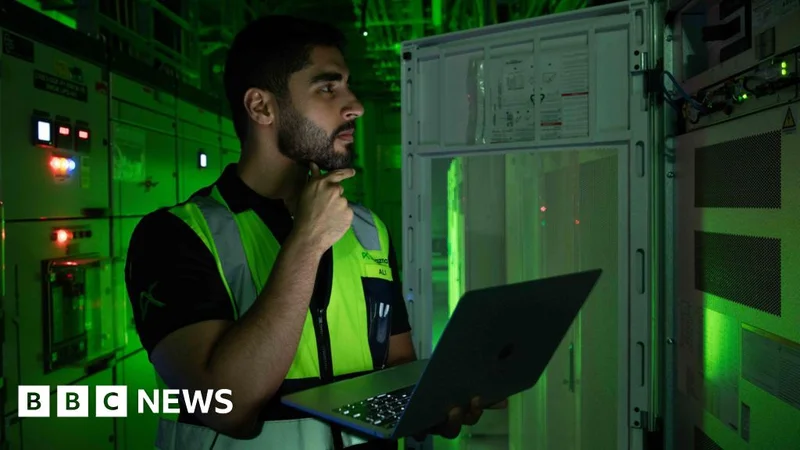
Image: Bbc
Main Takeaway
Gulf states are investing billions in AI, data centers and subsea cables as regional conflicts expose their dependence on vulnerable routes and foreign technology.
Jump to Key PointsSummary
The Gulf’s infrastructure bet
Gulf states are building an AI economy around data centers, cloud services and the networks that connect them. More than $250 billion has gone into AI, advanced data centers, video games and digital ecosystems over the past 20 years, while the region still represents just over 1% of global data-center capacity, according to Coface.
Saudi Arabia, the United Arab Emirates and Qatar are now extending that investment into fiber and subsea cables. The goal is control over the physical routes carrying data, alongside the computing capacity that processes it. Fortune describes the effort as a parallel infrastructure race, driven by the need to reduce exposure to networks concentrated around Egypt, the Red Sea and the Suez Canal.
Why cables matter to AI
Subsea cables are the Gulf’s digital arteries, and their geography creates a strategic vulnerability. More than 90% of Europe-to-Asia data and telecommunications traffic passes through Egypt and cable corridors converging around the Red Sea and Suez Canal, according to Fortune. Gulf data centers depend on those links to reach customers, cloud platforms and overseas computing resources.
The infrastructure push therefore covers more than server farms. Telecom operators and governments are financing new fiber routes, cable systems and alternative connections that can keep traffic moving when a single corridor is disrupted. Meta and Google have delayed Red Sea cable projects amid security concerns, while Gulf technology companies continue investing in regional data highways, Fortune reports.
War exposes the weak points
Regional conflict has turned those geographic vulnerabilities into an immediate business risk. Commercial routes through the Red Sea and the Strait of Hormuz have faced severe disruption, placing Gulf data centers and planned technology investments between 2 strategic choke points, according to Rest of World.
Attacks and elevated energy prices have changed operating conditions for data-center companies. CNBC reported that an Oracle data center in Dubai was hit during the conflict, while energy costs and security concerns have forced operators to reassess the economics of expansion. The Baker Institute argues that Gulf states retain advantages, including capital, energy resources and political commitment, even as war tests their plans.
Foreign partners bring foreign dependence
The Gulf’s AI strategy remains closely tied to the United States. Washington is supplying chips, software, cloud expertise and investment relationships as the UAE and Saudi Arabia seek to establish major AI hubs. A planned UAE-US campus was presented as the largest AI infrastructure hub outside the United States, BBC reported.
That partnership accelerates construction but also creates dependence on foreign suppliers and policy decisions. The Middle East Institute frames AI as a hedge against declining economic and geopolitical weight from hydrocarbons, while Stimson warns that U.S. infrastructure partnerships must serve influence without becoming tools of coercion. Coface identifies technology dependence, talent shortages, critical infrastructure exposure and resource pressure as central risks to the Gulf’s diversification strategy.
The economic case faces hard limits
AI gives Gulf governments a way to redirect oil wealth into a new source of economic influence, but data centers consume large quantities of electricity, water and specialized equipment. Coface links the region’s digital expansion to pressure on resources, while CNBC highlights the effect of high energy prices on facility operators.
The projects also need skilled workers, resilient logistics and dependable international connectivity. A data center can be built quickly with sufficient capital, but its value depends on access to chips, cloud software, customers and routes beyond national borders. The investment scale creates room for rapid growth, yet it also raises questions about whether spending is producing durable digital industries or amplifying exposure to imported technology and regional instability.
What happens next
The Gulf’s next phase will focus on redundancy: more cable routes, stronger terrestrial fiber, diversified suppliers and data-center capacity distributed across several countries. Gulf telecom companies have a direct role because they control connectivity at the point where national AI ambitions meet international traffic.
The strategic test is whether the region can convert capital and energy advantages into an infrastructure system that remains useful during conflict and independent enough to withstand external pressure. U.S. partnerships will continue to provide momentum, while war-related disruptions will keep security at the center of investment decisions. The AI race is therefore becoming a contest over cables, power, talent and sovereignty, not only models and chips.
Key Points
Gulf states are expanding AI infrastructure while seeking control over cables carrying regional data traffic.
Subsea cable concentration around the Red Sea and Hormuz exposes Gulf data centers to conflict disruption.
U.S. partnerships accelerate Gulf AI development but deepen dependence on foreign chips, software and expertise.
More than $250 billion has funded Gulf digital projects over two decades, Coface estimates.
Energy costs, talent shortages and resource pressure threaten the economics of Gulf data-center expansion.
Questions Answered
Gulf states are investing in AI data centers and subsea cables to diversify beyond oil and gain greater control over digital infrastructure. New fiber and cable routes are intended to reduce dependence on corridors around the Red Sea, Suez Canal and Strait of Hormuz.
Gulf AI projects are highly exposed to subsea cable disruptions because major Europe-Asia traffic routes converge near strategic waterways. Conflict, attacks and shipping restrictions can interrupt connectivity between Gulf data centers, international cloud platforms and overseas customers.
The United States supplies Gulf AI development with chips, cloud expertise, technology partnerships and investment. A planned UAE-US campus illustrates the scale of cooperation, while analysts warn that the arrangement also creates dependence on foreign technology and policy decisions.
The Gulf’s AI data-center expansion faces security threats, high energy costs, resource pressure, talent shortages and reliance on imported technology. Regional conflict has added direct risks to facilities and the cable networks connecting them.
Gulf governments and telecom companies are expected to pursue redundant cable systems, terrestrial fiber routes and more distributed data-center capacity. Their success will depend on keeping infrastructure connected and operational during geopolitical disruption.
Source Reliability
60% of sources are trusted · Avg reliability: 74
Go deeper with Organic Intel
Simple AI systems for your life, work, and business. Each one includes copyable prompts, guides, and downloadable resources.
Explore Systems