Google's $100 Home Speaker Debuts Gemini AI After Six-Year Wait, Reviews Split on Value
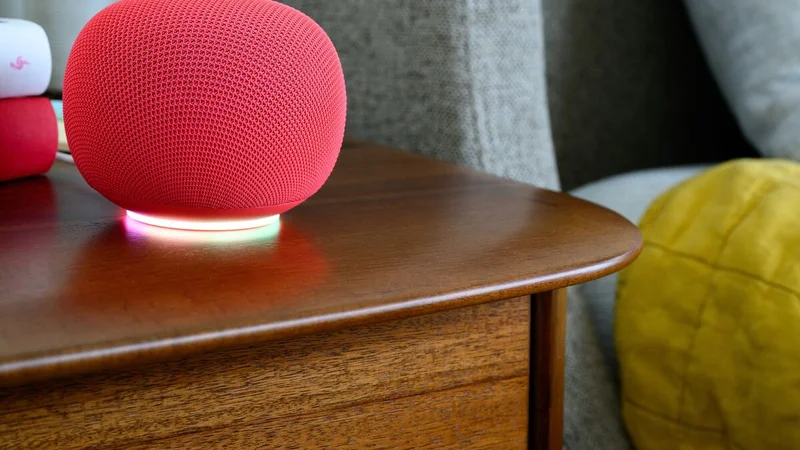
Image: Bloomberg AI
Main Takeaway
Google released its first new Home Speaker in six years for $99, embedding Gemini AI as reviewers debate whether the upgrade justifies the wait.
Jump to Key PointsSummary
What changed after six years of silence
Google shipped its first new Home Speaker in six years on June 24, 2026, pricing the device at $99 and baking in its Gemini AI assistant. The gap since the last hardware refresh spanned the entire rise of large language models, leaving the company with pressure to prove it could translate AI leadership into consumer hardware. Bloomberg AI notes that Google reshaped itself as an industry AI leader during those years, yet the new speaker arrives into a market now crowded with Amazon Echo, Apple HomePod, and a proliferation of third-party smart audio devices. The hardware itself carries refreshed aesthetics, with The Verge AI praising the red colorway as a winner while flagging finicky touch controls as a step backward from physical buttons. This long gap created outsized expectations that early reviews suggest the device struggles to fully meet.
The timing puts Google in an awkward position: it must now sell consumers on AI features that competitors have been iterating on annually.
How Gemini performs inside a speaker
Gemini integration represents the core differentiator Google is betting on, though reviewers describe the AI experience as uneven. The Verge AI found the speaker's three-microphone array reliably caught wake words even at maximum volume, outperforming Siri in challenging acoustic environments like running showers. This hardware competence in far-field audio pickup suggests Google's acoustic engineering team delivered solid fundamentals. Yet the community forum Googlenestcommunity surfaced early complaints about Gemini voices sounding muffled on Nest hardware, indicating potential tension between new AI software and existing audio output pipelines.
Bloomberg AI's framing in its headline, calling the device a weak case for Gemini in the home,单位 signals skepticism that the AI adds compelling daily value beyond what simpler assistants already provide. The gap between reliable wake word detection and truly useful AI-powered interactions appears to be where Google still has ground to cover.
The audio quality debate
Sound reproduction itself draws mixed verdicts, with The Verge AI calling it a pretty good speaker while Bloomberg AI's headline explicitly flags underwhelming audio quality. This divergence points to subjective listening preferences and perhaps to Google's engineering tradeoffs: prioritizing microphone arrays and AI processing over acoustic drivers. At $99, the speaker sits in a competitive mid-market segment where Amazon's Echo line has historically dominated through aggressive pricing and iterative refinement.
The hardware design earns warmer notices than the sonic performance, with The Verge AI's enthusiasm for the red variant suggesting Google finally invested in aesthetic differentiation after years of utilitarian gray fabric cylinders. Whether visual appeal can compensate for audio that multiple reviewers found merely adequate remains the open question for mainstream buyers.
What this means for Google's smart home strategy
The release exposes strategic tension in Google's consumer hardware approach. Google AI Blog positioned the speaker as built for Gemini, framing it as a platform for the company's AI future rather than merely an audio device. Yet the six-year gap between hardware generations allowed competitors to cement user habits and build integrated ecosystems that Google now must disrupt. Amazon's Alexa has become synonymous with smart speakers for many households, while Apple's HomePod carved out the premium audio niche.
Google's bet appears to be that Gemini's reasoning capabilities will eventually differentiate the experience in ways that wake word reliability and music playback cannot alone. The NYTimes coverage of best Nest speakers contextualizes this launch within a broader product lineup, suggesting the company still sees smart home audio as strategically vital despite the extended silence. Whether consumers will wait for promised AI improvements rather than choosing established alternatives is the near-term challenge.
What happens next for buyers and competitors
Pricing at $99 places Google in direct confrontation with Amazon's Echo lineup, where Amazon has refined its hardware annually and built deep retail integration. The competitive response from Amazon and Apple will likely shape whether this speaker gains traction or becomes another Google hardware product with passionate but narrow adoption. Beta.walmart's listing presence indicates broad retail distribution, which Google needs to overcome its historical weakness in physical retail presence compared to Amazon's own stores and Apple's retail network.
For consumers, the value proposition hinges on whether Gemini's current capabilities justify ecosystem commitment. The Verge AI's testing showed reliable basic functionality, but Bloomberg AI's skepticism about the AI case suggests power users may find the intelligence layer thinner than anticipated. Google's challenge now is software iteration speed: if Gemini improvements arrive quickly through over-the-air updates, early reviewer reservations could soften; if progress stalls, the six-year wait will look like misplaced priority rather than patient investment.
Why this launch matters beyond the hardware itself
This speaker functions as a referendum on whether Google's AI research superiority translates into consumer products people want to live with. The company dominates technical benchmarks and research publications, yet hardware has repeatedly been where that advantage dissipates. The Googlenestcommunity complaints about muffled AI voices illustrate how even small execution gaps undermine technological ambition.
The broader industry context includes rising consumer privacy concerns about always-listening devices, regulatory scrutiny of AI assistants, and economic pressure on discretionary electronics purchases. At $99, Google priced aggressively enough to invite trial, but not so low that expectations disappear. Whether this device expands Google's smart home footprint or merely maintains existing users will become clear through holiday 2026 sales data. For now, it represents a necessary but uncertain first step in reconnecting AI leadership with physical presence in people's homes.
Key Points
Google shipped its first new Home Speaker in six years for $99 with Gemini AI integration.
Reviewers found reliable wake word detection but uneven AI value in daily use.
Audio quality drew mixed reviews, with some calling it underwhelming for the price.
The Verge praised the red design and microphone performance in noisy environments.
Early community reports indicate Gemini voices sound muffled on some Nest hardware.
Questions Answered
The new Google Home Speaker is Google's first smart speaker hardware release in six years, priced at $99 and launched on June 24, 2026. It integrates Google's Gemini AI assistant and features a redesigned exterior with new color options including a red variant.
Google focused on AI research and software development during the gap, reshaping itself as an industry AI leader while allowing its consumer hardware to stagnate. The company now faces pressure to convert that technical leadership into compelling physical products.
Reviewers found Gemini's integration uneven: The Verge AI reported excellent wake word detection with three microphones, but Bloomberg AI suggested the AI adds limited daily value beyond simpler assistants. Some Nest community users reported muffled Gemini voice output.
Audio quality received mixed assessments, with The Verge AI calling it pretty good while Bloomberg AI described it as underwhelming. The speaker reliably handles voice commands in noisy environments but may not satisfy audiophiles at its $99 price point.
The Google Home Speaker undercuts Apple's premium pricing and matches Amazon's Echo range, but Amazon has iterated hardware annually and built deeper ecosystem integration. Apple's HomePod targets higher-fidelity audio. Google's differentiation relies on Gemini AI capabilities that reviewers found not yet fully compelling.
Early issues include finicky touch controls that The Verge AI preferred as physical buttons, and Googlenestcommunity reports of muffled Gemini voices on Nest hardware. Some reviewers found the six-year wait created expectations that the current feature set does not fully satisfy.
Source Reliability
50% of sources are highly trusted · Avg reliability: 68
Go deeper with Organic Intel
Simple AI systems for your life, work, and business. Each one includes copyable prompts, guides, and downloadable resources.
Explore Systems