Google Pushes AI Into YouTube and Docs at I/O Developer Conference
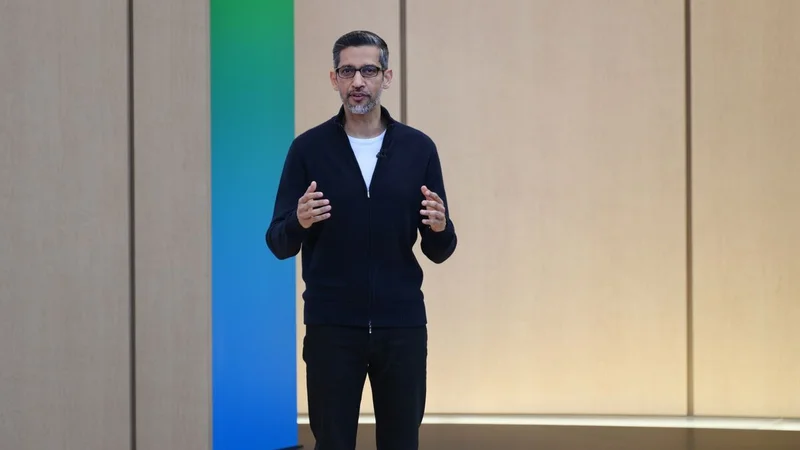
Image: Bloomberg AI
Main Takeaway
Google announced AI-powered voice features for YouTube and Google Docs at its annual I/O developer conference in Mountain View.
Jump to Key PointsSummary
What Google announced at I/O
Google unveiled plans to integrate artificial intelligence deeper into its core consumer products, including YouTube and Google Docs. Users will be able to ask questions directly of YouTube videos and create documents using voice commands. CEO Sundar Pichai framed the push as part of a broader transformation, stating that AI is "lighting up every part of the company." The announcements came during Google's annual developer conference in Mountain View, California, where the company typically reveals its roadmap for the coming year.
The focus on AI across Google's product suite signals an aggressive effort to keep pace with competitors in the generative AI race. Pichai described recent progress as "hyper progress," underscoring the speed at which Google is shipping AI features. The company has faced pressure from rivals like OpenAI and Microsoft to demonstrate concrete product integrations rather than research milestones.
Why voice matters for Google's AI strategy
Voice-enabled document creation and video questioning represent a bet on more natural interaction patterns. Rather than typing prompts or navigating menus, users can speak to accomplish complex tasks. This approach reduces friction for mainstream users who find traditional AI interfaces intimidating or cumbersome.
The Docs integration specifically targets one of the most common productivity workflows, potentially displacing third-party transcription and dictation tools. For YouTube, allowing questions about video content transforms passive viewing into interactive research. Both features build on Google's existing speech recognition infrastructure, which powers products from Google Assistant to Android's live caption feature.
How this stacks against Microsoft and OpenAI
Microsoft has already embedded Copilot across Office 365, offering similar voice and text generation capabilities in Word and other apps. OpenAI's ChatGPT has expanded into voice conversations and document analysis. Google's challenge is proving its integrations are not merely catch-up features but genuinely superior experiences.
The competitive pressure is acute. Microsoft reported Copilot adoption rates that threatened Google's enterprise dominance, while OpenAI's consumer growth has been explosive. Google's advantage lies in its massive existing user base across YouTube, Search, and Workspace, giving it distribution that competitors must build from scratch. However, distribution only matters if the products deliver, and Google's history of AI product launches includes notable stumbles like the Bard debut.
What developers and businesses should watch
The I/O announcements suggest Google is prioritizing consumer-facing AI over developer tools, at least in this cycle. While the company made over 100 announcements at the conference, the headline features focus on end-user productivity rather than new APIs or infrastructure. This could indicate a strategic choice to win user mindshare before expanding platform capabilities.
For businesses built on Google Workspace, the voice features promise workflow changes but also raise questions about data handling and compliance. Google's history of using consumer data to improve products creates friction with enterprise customers who demand strict data boundaries. How Google addresses these concerns will determine whether these features see adoption in regulated industries.
What comes next for Google's AI rollout
The pace of Google's AI shipping schedule suggests these features will reach users within months, not years. Pichai's emphasis on "relentless shipping" implies internal metrics tied to release velocity rather than perfection. This marks a cultural shift for a company historically criticized for moving slowly on product launches.
Analysts will track whether these integrations drive meaningful engagement or become novelty features that users try once and abandon. The test for Google is whether AI becomes essential to how people use YouTube and Docs, or remains a sidebar curiosity. Success would validate Google's strategy of baking AI into existing habits rather than asking users to adopt new platforms. Failure would strengthen the case for more radical product rethinking.
Key Points
Users can now ask questions of YouTube videos using AI
Google Docs adds voice-powered document creation
Over 100 announcements made at Google I/O 2026 conference
Pichai declares AI is lighting up every part of Google
Features position Google against Microsoft Copilot, OpenAI
Questions Answered
Google has not specified exact release dates, but the emphasis on rapid shipping suggests rollout within months.
They offer similar voice and text generation capabilities, with Google leveraging its existing user base across YouTube and Workspace.
Pricing details were not announced; Google may follow its pattern of basic features free with premium tiers for advanced capabilities.
Google has not detailed specific protections, which raises questions for enterprise customers about data boundaries and compliance.
Google typically rolls features across platforms, though specific device compatibility was not detailed in the announcements.
Source Reliability
50% of sources are highly trusted · Avg reliability: 85
Go deeper with Organic Intel
Simple AI systems for your life, work, and business. Each one includes copyable prompts, guides, and downloadable resources.
Explore Systems