Google Gemini Backs Argentina and Turkiye as AI Invades World Cup 2026
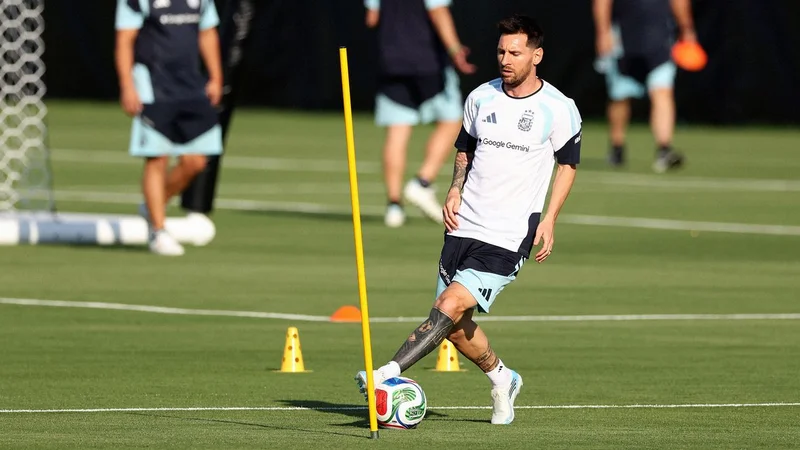
Image: Wired AI
Main Takeaway
Google Gemini sponsors Argentina and Turkiye's national teams while Lenovo and Salesforce deploy AI across World Cup operations in North America.
Jump to Key PointsSummary
Why Google is betting on football
Google is using the 2026 World Cup as a live laboratory for Gemini, its flagship AI platform. The company struck sponsorship deals with at least two national teams, Argentina and Turkiye, making the tournament the most aggressive sports marketing push by a major AI lab to date. For Google, the stakes extend beyond brand visibility. The company wants to prove Gemini can operate under the glare of a global audience where billions watch every decision.
The Argentine Football Association partnership makes Gemini the main global sponsor of the defending champions. Players and coaching staff will use AI models to break down plays, analyze opponent statistics, and compress the time between tactical insight and on-pitch execution. Google spokesperson Flor Sabatini told Wired the goal is to understand AI's real limits while improving experience, framing the tournament as a deliberate stress test in a high-pressure environment.
What Lenovo brings to the pitch
Lenovo's role as FIFA's official technology partner extends across hardware and AI services for all 48 participating teams. The company's World Cup debut includes AI-enabled phones and tablets, an AI assistant available to every squad, and AI integration within the video refereeing system. This is not a peripheral sponsorship. Lenovo's chief information officer Art Hu told Fortune the global viewership creates unbelievable expectations that force everything to work.
The tournament's logistical complexity amplifies the pressure. With matches across 16 cities in three countries, FIFA expects over five million in-person attendees and billions more watching remotely. Lenovo's technology must function across time zones, climates, and network conditions that vary dramatically. The company's bet is that demonstrating reliability at this scale will translate to enterprise and government contracts long after the final whistle.
How AI reshapes player preparation
The Argentine national team will serve as Google's most visible test bench. Gemini's logo appears on training kits, but the deeper integration happens in performance analysis. Coaches and players gain access to tools that process opponent patterns, individual form metrics, and real-time statistical modeling. Google has not disclosed which specific internal tools Argentina will deploy, but the arrangement signals a shift from AI as a back-office experiment to a competitive tool used at the highest level of sport.
This mirrors broader trends in professional athletics where data science now influences recruitment, injury prevention, and in-game tactics. The World Cup simply accelerates the timeline and intensifies the scrutiny. Any failure, whether a missed tactical recommendation or a system outage, will unfold in front of a global audience. Google appears willing to accept that risk for the validation it provides.
Where the technology faces limits
Despite the marketing momentum, AI's role in football remains bounded by practical constraints. Refereeing decisions still require human judgment even with AI-assisted video review. Tactical recommendations from models like Gemini must be interpreted by coaches who may distrust or misunderstand them. The physical unpredictability of sport, weather conditions, player fatigue, and spontaneous brilliance resists full algorithmic capture.
Google's Sabatini acknowledged as much in emphasizing the need to understand real limits. The company is not promising victory through computation. Instead, it is positioning Gemini as a decision-support layer that augments rather than replaces human expertise. Whether that distinction holds under tournament pressure will determine if this deployment becomes a template or a cautionary tale.
What this signals for sports technology
The 2026 World Cup represents a convergence point for technology companies seeking to prove AI in live, unscripted environments. Salesforce joins Google and Lenovo in the sponsor roster, though its specific AI contributions remain less detailed in available reporting. Together, these companies are treating the tournament as a demonstration stage for enterprise-grade AI reliability.
The implications stretch beyond football. If Gemini performs credibly for Argentina, Google gains reference customers in a sector that influences global culture. If Lenovo's infrastructure holds across three countries, its smart-city and large-event credentials strengthen. The World Cup becomes a proxy for any complex, distributed system where AI must coordinate across borders in real time. That is why the technology giants are spending heavily to be associated with success, and why their competitors are watching closely.
Key Points
Google Gemini becomes main global sponsor of Argentina's national football team for World Cup 2026.
Lenovo debuts as FIFA's official technology partner with AI devices and assistant for all 48 teams.
Argentine players and coaches will use AI models to analyze plays, opponents, and performance statistics.
Google also sponsors Turkiye's national team, expanding Gemini's visibility across multiple markets.
The tournament spans 16 cities in three countries with five million expected in-person attendees.
Questions Answered
Google Gemini sponsors both Argentina and Turkiye's national teams at the 2026 World Cup. The Argentine Football Association partnership makes Gemini the main global sponsor of the defending champions, while a separate deal covers Turkiye. These arrangements extend beyond logo placement to include AI tool access for performance analysis.
Argentina's players and coaching staff will use AI models to break down plays, analyze opponent statistics, and reduce the time between tactical insight and on-pitch action. Google has not specified which internal tools the team will access, but the focus is on real-time decision support during the high-pressure tournament environment.
Lenovo serves as FIFA's official technology partner, supplying AI-enabled phones and tablets, an AI assistant available to all 48 participating teams, and AI integration within the video system that referees use. The company's chief information officer emphasized that global viewership creates extreme reliability demands for all deployed systems.
The 2026 tournament features 48 teams playing across 16 cities in three countries, the United States, Canada, and Mexico. FIFA estimates over five million fans will attend matches in person, with billions more watching through broadcast and streaming channels. This geographic and logistical spread creates unique challenges for technology infrastructure and coordination.
Google faces reputational risk if Gemini underperforms or fails during visible moments, as any system errors would occur before a global audience. The company also confronts the fundamental challenge that football's physical unpredictability, weather variability, and spontaneous human performance resist full algorithmic prediction. Google spokesperson Flor Sabatini explicitly framed the deployment as an effort to understand AI's real limits.
Source Reliability
40% of sources are trusted · Avg reliability: 69
Go deeper with Organic Intel
Simple AI systems for your life, work, and business. Each one includes copyable prompts, guides, and downloadable resources.
Explore Systems