GM Bets EVs Can Double as Grid Batteries to Feed AI's Power Hunger
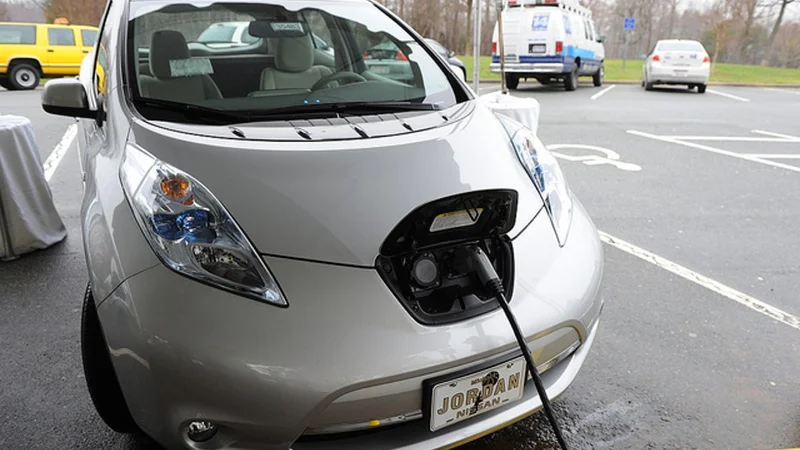
Image: Scientificamerican
Main Takeaway
GM activated vehicle-to-grid tech for current EV owners and unveiled sodium-ion grid storage to offset surging AI data center demand.
Jump to Key PointsSummary
How GM wants EVs to power the grid
General Motors activated vehicle-to-grid capabilities for its current EV and home energy customers at a San Francisco event on June 9, betting that idle car batteries can stabilize a grid buckling under AI-driven demand. The automaker sees millions of parked EVs as distributed storage assets rather than mere transportation. According to The Verge, GM announced new V2G features alongside a commercial energy storage strategy and simplified public charging tools. This isn't a distant pilot; it's live for existing owners.
The move reframes GM's business model. Fortune reports that GM is pitching itself as a "de facto distributed utility," stitching together hundreds of thousands of battery-powered vehicles into what functions as a virtual fleet of power plants. The publication notes this puts GM on a collision course with Ford Energy, as both Detroit automakers race to repurpose underused EV capacity for grid stability. The rivalry signals a broader industry pivot from selling cars to monetizing energy infrastructure.
Why AI data centers are the new grid threat
AI compute infrastructure is rewriting U.S. power demand faster than utilities can adapt. Data centers now consume roughly 4% of national electricity, with projections doubling by 2030 as training clusters and inference workloads multiply. The Verge connects GM's announcement directly to this pressure, noting the event framed EV batteries as partial relief for grid strain from AI chips and servers.
This isn't speculative future-tripping. Fortune describes America's grid as already "buckling under extreme weather, aging infrastructure, and an AI buildout." The timing matters: EV sales have cooled, leaving automakers with excess battery capacity and searching for revenue streams. GM's pitch to utilities, essentially "use our cars as backup," turns a sales slowdown into a grid solution. The EPA has previously addressed grid collapse fears around EV adoption, but ironically, the current threat runs in reverse: too much demand, not too many vehicles.
The sodium-ion bet for grid-scale storage
Beyond vehicle batteries, GM unveiled a commercial energy storage system anchored by newly developed sodium-ion batteries for industrial applications. This chemistry choice is deliberate. Sodium-ion avoids lithium's supply chain volatility and geopolitical concentration, potentially lowering costs for grid-scale installations where energy density matters less than longevity and safety.
The EV Report notes GM Energy is building a comprehensive ecosystem through partnerships and product expansion, positioning the division as a leader in both home and public charging. Fortune adds that GM's strategy rests on three planks: the quarter-million-plus cars as distributed power sources, the new grid-scale storage hardware, and a unified charging platform tying it together. Sodium-ion likely serves the middle plank, providing stationary storage that complements the mobile fleet. The technology remains less mature than lithium-ion, but for grid applications, the trade-offs may prove acceptable.
What vehicle-to-grid actually means for owners
For EV owners, V2G means their car's battery becomes a two-way asset. MCE Clean Energy explains that instead of one-directional charging, electricity flows in both directions: the grid charges the vehicle, and the vehicle can discharge back to the grid or home. This turns EVs into mobile storage units that absorb excess renewable generation during the day and release it during peak evening demand.
Scientific American has tracked this concept since at least 2013, when the Air Force piloted a 42-vehicle fleet including Nissan Leafs for grid support at Los Angeles Air Force Base. That early experiment proved technical feasibility; GM's announcement scales it to consumer vehicles. The practical question for owners remains compensation. Will utilities pay enough for grid services to offset battery degradation concerns? GM's simplified public charging feature suggests it's thinking about user experience friction, but pricing models and warranty implications still need clarity.
How Ford's simpler plan compares
GM isn't alone in seeing dollar signs in grid services. Fortune reports that Ford's newly branded Ford Energy unit is pursuing a parallel but different strategy. Where GM is building a comprehensive distributed utility platform, Ford appears to be taking a more direct approach, the specifics of which remain less fully articulated in available coverage. The competitive dynamic matters: two legacy automakers now view energy services as central to their futures, not sidelines to car sales.
The divergence reflects deeper strategic choices. GM's three-pillar structure, vehicles plus grid storage plus charging platform, demands heavy integration investment. Ford's path may prove more capital-efficient but less differentiated. Both face the same hurdle: convincing utilities, regulators, and customers that car batteries belong in the grid stack. Early movers in V2G, like Nissan with the Leaf, struggled to build sustained programs. GM's scale advantage, over 250,000 compatible vehicles on roads, could change the economics if activation rates prove high.
What happens next for GM Energy
GM Energy's expansion will test whether automakers can become energy companies in practice, not just presentation. The EV Report positions GM as building an ecosystem to accelerate electrification through partnerships and sales growth, suggesting the division is already contributing meaningfully to corporate strategy. The sodium-ion grid storage and V2G activation represent capital commitments that need revenue proof within 2-3 years.
The regulatory environment shapes the timeline. Utilities must design rate structures that reward V2G participation without disadvantaging non-participants. State regulators must resolve who owns the value stream: the car owner, the automaker, the utility, or some platform intermediary. GM's unified charging platform hints at wanting that intermediary role. Whether utilities cede it, and whether EV owners trust their car's battery to a grid-facing service, will determine if this announcement becomes a business model or a press release. The grid needs the capacity; the question is whether GM can capture it profitably.
Key Points
GM activated vehicle-to-grid technology for existing EV and home energy customers nationwide.
GM unveiled sodium-ion battery systems for industrial grid-scale energy storage deployment.
AI data centers now consume 4% of U.S. electricity and are projected to double by 2030.
Ford Energy competes with a simpler alternative strategy for EV-based grid services.
Early V2G pilots began in 2013, but GM's 250,000-vehicle scale tests commercial viability.
Questions Answered
GM activated vehicle-to-grid capabilities for its current EV and home energy customers on June 9, 2026, allowing bidirectional electricity flow between vehicles and the grid. The announcement included a new commercial energy storage strategy using sodium-ion batteries and simplified public charging features. According to The Verge, this turns millions of parked EVs into potential grid assets.
GM is positioning EV batteries as partial relief for grid strain caused by surging AI data center electricity consumption. Fortune reports that AI infrastructure is rewriting U.S. power demand while the grid already faces extreme weather and aging infrastructure challenges. The automaker sees idle EV batteries as distributed storage that can help balance supply and demand.
energy infrastructure.
Sodium-ion batteries are an alternative chemistry to lithium-ion that avoids supply chain volatility and geopolitical concentration. GM is deploying them for industrial-scale grid storage where energy density matters less than cost, longevity, and safety. The technology remains less mature than lithium-ion but offers strategic advantages for stationary applications.
Vehicle-to-grid technology enables bidirectional electricity flow, allowing EV batteries to both charge from and discharge to the grid. MCE Clean Energy explains that this turns EVs into mobile storage units that absorb excess renewable generation and release it during peak demand. Scientific American tracked early military pilots of this concept dating back to 2013.
Source Reliability
50% of sources are highly trusted · Avg reliability: 66
Go deeper with Organic Intel
Simple AI systems for your life, work, and business. Each one includes copyable prompts, guides, and downloadable resources.
Explore Systems