Flesh-Eating Screwworm Spreads From Texas to New Mexico, Sparking Political Feud and Market Panic
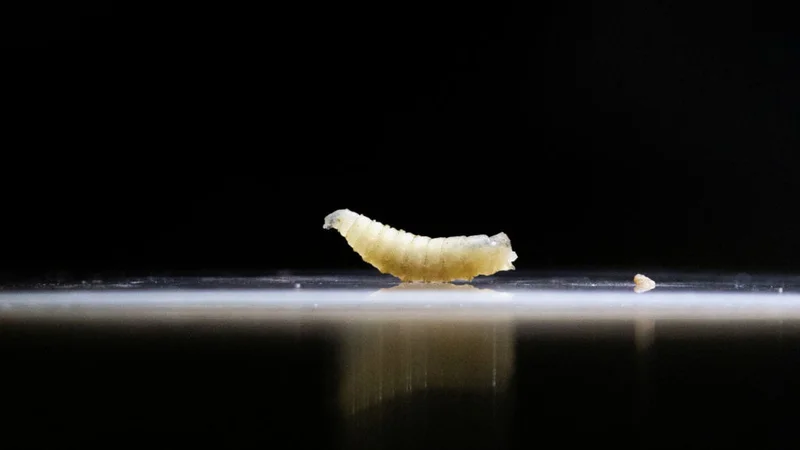
Image: Pbs
Main Takeaway
The New World screwworm fly, absent from the U.S. since 1966, has infected five animals across Texas and New Mexico.
Jump to Key PointsSummary
What the screwworm is and why it matters
The New World screwworm is not actually a worm but a fly larva that consumes living flesh, making it far more destructive than maggots that feed on dead tissue. The flies deposit eggs in open wounds of warm-blooded animals, and the larvae burrow into flesh, creating devastating injuries that can kill livestock if untreated. The pest was eradicated from the United States in 1966 after a decades-long campaign using sterile male flies dropped from aircraft, a program that has kept screwworm contained to southern Panama ever since.
The USDA confirmed the first U.S. case in decades on June 4, 2026, in a 3-week-old calf in La Pryor, Texas, about 50 miles from the Mexico border. Texas State Veterinarian Bud Dinges immediately established a 12-mile quarantine zone prohibiting movement of any warm-blooded animal without inspection. The discovery shattered decades of confidence in the biological barrier that had protected American agriculture.
How the outbreak spread beyond Texas
By June 9, the USDA announced three additional confirmed cases, including one outside the main Texas cluster and another across state lines. The total reached five animals: three calves and a goat in Texas, plus a dog in Lea County, New Mexico. The New Mexico case demonstrated the pest's capacity to cross political boundaries and exploit any gap in surveillance, complicating containment efforts that already spanned multiple jurisdictions.
The geographic spread within days of initial detection reveals the difficulty of tracing and containing a mobile insect threat. Unlike a single-farm disease that can be isolated through culling and quarantine, screwworm flies range widely and infest any animal with an open wound. The sterile fly program's success in Panama had created a single point of failure, and that failure's consequences now rippled through two states.
The political fight over USDA's response
Texas Agriculture Commissioner Sid Miller, who lost his bid for a fourth term in March despite Donald Trump's endorsement, publicly blasted the USDA's handling of the crisis. Agriculture Secretary Brooke Rollins fired back on June 8, calling Miller unserious in unusually personal terms for a cabinet official. The exchange transformed a technical agricultural emergency into a proxy war between MAGA-aligned state officials and the Trump administration's own appointees.
Fortune reported that Miller's attacks centered on perceived federal sluggishness, while Rollins emphasized that no human health or commercial food supply dangers existed. The spat distracted from operational questions about whether the USDA's Panama-based sterile fly program had degraded or whether border biosecurity failed. With Miller politically wounded from his primary loss and Rollins defending an administration she serves, neither participant proved entirely disinterested.
Market reactions and agricultural economic risk
The livestock markets responded with extreme volatility as traders priced in potential supply disruptions, according to Hoosier Ag Today. Angie Setzer, co-founder of Consus Ag Consulting, characterized market behavior as hysteria-driven, noting that actual production impacts remained minimal while fear drove price swings. The cattle industry contributes tens of billions of dollars annually to the U.S. economy, making even small probability events economically significant when magnified across national markets.
The financial damage from the 1960s eradication effort provided context for current fears. Screwworm once cost American ranchers hundreds of millions in annual losses, and the biological characteristics that made eradication possible also make re-infestation catastrophic. Markets now must price uncertainty about whether this represents a contained breach or the beginning of a sustained re-establishment.
What containment efforts look like now
The USDA has reactivated emergency protocols from the eradication era, including expanded surveillance, quarantine enforcement, and coordination with Mexican agricultural authorities. The sterile male fly program, which releases millions of irradiated males to overwhelm wild populations, faces logistical challenges in scaling rapidly to a new geographic front. The program's decades of success in Panama had reduced preparedness for domestic re-emergence.
Texas officials established the initial quarantine zone within hours of confirmation, but the New Mexico case showed reactive measures lagging behind the pest's movement. Wildlife reservoirs, including deer and feral hogs, complicate eradication because they cannot be quarantined or inspected. The next weeks will determine whether rapid response can eliminate the incursion or whether screwworm re-establishes permanent U.S. presence after 60 years of absence.
What happens next for ranchers and consumers
Ranchers within quarantine zones face immediate restrictions on animal movement, with economic impacts concentrated in south Texas border counties. The USDA has stressed that no human health or food safety risk exists from properly inspected commercial meat, attempting to prevent consumer panic that could damage beef demand. Secretary Rollins has positioned the response as competent and measured, though the political feuding undermines that framing.
The broader agricultural sector watches to see whether the sterile fly release program can expand quickly enough to prevent establishment. If screwworm becomes endemic again, the industry faces permanent cost increases for monitoring, treatment, and potentially reduced market access from trade restrictions. The next 30 to 60 days of surveillance data will determine whether this remains a historical footnote or returns as a permanent threat to American livestock production.
Key Points
New World screwworm fly reappears in U.S. after 60-year absence, threatening cattle industry.
Five confirmed animal cases span Texas and New Mexico, indicating geographic spread beyond initial cluster.
USDA Secretary Brooke Rollins and Texas Ag Commissioner Sid Miller trade public insults over response.
Livestock markets experience extreme volatility as traders price in potential supply disruptions.
Quarantine zones restrict animal movement while sterile fly program scales to address domestic outbreak.
Questions Answered
The New World screwworm is a fly larva that eats living flesh rather than dead tissue, making it uniquely destructive. Flies lay eggs in open wounds of cattle and other warm-blooded animals, and the larvae burrow into flesh, creating injuries that can kill livestock if untreated.
Five confirmed cases exist as of June 9, 2026: three calves and a goat in Texas, plus a dog in Lea County, New Mexico. The New Mexico case demonstrates the pest has already crossed state lines.
Texas Agriculture Commissioner Sid Miller criticized the USDA's response as insufficient, and Agriculture Secretary Brooke Rollins called Miller unserious in return. The feud reflects political tensions between state and federal officials despite shared interest in containment.
USDA officials state there is no danger to human health or the commercial food supply from properly inspected meat. Screwworm primarily threatens livestock production through animal mortality and movement restrictions.
The U.S. eliminated screwworm in 1966 through a program breeding sterile male flies and releasing them by aircraft to mate with wild females, preventing reproduction. This program has operated in Panama for decades to create a biological barrier.
Source Reliability
50% of sources are trusted · Avg reliability: 73
Go deeper with Organic Intel
Simple AI systems for your life, work, and business. Each one includes copyable prompts, guides, and downloadable resources.
Explore Systems