FBI and DHS Classify Anti-AI Violence as Domestic Extremism Threat
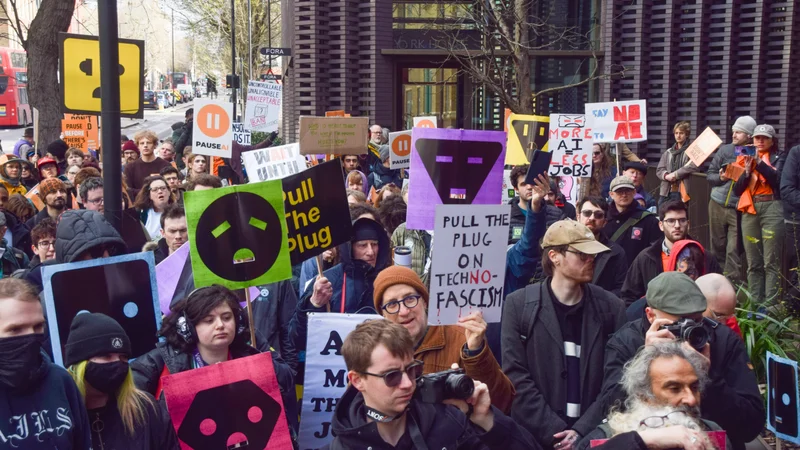
Image: Ars Technica AI
Main Takeaway
FBI and DHS formally classify anti-AI violence as 'anti-tech extremism' after attacks on CEOs and data centers, documents show.
Jump to Key PointsSummary
What triggered the new classification
Federal law enforcement agencies formally designated anti-technology violence as a domestic extremism threat following a series of high-profile attacks, including a Molotov cocktail attack on OpenAI CEO Sam Altman's home and a shooting in Indianapolis. The classification emerged from over 1,000 pages of unpublished intelligence reports circulated among the Department of Homeland Security, the FBI, and regional fusion centers across the country.
Counterterrorism analysts developed criteria to distinguish lawful AI activism from extremism, identifying the tipping point as when grievance fuses with explicit target identification and attack planning. This formal designation elevates federal tracking priority for threats against AI executives, researchers, and data center infrastructure nationwide. The classification marks a significant shift in how law enforcement frames public opposition to artificial intelligence expansion.
How law enforcement defines the threat
Fusion centers, the intelligence-sharing hubs where federal, state, and local law enforcement collaborate, have begun circulating detailed assessments of what they term "anti-tech violent extremism." These reports analyze the trajectory from public concern to potential violence, drawing on patterns observed in other domestic extremism categories.
The intelligence documents reveal agencies are keeping tabs on in-person assemblies and monitoring online organizing around data center protests. Analysts note that resistance to new technologies turned violent has historical precedent, but the scale and speed of AI adoption across sectors has compressed the timeline from public concern to organized opposition. The reports explicitly connect rising anti-technology sentiment to specific infrastructure targets, particularly data centers that have become focal points for community opposition due to water usage, energy consumption, and land use conflicts.
What sparked the escalation timeline
The past several months have seen a consolidation of anti-technology violence across Europe and North America, according to terrorism researchers tracking the phenomenon. Incidents include physical attacks on technology executives, sabotage of data center construction sites, and organized protests targeting AI infrastructure.
The Soufan Center, which researches terrorism and political violence, warned in late 2025 that negative public attitudes about rapid AI adoption combined with the boom in infrastructure construction created conditions for violent escalation. Their assessment proved prescient as incidents multiplied in early 2026. Researchers at the International Centre for Counter-Terrorism have documented a widespread series of sabotage and terrorist attacks, identifying underlying ideological patterns that blend environmental, labor, and anti-corporate grievances into a coherent anti-technology framework.
Why critics question the timing
Some observers question whether the extremism classification serves a political function for the Trump administration's AI-friendly policy agenda. Technology commentator Dare Obasanjo noted on Threads that it remains unclear whether the threat represents a genuine security concern or a political move to target opponents of AI expansion.
The classification arrives as the administration pursues aggressive deregulation of AI development and seeks to accelerate data center construction. Critics argue that framing opposition as extremism could chill legitimate protest and conflate environmental and labor activism with terrorism. The broad language of the intelligence reports, which reference concerns about job displacement and data center proliferation alongside violent incidents, leaves ambiguity about where law enforcement draws the line between protected speech and threat activity.
What scholars saw coming
Academic researchers had predicted this trajectory months before the formal classification. A Combating Terrorism Center paper at West Point published in April 2026 argued that the existing scholarly focus on how terrorists misuse AI was incomplete, and that researchers needed to examine how AI itself becomes the target of political violence. The paper extended a framework developed by technology researcher Mauro Lubrano on anti-technology extremism.
Separately, a working paper from the Abundance Institute published May 27 examined how social media accelerates anti-technology political organizing. The research traced how communication technologies amplify grievances about technological change, creating feedback loops between isolated incidents and broader movement formation. These academic assessments provided conceptual groundwork that law enforcement appears to have adopted in structuring its threat classification.
What happens next for protesters and companies
The formal designation triggers expanded federal resources for monitoring and potentially prosecuting individuals and groups deemed to meet the extremism threshold. Technology companies and their executives now receive heightened protection under counterterrorism frameworks, while data center operators gain additional federal law enforcement coordination for site security.
For civil liberties organizations, the classification raises concerns about surveillance overreach and the criminalization of legitimate opposition to industrial projects. The distinction between violent extremism and lawful protest will likely become contested terrain in courts and public discourse. Companies including OpenAI, whose CEO was directly targeted, and major data center operators like Amazon Web Services, Google, and Microsoft face the dual challenge of securing infrastructure while avoiding the perception that they are using security frameworks to suppress democratic opposition. The classification also places pressure on local law enforcement fusion centers to develop expertise in evaluating technology-related threats, a capability most were not designed to possess.
Key Points
FBI and DHS classify anti-AI violence as domestic extremism threat
Over 1,000 pages of intelligence reports circulated to fusion centers
Sam Altman home attack and Indianapolis shooting triggered formal designation
Analysts distinguish lawful activism from extremism by attack planning criteria
Critics warn classification could chill legitimate environmental and labor protest
Questions Answered
It is a new domestic threat category used by federal law enforcement to describe violence targeting AI executives, researchers, and data center infrastructure.
The FBI, Department of Homeland Security, and regional fusion centers developed and circulated the classification in unpublished intelligence reports.
A Molotov cocktail attack on OpenAI CEO Sam Altman's home and a shooting in Indianapolis were key triggering events.
They identify when grievance fuses with explicit target identification and attack planning, rather than lawful protest activity.
Yes, some observers question whether it serves political purposes and worry it could criminalize legitimate opposition to AI expansion.
Source Reliability
42% of sources are trusted · Avg reliability: 64
Go deeper with Organic Intel
Simple AI systems for your life, work, and business. Each one includes copyable prompts, guides, and downloadable resources.
Explore Systems