Epic Launches AI-Assisted Games Launcher Preview With Linux Support and Faster Startup Claims
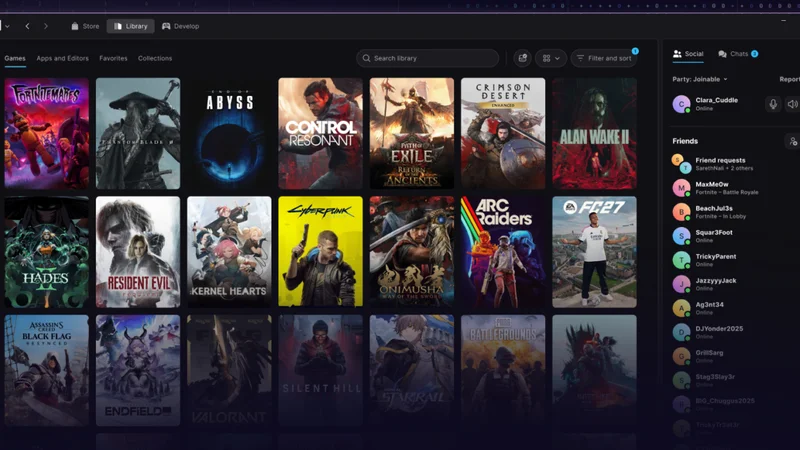
Image: Ars Technica AI
Main Takeaway
Epic Games has released a preview of a redesigned launcher that it says starts faster than Steam, supports Linux, and was built with AI assistance.
Jump to Key PointsSummary
Epic’s launcher gets a new foundation
Epic Games has released a public preview of a redesigned Epic Games Store launcher for Windows and macOS, with Linux support arriving for the first time. The client brings a new interface and a rebuilt technical foundation after years of complaints about the existing launcher’s speed and responsiveness. Epic describes the preview as “vibe coded,” using AI as a development tool rather than presenting traditional programming as the sole method behind the software.
The preview is available through Epic’s launcher site, though the company warns that early users will encounter bugs. The release covers the core functions expected from Epic’s PC client, including access to purchased games, updates, social features, and store content. The redesign represents Epic’s clearest attempt yet to address a weakness that has made its storefront harder to use than Steam.
Speed becomes Epic’s headline claim
Epic says the new launcher is substantially faster and more responsive than its current client, positioning startup time and library performance against Steam. One company comparison cited by coverage puts startup at 1.8 times faster than Steam, while another highlighted claim says the game library loads 30 times faster than the previous Epic launcher. Those figures remain company benchmarks attached to a preview release, rather than independent performance testing.
The speed claim targets a long-running source of frustration. Epic Games Store executive Steven Allison previously described the existing launcher as “really slow,” reflecting criticism from both players and people inside Epic. The new client’s lighter system demands, refreshed design, and quicker library access address that complaint directly, but its real test will come under ordinary use across different hardware and network conditions.
Linux broadens the storefront’s reach
Linux support gives Epic’s store a new platform foothold and expands the launcher beyond its established Windows and macOS base. The move matters most for Steam Deck users, Linux desktop players, and developers testing games across operating systems, although the preview’s practical compatibility will depend on individual games, anti-cheat systems, and Epic’s wider Linux support.
The redesigned client also adds platform features planned in Epic’s broader launcher overhaul. Coverage of the earlier announcement identified player profiles with avatars, universal controller support, social improvements, and a more complete library experience. These additions help Epic compete with Steam as a daily game platform rather than functioning mainly as a place to claim free games and launch individual titles.
Vibe coding puts AI in the spotlight
Epic’s “vibe coded” description is both a development claim and a marketing statement. The company’s announcement opens with a joke that programming is hard, then says it used AI to build a faster launcher with a new look. That framing fits Epic’s broader push for AI-assisted development, which has drawn attention across its game-making operations.
The phrase also raises a practical question about how AI-generated code is tested and maintained in software used by millions of players. Epic has acknowledged that the preview will contain bugs, making the release process and feedback loop important. AI assistance does not remove the need for architecture, security review, compatibility testing, or long-term maintenance, particularly in a launcher that handles accounts, purchases, downloads, updates, and social functions.
Steam remains the benchmark
Epic’s comparison with Steam shows how directly the launcher redesign targets Valve’s dominant PC distribution platform. Faster startup, Linux support, profiles, controller compatibility, and social features all address areas where Steam has set user expectations. Epic’s store has competed for years through exclusive releases, free games, and revenue-sharing terms, but its client experience has remained a recurring liability.
A faster launcher can reduce friction, yet speed alone won't settle the broader competition. Players also weigh library history, community tools, mod support, cloud saves, discovery, refunds, and whether friends use the same platform. Epic’s preview gives the company a stronger base for that contest, while the early bugs and untested Linux experience leave adoption dependent on execution after launch.
What happens after the preview
Epic’s next challenge is turning a fast preview into a dependable everyday client. That means fixing reported bugs, validating the performance claims across hardware, expanding Linux compatibility, and delivering the social and controller features outlined in the redesign roadmap. The company has already framed the release as a response to years of criticism, so users will judge it against the old launcher as much as against Steam.
The launch also gives Epic a visible case study for AI-assisted software development. If the preview remains stable and improves quickly, Epic can point to the project as evidence that AI tools help teams ship large consumer applications faster. If reliability problems persist, “vibe coded” will read less like a clever slogan and more like a reminder that generated code still needs disciplined engineering.
Key Points
Epic Games launched an AI-assisted launcher preview with Linux support and claimed faster startup than Steam.
Epic’s redesigned client targets long-standing complaints about slow loading and poor Epic Games Store responsiveness.
The preview adds Linux access, a refreshed interface, player profiles, controller support, and social improvements.
Epic disclosed that the preview may contain bugs, making testing and post-launch maintenance central to adoption.
The launcher strengthens Epic’s competition with Steam but does not automatically match Steam’s broader ecosystem advantages.
Questions Answered
Epic Games’ new launcher preview is a rebuilt Epic Games Store client for Windows, macOS, and Linux. It offers a redesigned interface, faster library access, and broader platform support, while Epic warns that the preview contains bugs.
Epic Games says its new launcher starts 1.8 times faster than Steam. That figure is an Epic benchmark, and independent testing has not established whether the same advantage holds across different computers.
Epic Games calls the launcher “vibe coded” because developers used AI as a tool during its creation. The company presented the phrase humorously, while the preview still requires testing, code maintenance, and conventional software engineering.
Epic Games’ new launcher preview supports Linux for the first time. Its usefulness on Linux will depend on game compatibility, anti-cheat support, and how Epic expands the client after the preview period.
Epic Games’ launcher redesign adds Linux support, a refreshed interface, faster library loading, player profiles with avatars, and universal controller support. The broader overhaul also targets social and library improvements that help the store compete with Steam.
Source Reliability
55% of sources are established · Avg reliability: 71
Go deeper with Organic Intel
Simple AI systems for your life, work, and business. Each one includes copyable prompts, guides, and downloadable resources.
Explore Systems