EBay Dismisses GameStop's $56 Billion Takeover as 'Neither Credible Nor Attractive'
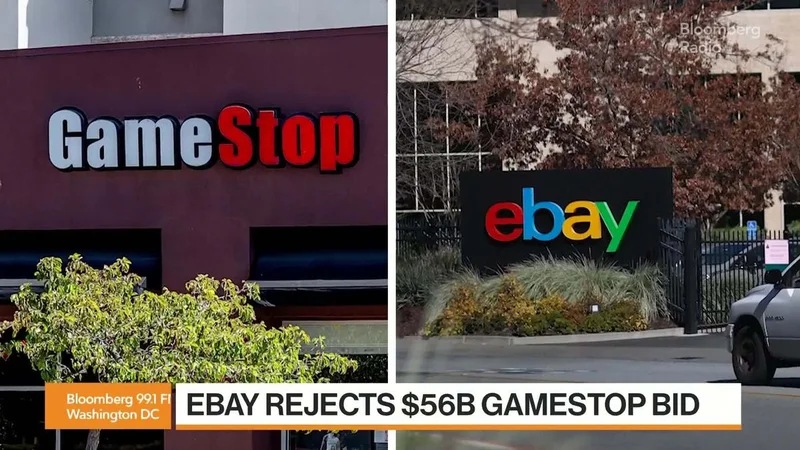
Image: Bloomberg AI
Main Takeaway
EBay rejects GameStop CEO Ryan Cohen's $56 billion unsolicited bid, citing financing uncertainty and operational risks. The board defends its standalone.
Jump to Key PointsSummary
Why eBay shut the door so fast
EBay's board moved with unusual speed to reject GameStop's $56 billion takeover proposal, dismissing it as "neither credible nor attractive" in a sharply worded statement. The board cited specific concerns about uncertainty surrounding GameStop's financing plan and the operational risks of combining the two companies. EBay Chairman Paul Pressler sent a letter directly to Ryan Cohen making the rejection formal and public, a move that signaled zero interest in negotiation rather than the typical corporate dance of polite consideration. The board emphasized that eBay remains a "strong, resilient business" with a "differentiated global marketplace" and a clear strategy already in motion.
The speed and tone of the rejection reflect eBay's confidence in its current trajectory and its view that GameStop's offer was more theater than serious corporate strategy. EBay's stock had already come under pressure from the initial disclosure that GameStop had accumulated a 5% stake beginning in February. By slamming the door firmly, eBay's board sought to remove any ambiguity and reassure shareholders that management's standalone plan offers better value than Cohen's vision. GameStop's shares fell 4% before market open following the rejection, suggesting investors had priced in at least some probability of a deal or saw the rebuke as damaging to Cohen's credibility.
What GameStop actually proposed
GameStop's bid valued eBay at $125 per share in cash and stock, with an equity value of approximately $55 billion on paper. The proposal came with a strategic vision that Ryan Cohen had been developing for months, including a plan to transform GameStop's roughly 1,600 U.S. stores into drop-off and shipping locations for eBay sellers. One particularly unconventional element involved live sales broadcasts from GameStop locations featuring eBay products, blending physical retail with digital marketplace dynamics in a way that few analysts took seriously.
Cohen had disclosed earlier in May that GameStop was pursuing eBay as a vehicle to compete directly with Amazon, a declaration that surprised many given the vast gap in scale and resources between the two companies. GameStop had been quietly accumulating eBay shares since February, building a 5% stake that triggered disclosure requirements and set the stage for the public offer. The gaming retailer's transformation from a meme stock phenomenon to an aspiring e-commerce consolidator represented a bold strategic pivot, but one that eBay's board clearly viewed as lacking substance. GameStop did not immediately respond to requests for comment after the rejection, leaving observers to wonder whether Cohen would retreat or escalate.
The financing question that sank the deal
EBay's specific mention of "uncertainty" around GameStop's financing plan struck at the heart of what made the offer implausible from the start. GameStop's market capitalization has fluctuated wildly over the past four years, driven by retail investor enthusiasm rather than operational fundamentals. A $56 billion acquisition would represent one of the largest attempted takeovers in recent retail history, yet GameStop's own financial capacity to fund such a deal remains deeply questionable. The company has burned through cash in its turnaround efforts and lacks the balance sheet strength to finance a transaction of this magnitude without massive external backing that no bank or investor has publicly committed to providing.
The structure of the offer, cash and stock, introduced additional complications. EBay shareholders would receive payment partly in GameStop shares, which trade at valuations that many analysts consider disconnected from underlying business performance. This meant eBay owners would effectively swap a stake in a profitable marketplace for exposure to a volatile gaming retailer whose stock moves on social media sentiment as much as fundamentals. EBay's board recognized this asymmetry and treated it as a fatal flaw. The rejection letter's emphasis on financing uncertainty suggests that even if Cohen had lined up debt financing, the equity component alone may have doomed the proposal.
What this means for Ryan Cohen's empire building
The rejection exposes the limits of Ryan Cohen's ability to parlay his meme-stock-fueled platform into serious corporate acquisitions. Since taking control of GameStop in 2021, Cohen has pursued a vision of transforming the company into a technology and e-commerce player, but tangible results have been elusive. The eBay bid represented his most ambitious attempt to acquire scale rather than build it organically, and its swift rejection leaves his strategy looking more speculative than strategic. GameStop's 4% stock drop on the news indicates that even the company's own investor base had mixed feelings about the eBay pursuit.
Cohen now faces a choice between pursuing other acquisition targets, attempting to pressure eBay through activist tactics, or retreating to focus on GameStop's core gaming business. None of these paths look particularly promising. Other potential targets would likely view GameStop's approach with the same skepticism eBay displayed, and eBay's strong rejection makes a hostile campaign appear futile. The episode may reinforce perceptions among institutional investors that Cohen's ambitions outpace his company's capabilities, potentially constraining his ability to raise capital for future deals. For a figure who built his reputation on defying conventional wisdom, this rejection represents a conventional failure.
How Amazon factors into this chess game
GameStop's explicit framing of eBay as a vehicle to compete with Amazon reveals the scale of Cohen's ambitions and the absurdity of his starting position. Amazon's market capitalization exceeds $2 trillion, while GameStop's hovers around a fraction of that even after its meme-stock surges. EBay itself, with its established global marketplace and profitable operations, represents a more realistic competitor to Amazon than GameStop could ever be alone, yet even eBay has struggled to maintain relevance against the Seattle giant's relentless expansion. The idea that bolting GameStop's declining retail footprint onto eBay's platform would create a meaningful Amazon challenger struck most analysts as fantasy.
Amazon's shadow loomed over the entire episode, from GameStop's initial disclosure to eBay's rejection rationale. EBay's board emphasized its "differentiated global marketplace" and confidence in sustainable growth, code for "we already know how to compete with Amazon without Ryan Cohen's help." The rejection can be read as a vote of confidence in eBay's existing strategy and an implicit acknowledgment that GameStop's proposed synergies, store-based shipping and live broadcasts included, would not materially change the competitive equation. Amazon, meanwhile, faces no meaningful threat from this failed combination and can continue absorbing e-commerce market share without disruption.
What happens next for both companies
EBay will likely return to executing its existing strategy with renewed validation from its board's decisive action. The company has been investing in its authentication programs, expanding its focus on collectible and luxury categories, and refining its seller tools. With the GameStop distraction dismissed, management can focus on demonstrating that its standalone path delivers the "long-term value for our shareholders" that Pressler promised. The board may also consider defensive measures, such as a shareholder rights plan or other anti-takeover provisions, to prevent future unsolicited approaches from Cohen or similarly situated bidders.
GameStop faces a rockier road. Cohen must now explain to shareholders why a bid that consumed management attention and strategic credibility ended so abruptly. The company may attempt to sell its 5% eBay stake, though doing so at current prices could crystallize a loss if the position was accumulated at higher levels. More likely, Cohen will seek another acquisition target or pivot to operational initiatives that demonstrate GameStop can grow without external deals. The gaming retailer's next earnings call will face intense scrutiny regarding its strategic direction. Whatever path Cohen chooses, the eBay rejection has demonstrated that meme-stock energy does not translate automatically into merger-and-acquisition credibility, a lesson that may prove expensive for GameStop's remaining ambitions.
Key Points
EBay's board rejected GameStop's $56 billion takeover offer as 'neither credible nor attractive,' citing financing uncertainty and operational risks
GameStop had proposed $125 per share in cash and stock, with plans to convert its 1,600 U.S. stores into eBay shipping and broadcast locations
Ryan Cohen disclosed earlier in May that GameStop was pursuing eBay to compete with Amazon, and had accumulated a 5% stake since February
The rejection letter from eBay Chairman Paul Pressler defended the company's standalone strategy and current management team's ability to deliver value
GameStop shares fell 4% following the rejection, indicating investor disappointment or skepticism about Cohen's M&A credibility
Questions Answered
EBay's board described the bid as 'neither credible nor attractive,' citing uncertainty around GameStop's financing plan and the operational risks of combining the two companies. The board expressed confidence in eBay's standalone strategy and current management team.
Ryan Cohen saw eBay as a vehicle to compete with Amazon. The plan included converting GameStop's approximately 1,600 U.S. stores into drop-off and shipping locations for eBay sellers, and hosting live sales broadcasts from physical stores featuring eBay products.
GameStop's stock fell 4% before market open on the day the rejection was announced, suggesting investors had priced in some probability of a deal or viewed the rebuke as damaging to Cohen's credibility.
GameStop has not announced plans for its eBay position. It could hold the stake as a passive investment, sell it on the open market, or potentially use it as leverage in future negotiations, though eBay's firm rejection makes an activist campaign appear unlikely to succeed.
It is too early to say definitively, but the swift and public rejection damages Cohen's M&A credibility. He may attempt other targets, but any future approach will likely face heightened skepticism from target boards and investors about financing capacity and strategic logic.
Source Reliability
50% of sources are highly trusted · Avg reliability: 74
Go deeper with Organic Intel
Simple AI systems for your life, work, and business. Each one includes copyable prompts, guides, and downloadable resources.
Explore Systems