Deezer Launches Free AI Music Detector for Spotify and Apple Music Playlists
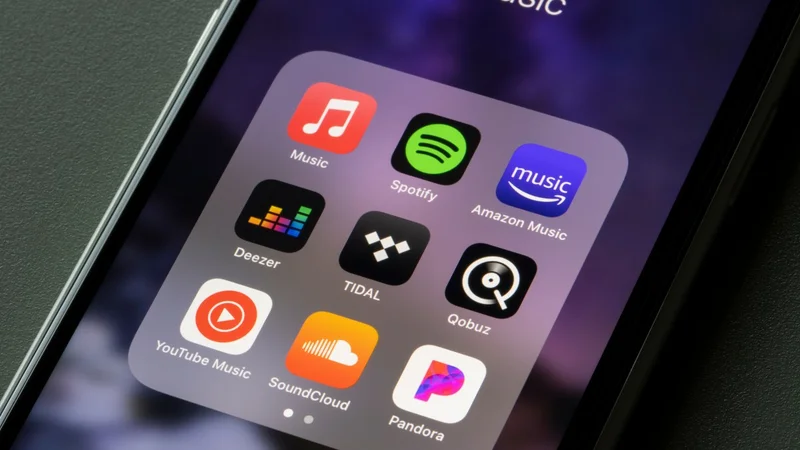
Image: TechCrunch AI
Main Takeaway
Deezer released a free tool that scans playlists from Spotify, Apple Music, and other services to identify AI-generated tracks, citing 75,000 daily uploads.
Jump to Key PointsSummary
Why Deezer built a cross-platform AI detector
Deezer launched a free web tool that analyzes playlists from Spotify, Apple Music, and other streaming services to identify AI-generated music. Users can submit up to 100 playlists for scanning, receiving a breakdown of which tracks are fully AI-generated versus human-created. The move extends Deezer's existing internal detection system, which it deployed in 2025 as the first streaming platform to automatically tag AI tracks and remove them from algorithmic recommendations.
The French company is positioning itself as-tech-chief among streaming services on AI transparency, at a moment when rivals have been slower to act. According to The Verge, Deezer was the first major platform to implement AI tagging, and its new cross-platform detector now lets listeners audit their own collections regardless of where they subscribe. TechCrunch reports that many competing services have yet to launch comparable detection tools, leaving a gap Deezer is exploiting for both marketing and policy influence.
The scale of AI music flooding streaming platforms
Deezer's data reveals the magnitude of the problem. The platform now receives approximately 75,000 fully AI-generated tracks every day, according to Music Business Worldwide and Deezer's own newsroom. That figure represented 44% of all new uploaded music as of April 2026, up from 34% in late 2025 and 28% earlier that year. The growth curve is steep and accelerating.
A Deezer study cited across multiple sources found that 97% of listeners cannot distinguish AI-generated music from human-made tracks. This near-total opacity creates fertile ground for streaming fraud, where AI-produced content can dilute royalty pools and manipulate playlist algorithms. Deezer has responded by not only detecting and tagging AI tracks but also stopping storage of hi-resolution versions of confirmed AI content, reducing platform overhead for material it considers lower value.
How the detection technology actually works
Deezer's detection system analyzes audio embeddings using machine learning models trained to identify patterns characteristic of AI generation from tools like Suno and Udio. The company claims its technology can process tracks at scale with high accuracy, though it has not published detailed methodology or independent validation. The system distinguishes fully AI-generated music from human-created content, focusing on complete automation rather than AI-assisted production.
The tool is now available for free to consumers via Deezer's website, but the company is also licensing the underlying technology to the broader music industry. According to TechCrunch, Deezer began selling its detection tool to industry partners in January 2026, creating a secondary revenue stream from the same infrastructure. This dual approach, consumer-facing transparency and B2B licensing, suggests Deezer sees detection as both a competitive differentiator and a standalone product category.
What rivals are doing about AI music
Spotify and Apple Music have been comparatively quiet on AI detection. Music Business Worldwide noted in September 2025 that Deezer was essentially alone among major platforms in publicly addressing the AI music surge. Spotify has since revealed some measures for handling AI music, spam, and deepfakes, but has not implemented the systematic tagging and transparency that Deezer has made central to its brand.
This asymmetry creates a strategic opening. By making its detector work across competing platforms, Deezer effectively turns a technical capability into marketing that highlights competitors' inaction. TechRadar framed the tool as superior to Spotify's annual Wrapped feature, giving users something to share that signals musical authenticity rather than mere consumption volume. The competitive subtext is hard to miss: Deezer is smaller than Spotify or Apple Music, and AI transparency has become a wedge issue where it can claim leadership.
What happens next for artists and listeners
The tool's launch intensifies pressure on the broader industry to develop or adopt detection standards. If listeners begin routinely auditing their playlists and sharing results, platforms without comparable transparency may face user demands for similar features. Deezer's licensing strategy also positions it to become a detection infrastructure provider, potentially embedding its technology into royalty distribution systems and rights management workflows.
For artists, the implications are mixed. Detection helps protect against dilution of royalty pools by AI-generated content, but it also raises questions about where lines are drawn between AI-assisted and fully AI-generated work. Deezer's current system targets fully automated production, but industry standards remain unsettled. The company told Courthouse News that its tagging initiative is part of a broader fight against streaming fraud, suggesting detection will increasingly tie into enforcement mechanisms, not just labeling.
Why this matters for the future of music streaming
Deezer's cross-platform detector represents a shift from internal content moderation to public-facing transparency infrastructure. By making AI detection a consumer feature rather than a back-end process, the company is betting that listener awareness will become a market force. The 97% failure rate in human detection of AI music means most users have been operating blind, and Deezer is offering the first widely accessible corrective.
Whether this translates to lasting competitive advantage depends on whether larger platforms respond with their own tools or adopt Deezer's technology through licensing. The company's dual-track approach, free consumer tool plus paid industry licenses, creates multiple paths to monetize its first-mover position. As AI music generation tools improve and proliferate, detection is likely to become a standard platform capability rather than a differentiator. Deezer's challenge is to convert its current lead into durable industry influence before that happens.
Key Points
Deezer released a free tool that scans Spotify and Apple Music playlists for AI-generated tracks.
The platform receives 75,000 AI-generated tracks daily, 44% of all new uploads.
A Deezer study found 97% of listeners cannot distinguish AI music from human-made songs.
Deezer also licenses its detection technology to industry partners as a B2B product.
Spotify and Apple Music have not implemented comparable AI tagging or transparency tools.
Questions Answered
Deezer's AI music detector is a free web tool that analyzes playlists from Spotify, Apple Music, and other streaming services to identify fully AI-generated tracks. Users submit up to 100 playlists and receive a breakdown of which tracks are AI-generated versus human-created, based on machine learning models that analyze audio embeddings for patterns characteristic of AI tools like Suno and Udio.
Deezer built the cross-platform detector to extend its first-mover advantage in AI transparency and to highlight that competitors like Spotify and Apple Music lack comparable tools. The company has positioned itself as the industry leader on AI music disclosure since launching internal tagging in 2025, and the new consumer tool turns that technical capability into marketing that exposes rivals' inaction.
Deezer reports receiving approximately 75,000 fully AI-generated tracks every day, which represents 44% of all new music uploaded to the platform as of April 2026. This figure has grown rapidly from 28% in early 2025 and 34% in late 2025, indicating accelerating adoption of AI music generation tools.
No. According to a Deezer study cited across multiple sources, 97% of listeners cannot accurately distinguish AI-generated music from human-created tracks. This near-universal inability to detect AI content creates significant challenges for streaming fraud, royalty distribution, and listener trust.
Yes. In addition to the free consumer tool, Deezer licenses its AI detection technology to industry partners as a B2B product. The company began selling detection services to the broader music industry in January 2026, creating a secondary revenue stream from the same underlying infrastructure.
Spotify and Apple Music have been significantly slower than Deezer to address AI music transparency. Spotify has revealed some measures for handling AI music, spam, and deepfakes but has not implemented systematic tagging or consumer-facing detection. Apple Music has not publicly announced comparable AI detection capabilities.
Source Reliability
33% of sources are established · Avg reliability: 62
Go deeper with Organic Intel
Simple AI systems for your life, work, and business. Each one includes copyable prompts, guides, and downloadable resources.
Explore Systems