Microsoft and Stellantis Ink 5-Year Deal for 100+ AI Car Projects
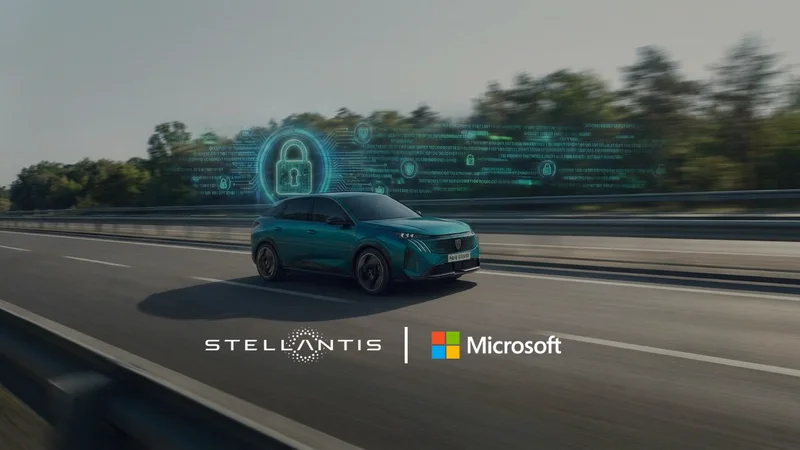
Image: News.microsoft
Main Takeaway
Stellantis teams with Microsoft on a sweeping five-year plan to embed AI across 14 brands, cut data-center energy 60%, and roll out 20,000 Copilot seats.
Jump to Key PointsSummary
The scope of the new partnership
Stellantis and Microsoft have signed a five-year strategic pact to co-develop more than 100 AI initiatives that will touch everything from vehicle software and customer care to cybersecurity and cloud infrastructure. According to the official announcement, joint engineering squads will embed AI into Stellantis vehicles, dealer systems, factory floors, and back-office operations across its 14 brands, including Jeep, Ram, Peugeot, and Fiat. Microsoft’s Azure cloud and its Copilot stack will serve as the backbone, while Stellantis will contribute vehicle data, manufacturing know-how, and customer touch-points spanning 130 countries.
Detroit News reports that the deal also covers a new AI-driven global cyber-defense center designed to monitor threats across Stellantis’s connected-car fleet in real time. Employees are already being trained on integrating AI into daily workflows, Stellantis told the Free Press, signaling that the rollout is moving from slide-ware to shop-floor reality.
What this means for car owners
Starting as early as the 2027 model year, owners of Stellantis vehicles should notice smarter digital cockpits, predictive maintenance alerts, and voice assistants that actually understand context. Ars Technica quotes Ned Curic, Stellantis CTO, saying AI will be baked into “the core vehicle operating system,” not layered on as an afterthought. Expect over-the-air updates that learn your driving style and automatically adjust suspension or battery management for the daily commute versus the weekend road trip.
Customer-care centers will also get an AI boost. Instead of navigating phone trees, owners will chat with Copilot-powered agents that can pull real-time diagnostics, schedule service, or order parts without human hand-offs. Microsoft’s data shows similar implementations have cut average call resolution time by 30 percent in pilot programs.
Why the cloud footprint is shrinking
A headline-grabbing piece of the agreement is Stellantis’s pledge to shrink its global data-center footprint by 60 percent by 2029. Qz notes the automaker will migrate legacy workloads to Azure’s more efficient regions and lean on edge computing inside vehicles to process sensor data locally. Fewer servers in fewer buildings should translate to lower energy bills and faster response times for safety-critical features like automatic emergency braking.
Stock Titan adds that the shift includes a wholesale modernization of Stellantis’s SAP and PLM systems, which currently chew through on-prem CPU cycles. Microsoft will also provide 20,000 Copilot for Microsoft 365 licenses to office staff, theoretically cutting email drafting and spreadsheet wrangling time in half.
Competitive ripple effects
Ford and GM have already rolled out their own cloud-AI alliances with Google and Amazon respectively, so Stellantis risked looking late to the party. Bloomberg AI frames the Microsoft deal as catch-up that could leapfrog rivals if executed well, because it bundles consumer-facing AI, factory AI, and cybersecurity under one roof. Toyota and Volkswagen—both building in-house stacks—will likely feel pressure to accelerate or partner up.
On the supplier side, chip vendors like Nvidia and Qualcomm stand to gain from the need for more powerful in-vehicle processors, while traditional Tier-1 software houses may lose ground if Stellantis brings more development in-house via Microsoft tooling.
What happens next
The first consumer-visible features—likely upgraded voice assistants and predictive service alerts—are slated for late 2026 model-year refreshes. Internally, Stellantis will start migrating 30 petabytes of vehicle telemetry to Azure by Q3 2026, according to an internal timeline leaked to WindowsForum. A joint governance board with equal seats from both companies will meet monthly to green-light or kill individual AI pilots, a structure designed to avoid the slow death that plagues many corporate tech alliances.
Longer term, the partners hint at monetizing anonymized fleet data for insurance and smart-city partnerships, though privacy watchdogs in Europe and California are already circling. If Stellantis can hit the 60 percent data-center reduction target ahead of schedule, expect Microsoft to turn the case study into a marketing blitz aimed at luring other automakers onto Azure.
Key Points
Five-year pact will produce 100+ joint AI projects across engineering, sales, and customer care.
Stellantis commits to a 60 percent reduction in owned data-center capacity by 2029 via Azure migration.
20,000 Copilot for Microsoft 365 seats will roll out to employees, alongside AI training programs.
First consumer AI features—voice assistants, predictive maintenance—arrive on 2027 vehicles.
New AI cyber-defense center will monitor Stellantis’s global connected-car fleet for real-time threats.
Questions Answered
Jeep, Ram, and Peugeot are expected to debut the earliest consumer-facing AI updates in late 2026 or 2027 model-year refreshes.
By moving legacy SAP and PLM workloads to more efficient Azure regions and shifting compute-heavy sensor processing to in-vehicle edge chips.
Telemetry will be processed on Azure, but both companies claim it will be anonymized and governed by regional privacy laws; the exact policy is still being finalized.
Stellantis says core vehicle functions will remain intact without AI, but over-the-air updates and some infotainment features may require the new software stack.
Executives haven’t announced pricing changes, yet cloud and AI investments often get amortized across vehicle MSRPs or subscription services like Uconnect.
Source Reliability
29% of sources are highly trusted · Avg reliability: 71
Go deeper with Organic Intel
Simple AI systems for your life, work, and business. Each one includes copyable prompts, guides, and downloadable resources.
Explore Systems