Adobe Firefly AI Assistant turns Creative Cloud into chatbots
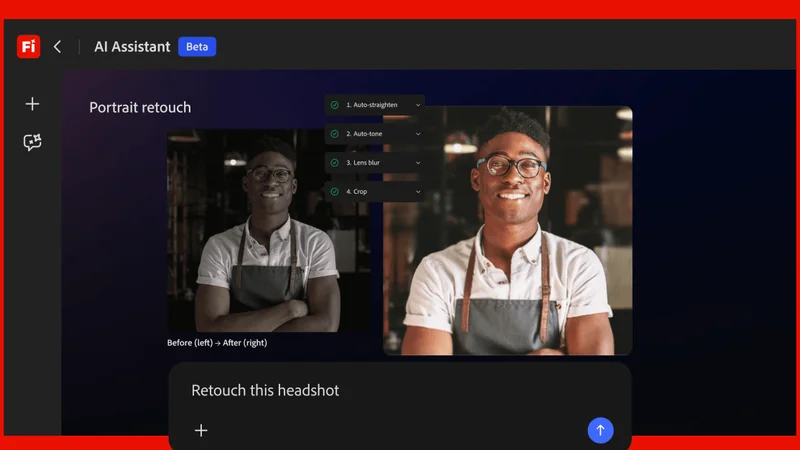
Image: The Verge AI
Main Takeaway
Adobe's Firefly AI Assistant lets creators edit images, video and docs by typing or speaking natural language commands across Creative Cloud.
Summary
Adobe turns Creative Cloud into a chat interface
Adobe has unveiled Firefly AI Assistant, a conversational agent that lets creators edit images, videos and documents by describing what they want in plain language. Available in public beta across Photoshop, Premiere, Lightroom, Illustrator and Express, the tool marks what Adobe calls a "fundamental shift" in creative work by replacing complex manual processes with natural language commands. Users can now type or speak requests like "remove the background" or "make this look like a vintage film" and watch the software execute the changes automatically. The assistant builds on last October's Project Moonlight preview, extending the same chat-style interface across Adobe's entire creative suite. According to Adobe's announcement, this removes traditional skill barriers while maintaining creative control, though the company hasn't clarified pricing beyond existing Firefly credit systems.
How creatives will work differently
Professional designers and editors gain a new workflow where tedious tasks happen through conversation rather than menu navigation. The assistant can chain operations across multiple Adobe apps, automatically moving from Photoshop edits to Premiere timeline adjustments based on descriptive prompts. Early demonstrations show it handling complex multi-step processes like generating video thumbnails, applying consistent color grading, and creating social media variants from a single master file. Adobe's internal surveys suggest creatives spend 60-70% of their time on repetitive technical tasks rather than creative decisions. By converting these into natural language requests, the company claims professionals can redirect that time toward concept development and client relationships. However, questions remain about how this affects billable hours and the perception of creative labor value.
Why enterprises are building custom versions
Major corporations like Disney and Home Depot are already building custom versions through Adobe's Firefly Foundry service, creating brand-specific AI models that maintain visual consistency across thousands of assets. The enterprise focus addresses a key concern: ensuring AI-generated content matches established brand guidelines without manual oversight. Adobe's platform approach integrates with GenStudio for content management, creating an end-to-end pipeline from creation to delivery. This positions Adobe not just as a tool provider but as a complete creative infrastructure vendor, competing directly with enterprise AI platforms from Google and OpenAI that lack Adobe's creative heritage.
What powers the assistant under the hood
The assistant orchestrates multiple AI models, including Adobe's own Firefly systems plus Google and OpenAI models for specialized tasks. This multi-model approach allows it to handle everything from simple crop operations to complex generative fills that require understanding artistic context and style consistency. Unlike basic prompt-to-image tools, the system maintains layer structures, edit histories and non-destructive workflows that professionals require. It also preserves metadata and color profiles, ensuring outputs remain compatible with existing production pipelines rather than creating isolated AI artifacts.
How job roles may evolve
This shift toward conversational editing will likely compress the skill curve between amateur creators and seasoned professionals. Tasks that once required years of software mastery can now be accomplished through descriptive language, potentially democratizing access to professional-quality creative tools. However, experienced creatives who understand visual language and can craft precise, nuanced prompts will likely become more valuable, serving as directors who orchestrate AI execution rather than manual operators. The real differentiator shifts from software proficiency to creative vision and prompt engineering skills.
How rivals are responding
Adobe's move pressures rivals like Canva, Figma and emerging AI-native creative platforms to develop similar conversational interfaces. The integration advantage of controlling both the AI models and the creative applications gives Adobe a significant moat that pure-play AI companies can't easily replicate. Google's Imagen and OpenAI's DALL-E face the challenge of operating as standalone services, while Adobe embeds AI directly into workflows professionals already use. This could accelerate consolidation in the creative software space as smaller players struggle to match Adobe's integrated approach.
What to expect next
The public beta rolls out over the coming weeks, with enterprise features following through Firefly Foundry. Adobe plans to expand the assistant's capabilities to include 3D modeling, audio editing and collaborative features where multiple users can co-edit projects through conversation. Pricing remains the elephant in the room. While the company hasn't announced changes to its subscription model, the credit-based system for AI usage may need restructuring as conversational workflows dramatically increase API calls. Expect Adobe to experiment with unlimited AI tiers for enterprise customers while maintaining usage caps for individual creators.
Key Points
Adobe launches Firefly AI Assistant enabling natural language editing across Creative Cloud apps
Conversational interface removes traditional software skill barriers while maintaining professional workflows
Enterprise customers like Disney already deploying brand-specific AI models through Firefly Foundry
Multi-model architecture combines Adobe Firefly, Google and OpenAI systems for specialized creative tasks
Shift from manual editing to AI direction redefines creative professional roles and market dynamics
FAQs
Unlike standalone generators, it integrates directly into professional workflows, maintains layer structures and edit histories, and can chain operations across multiple Adobe applications rather than creating isolated outputs.
Not obsolete but transformed. Technical software mastery becomes less critical while creative vision, prompt crafting, and art direction skills become more valuable as humans shift to directing AI execution.
Adobe hasn't announced specific pricing beyond existing Firefly credit systems. The public beta launches soon with current subscription tiers, though unlimited AI access may emerge for enterprise customers.
Yes, through Firefly Foundry enterprise service, companies can build custom AI models trained on their brand assets to ensure visual consistency across all AI-generated content.
Initially Photoshop, Premiere, Lightroom, Illustrator, Express and the Firefly web studio, with plans to expand to 3D modeling, audio editing and collaborative features.
The assistant integrates into current subscriptions initially, but increased AI usage may require credit purchases or new unlimited tiers as conversational workflows scale API consumption.
Source Reliability
50% of sources are highly trusted · Avg reliability: 77
Go deeper with Organic Intel
Our AI for Your Business systems give you practical, step-by-step guides based on stories like this.
Explore ai for your business systems