Eclipse Closes $1.3B Twin Funds to Back Physical AI, Robotics and Defense Startups
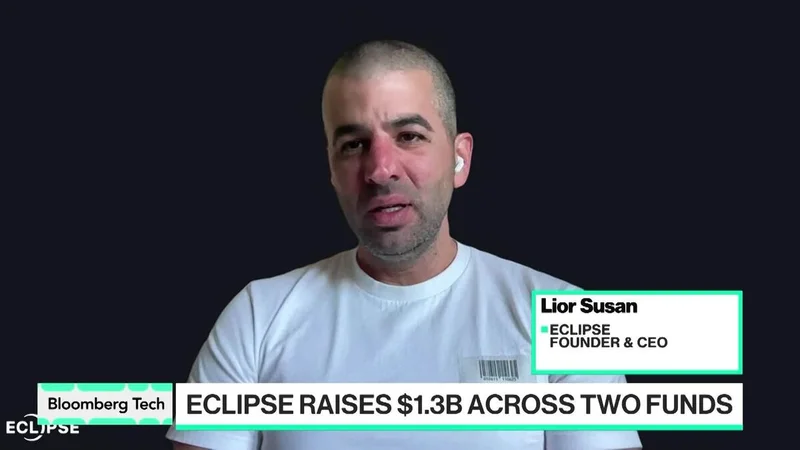
Image: Bloomberg AI
Main Takeaway
Eclipse Ventures raises $1.3B across two new funds to pour into manufacturing, robotics, defense and AI infrastructure startups, doubling down on the.
Summary
The record raise
Eclipse Ventures has closed $1.3 billion across two new funds, according to regulatory filings and investor updates. The haul nearly doubles the firm’s assets under management and is the largest single raise in its eight-year history. Lior Susan, the former Flextronics executive who founded Eclipse in 2015, told Bloomberg the capital will be deployed over the next four years across roughly 30 portfolio companies, with check sizes ranging from $20 million to $150 million per deal.
Where the money is going
The twin funds will target what Eclipse calls the “physical stack” — companies that combine software, hardware and manufacturing to solve real-world problems. Priority sectors include autonomous factory robotics, AI-optimized semiconductor fabs, next-gen defense systems and energy infrastructure. Eclipse is already a major backer of Cerebras Systems, the AI chip designer that raised $1 billion in Series H funding on the same day the new Eclipse funds were announced. The firm’s portfolio also spans battery makers, industrial 3-D printing startups and drone companies serving both commercial and defense customers.
Why this matters for the robotics funding drought
Venture funding for robotics and manufacturing startups has cratered since 2022, with PitchBook data showing a 68% drop in deal volume year-over-year. Eclipse’s mega-raise bucks that trend and signals renewed institutional appetite for capital-intensive bets on physical AI. The firm argues that software-only AI companies face diminishing returns, while startups that control the full stack — from silicon to factory floor — can capture more value. That thesis helped Eclipse return 3.2x invested capital to LPs in its second fund, according to an investor letter reviewed by Bloomberg.
Defense dollars enter the chat
Roughly 25% of the new capital is earmarked for startups building dual-use technologies that serve both commercial and defense markets, Susan confirmed. That allocation reflects Eclipse’s early backing of Anduril Industries and Shield AI, two defense unicorns that have proven hardware startups can scale within Pentagon procurement cycles. The strategy also taps into record defense budgets — the U.S. Department of Defense requested $1.8 trillion in total spending authority for 2027, with AI and autonomous systems labeled “critical modernization priorities.”
What happens next for the portfolio
Eclipse plans to lead Series B and C rounds for companies already in its portfolio while reserving fresh capital for 8-10 new bets. The firm is actively recruiting talent from Apple, Tesla and SpaceX to help portfolio companies navigate manufacturing scale challenges. Susan told TechCrunch that Eclipse’s internal engineering team — staffed by 25 former hardware executives — will now embed full-time at startups rather than serving as part-time advisors. That operating model, rare in venture capital, helped Eclipse portfolio company Bright Machines automate 40% of Flextronics’ iPhone assembly lines last year.
The broader ripple effects
Other deep-tech funds are likely to follow Eclipse’s lead, with Lux Capital, Eclipse’s closest competitor, already marketing a $900 million successor fund. The raise also validates verticalized AI hardware plays against horizontal software platforms — expect more startups pitching custom silicon, robotics arms and factory control systems rather than APIs and SaaS subscriptions. For enterprise buyers, the flood of capital means faster deployment timelines and lower upfront costs as startups compete for pilot programs. For LPs, Eclipse’s raise sets a new bar for hardware VC fund sizes and may accelerate consolidation among smaller deep-tech investors unable to compete at this scale.
Key Points
Eclipse Ventures raised $1.3B across two new funds, nearly doubling assets under management
Capital targets physical AI: robotics, manufacturing, defense, energy infrastructure startups
25% of funds earmarked for dual-use defense technologies amid record Pentagon budgets
Eclipse will embed full-time engineers from Apple, Tesla, SpaceX at portfolio companies
Raise bucks 68% decline in robotics VC funding since 2022 and may spark broader deep-tech consolidation
FAQs
Eclipse backs startups that combine software, hardware and manufacturing to solve physical-world problems in robotics, defense, energy and AI infrastructure.
The firm employs 25 former hardware executives who embed full-time at portfolio companies to help solve manufacturing and scale challenges, rather than serving as part-time advisors.
Venture funding for robotics dropped 68% since 2022; Eclipse's $1.3B haul signals renewed institutional appetite for capital-intensive physical AI bets.
About 25% of the new funds target dual-use technologies serving both commercial and defense markets, building on Eclipse's early backing of unicorns like Anduril and Shield AI.
Over four years across ~30 companies with $20-150M checks each, leading Series B/C rounds for existing portfolio companies and 8-10 new investments.
Source Reliability
42% of sources are low credibility · Avg reliability: 47
Go deeper with Organic Intel
Our AI for Your Business systems give you practical, step-by-step guides based on stories like this.
Explore ai for your business systems