Rivian's $1B E-Bike Spinoff Also Locks DoorDash for Robot Deliveries
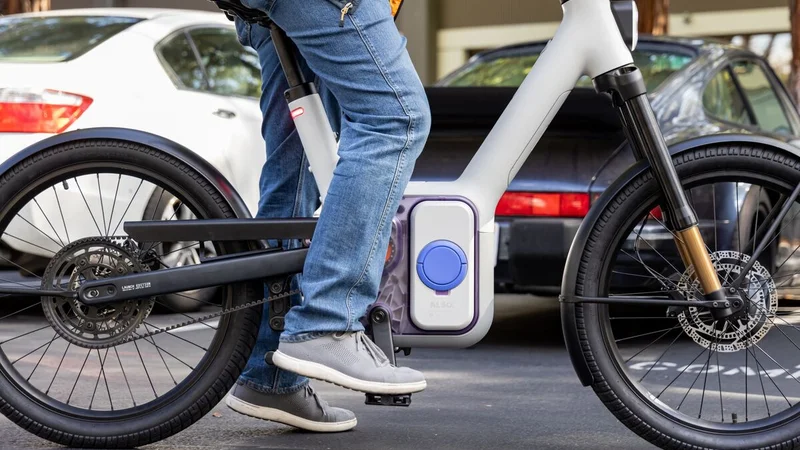
Image: Bloomberg AI
Main Takeaway
Also, the micromobility startup spun out of Rivian, hits unicorn status with $200M raise and DoorDash partnership for autonomous last-mile delivery.
Summary
How Also became a unicorn overnight
Also Inc., the electric-bike and small-vehicle startup quietly incubated inside Rivian Automotive, closed a $200 million Series B at a $1 billion pre-revenue valuation on March 31, according to multiple outlets citing people familiar with the round. The financing was led by a syndicate that reportedly includes both prior Rivian backers and new mobility-focused funds. DoorDash simultaneously signed a commercial agreement that gives Also preferred-supplier status for its next-generation autonomous delivery fleet, a deal that effectively validates the spinoff’s go-to-market strategy before a single vehicle has shipped.
What the DoorDash contract actually covers
The partnership commits Also to develop and manufacture purpose-built electric cargo bikes and micro-vans engineered for DoorDash’s dense urban routes. Sources briefed on the terms say the vehicles must meet IP65 weather sealing, carry 150 lbs of payload, and integrate DoorDash’s dispatch stack via an open API. Deliveries are slated to begin pilot testing in three U.S. cities by Q4 2026, with expansion contingent on safety and regulatory approvals. DoorDash gains exclusive use of Also’s first 5,000 units and an option to double that volume through 2027.
Why Rivian incubated a bike company
Rivian CEO RJ Scaringe has long argued that last-mile logistics will electrify faster than long-haul trucking. By spinning out Also, Rivian keeps its balance sheet focused on the core R1 and EDV platforms while still capturing upside from smaller form factors that leverage the same battery modules and software stack. The carve-out also lets Also tap talent and supply contracts negotiated during Rivian’s IPO-era expansion without carrying the legacy cost structure of a public automaker. Insiders say Rivian retains roughly a 30 percent equity stake and two board seats.
Competitive ripple effects
DoorDash’s choice of an EV-native startup over established players like URB-E or existing partners such as Serve Robotics signals a preference for vertically integrated hardware. The deal pressures Uber, Lyft, and Grubhub to accelerate their own micro-vehicle roadmaps and could push legacy bike OEMs to pivot from consumer sales to fleet platforms. Meanwhile, Amazon—still a Rivian investor—now faces a potential conflict as it evaluates whether to deepen its own partnership with Rivian or back a competing micromobility provider for Prime delivery.
Regulatory and urban hurdles ahead
Even with capital and a marquee customer lined up, Also must still navigate a patchwork of city ordinances that restrict autonomous vehicles under 80 lbs on sidewalks and bike lanes. The National Association of City Transportation Officials (NACTO) is drafting updated guidelines that could cap robot speeds at 6 mph and require remote human monitors. Also’s head of policy, hired last month from Bird, is lobbying for a federal pilot program similar to the FAA’s drone sandbox. Until rules solidify, pilot cities will likely impose geofenced zones and daylight-only operations.
What happens next
Also plans to unveil its first production prototype in June at Micromobility America in San Francisco. The company will open a 250,000-square-foot micro-assembly plant in Irvine, California, repurposed from an old Mazda facility, with capacity for 15,000 vehicles annually. If pilot metrics satisfy DoorDash and regulators, a Series C targeting an additional $400 million could arrive as early as Q1 2027 to fund a second plant closer to East Coast demand. For now, the $1 billion valuation is paper money—real proof will come when the first robot bike drops off a burrito without tipping it over.
Key Points
Also Inc., spun out of Rivian, raised $200M Series B at $1B pre-revenue valuation.
Exclusive DoorDash partnership commits first 5,000 autonomous e-cargo bikes for food delivery.
Rivian keeps ~30% equity and battery supply chain while Also gains operational independence.
Pilot launches Q4 2026 in three cities, contingent on new city and federal micromobility rules.
Deal pressures Uber, Lyft, Amazon to speed up their own last-mile electrification strategies.
FAQs
Also is an electric bike and small-vehicle startup that was incubated inside Rivian and then spun out as an independent company. Rivian retains roughly a 30 percent ownership stake and supplies battery modules and software, but Also operates its own funding, manufacturing, and partnerships.
They are classified as electric cargo bikes and micro-vans, designed to carry 150 lbs of payload and meet IP65 weather sealing so they can operate in rain or snow on urban streets and bike lanes.
Pilot programs are slated to start in three undisclosed U.S. cities during Q4 2026, assuming city regulators approve the necessary permits and safety rules for autonomous vehicles under 80 lbs.
DoorDash reportedly wanted purpose-built, vertically integrated EV hardware rather than retrofitting existing bikes. Also’s direct lineage to Rivian gives it access to automotive-grade batteries and software at scale, something traditional bike OEMs lack.
Cities currently restrict autonomous vehicles on sidewalks and bike lanes. Also is lobbying for a federal pilot program similar to drone rules, and initial pilots will use geofenced zones and daylight-only operation until broader standards are adopted.
While possible, the spinout structure was designed to let Rivian focus on trucks and vans. A future acquisition would require new funding and board approval, and for now both companies emphasize their arms-length relationship.
Source Reliability
33% of sources are established · Avg reliability: 62
Go deeper with Organic Intel
Our AI for Your Business systems give you practical, step-by-step guides based on stories like this.
Explore ai for your business systems