Pony AI Turns First Profit, Plans 20-City Robotaxi Blitz
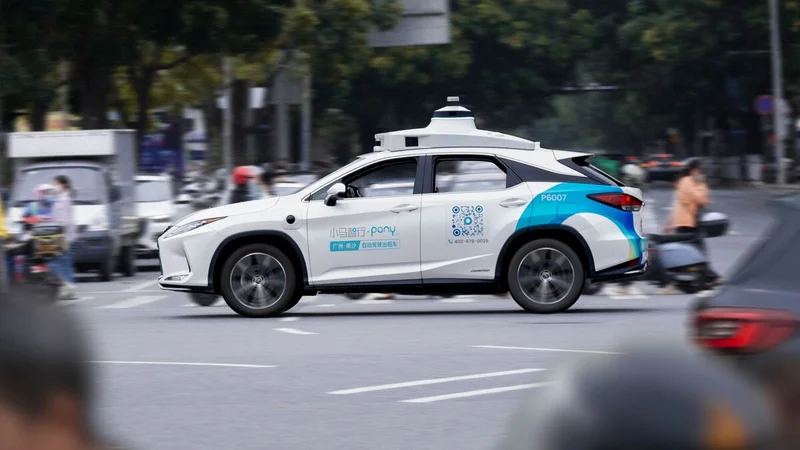
Image: Bloomberg AI
Main Takeaway
Chinese startup Pony AI posts first-ever profit via investment gains, launches Gen-7 vehicles that cost 70% less, and vows robotaxis in 20 cities with.
Summary
How did Pony AI suddenly become profitable?
Pony AI booked its first quarterly profit, but the milestone came from an early strategic investment windfall rather than core robotaxi operations, Bloomberg reports. The company simultaneously reached unit-economics breakeven in Shenzhen with its seventh-generation robotaxi, which CNBC notes costs 70% less to manufacture than prior models. That cost drop, paired with an “asset-light” expansion model that leans on partners like Uber and Bolt, is what flipped the financial switch.
What is the 20-city expansion plan?
CEO James Peng wants driverless rides humming in 20 cities by the end of 2026. The map splits between Asia, the Middle East and now Europe. Pony.ai will triple its fleet to roughly 3,000 Gen-7 vehicles, TechBuzz and CNEVPost confirm, using local ride-hailing apps rather than building consumer brands from scratch. Zagreb with Uber, several Gulf cities with Careem, and undisclosed European markets via Stellantis are already in pilot.
How are Uber, Bolt and Stellantis involved?
Instead of owning every car, Pony licenses its stack to partners who supply vehicles and local permits. Uber integrates the cars into its app in Croatia and the Middle East, Bolt does the same in Eastern Europe, and Stellantis will factory-install the system in new Chrysler Pacifica-based taxis bound for Europe. This “white-label” approach lets Pony scale faster and shift capital risk to automakers and ride platforms.
What changed to make robotaxis finally economical?
Two levers: price and utilization. Gen-7 sensors use cheaper solid-state LiDAR and fewer redundant cameras, cutting hardware cost to roughly $30k per vehicle. At the same time, Shenzhen data show cars now average 12 paid rides per shift, hitting the magic break-even point of $1.20 per km. The combo turns robotaxis from science project to margin-positive business inside a single city, a first for any Chinese operator.
Will regulators allow rapid global rollouts?
Europe’s patchwork rules remain the biggest speed bump. Pony’s Croatia pilot operates under a temporary permit that caps vehicles at 50 and requires a safety driver for the first six months. EU-wide legislation on Level-4 autonomy is still two years away, so the company will likely rely on city-by-city exemptions, mirroring the playbook it used in Beijing and Guangzhou. Investors are betting the political winds shift once safety records improve.
What does this mean for competitors like Waymo and Cruise?
Pony’s asset-light model undercuts the capital-heavy fleets that Alphabet’s Waymo and GM’s Cruise have built in the U.S. By letting Uber and Bolt shoulder vehicle ownership, Pony can reach new continents for a fraction of the cash burn. Waymo still leads on miles driven, but its $100k-plus sensor suite and limited international presence look suddenly expensive. Cruise, still recovering from its San Francisco suspension, risks being boxed out of Europe entirely if partnerships like Pony-Stellantis lock up automaker channels first.
What happens next?
Watch three metrics: permit counts in Europe, fleet utilization in each new city, and whether the Gen-7 cost curve drops another 20% by 2027. If Pony clears those gates, the company could IPO as early as late 2026, riding both profit proof and expansion momentum. Miss on any front and the “20-city” pledge risks becoming another autonomous-driving headline that ages poorly.
Key Points
Pony AI posts first-ever quarterly profit, driven partly by investment gains and partly by Gen-7 robotaxi unit-economics break-even in Shenzhen.
Seventh-generation hardware costs 70% less to build, cutting per-kilometer breakeven to $1.20 and making robotaxi rides margin-positive.
Asset-light expansion leverages Uber, Bolt and Stellantis to supply vehicles and permits, aiming for 20 cities and 3,000 cars by end-2026.
European debut starts in Zagreb under temporary permit, with broader EU rollouts hinging on future legislation and city-specific exemptions.
Model undercuts Waymo and Cruise by shifting capital risk to partners, potentially accelerating global reach at lower cash burn.
FAQs
Not yet. The quarterly profit includes a one-time investment gain. However, its Gen-7 robotaxis have reached break-even on operating costs in Shenzhen, meaning each ride now covers its own expenses.
Pony supplies the autonomous driving software and tele-operations; Uber, Bolt or Stellantis provide the vehicles, insurance, local permits and customer app. Pony earns a per-mile or per-ride royalty instead of owning the fleet.
Pony hasn’t released a full list, but filings mention the Gulf region via Uber’s Careem, additional Eastern European cities with Bolt, and several Western European markets using Stellantis vans.
The company will rely on temporary city permits, as it already does in China. If legislation is delayed beyond 2027, expansion could slow and planned IPO valuations might be trimmed.
Source Reliability
37% of sources are highly trusted · Avg reliability: 72
Go deeper with Organic Intel
Our AI for Your Business systems give you practical, step-by-step guides based on stories like this.
Explore ai for your business systems