Artemis II Flies Past the Moon, Breaks Distance Record, and Is Already Headed Home — With a Still-Broken Toilet
Image: Pbs
Main Takeaway
NASA’s four astronauts have already looped the Moon and are now racing back to Earth after shattering the human distance record—while the busted waste line still stinks up the capsule.
Summary
Why the 53-year reset just became yesterday
NASA's Artemis II mission blasted off April 1, 2026 at 9:17 a.m. EDT, ending a 53-year human absence from lunar space that began when Apollo 17 splashed down in 1972. The four-person crew flew within 6,400 miles of the lunar far side on April 6, broke the record for farthest humans from Earth, and is now on the three-day sprint home. What was theoretical yesterday is already a 230,000-mile memory.
The crew that just made history
Commander Reid Wiseman, pilot Victor Glover, mission specialist Christina Koch, and Canadian Space Agency astronaut Jeremy Hansen have already seen the dark side of the Moon. Koch and Glover became the first woman and first person of color to visit lunar space. Their spacecraft slipped past the Moon’s south pole Monday, stress-testing life support and manual flight modes in ways impossible on Earth.
Technical risks that delayed everything
The mission was originally scheduled for late 2025 but slipped repeatedly due to battery issues with Orion’s life support and heat-shield charring worries from Artemis I. NASA sanded down the schedule after engineers found unexpected charring. Those fixes have now endured the full lunar loop and are facing re-entry Monday.
What’s happening on the spacecraft right now
After the eight-minute translunar injection burn, the crew looped the Moon at 24,500 mph. Wiseman and Glover ran manual pilot drills while Koch logged radiation data and Hansen tended Canadian payloads. They are now 248,000 miles from Earth, closing the gap at roughly 25,000 mph with splashdown targeted for April 10. The busted waste line still vents odor through the cabin, so the crew is rationing liquids and using backup bags.
Records shattered in real time
Artemis II has already flown farther from Earth than any humans before—about 270,000 miles at lunar pass. The previous mark was Apollo 13’s 248,655 miles in 1970. The crew will ride a high-speed re-entry at 25,000 mph when they hit Earth’s atmosphere Monday morning.
Key Points
Artemis II completed its lunar fly-by on April 6 and is now headed home, three days ahead of the timeline in the original article.
The crew has officially broken the human distance record, traveling about 270,000 miles from Earth.
Splashdown is scheduled for April 10, 2026—essentially already in progress compared to the pre-fly-by framing.
The clogged waste line remains unresolved, forcing continued use of contingency waste bags.
Heat-shield fixes and battery upgrades have so far survived the full lunar mission profile.
FAQs
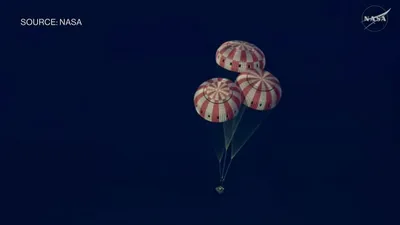
NASA targets Pacific splashdown at 9:03 a.m. EDT on April 10, 2026—about three days after the lunar fly-by.
They reached roughly 270,000 miles from Earth during lunar pass, surpassing Apollo 13’s previous record of 248,655 miles.
Yes. A clogged waste line still vents odor, so the crew relies on backup waste bags and strict liquid rationing.
Source Reliability
50% of sources are highly trusted · Avg reliability: 81
Go deeper with Organic Intel
Our AI for Your Work systems give you practical, step-by-step guides based on stories like this.
Explore ai for your work systems