Trump's NASA Moves to Replace Boeing's $4B-per-Flight Moon Rocket After Artemis II Success
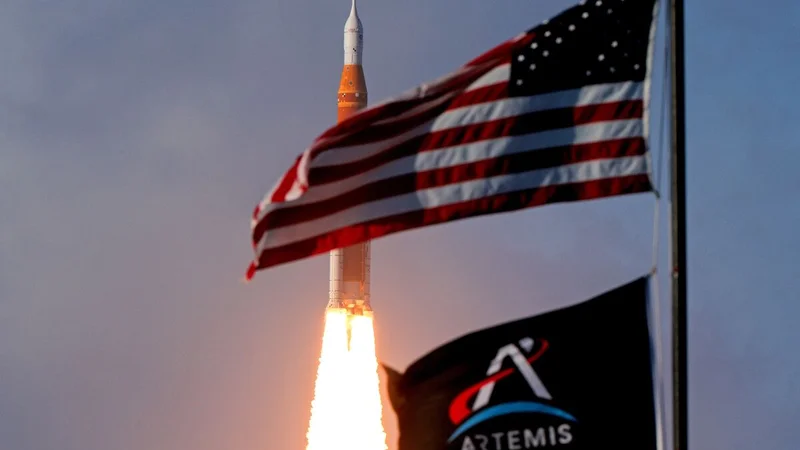
Image: Bloomberg AI
Main Takeaway
Fresh off Artemis II's lunar fly-by, Trump's NASA chief Isaacman is shopping for commercial alternatives to Boeing's SLS, which costs $4B per launch and.
Summary
The $4 billion-per-flight problem
Boeing's Space Launch System (SLS) just delivered astronauts around the moon on Artemis II, yet NASA is already soliciting replacements. Each flight costs roughly $4 billion — four times original estimates — and the rocket is years behind schedule. The Trump administration's 2026 budget request explicitly seeks commercial alternatives, placing the decade-old program's future in doubt despite its recent success.
Political pressure meets pork-barrel politics
The White House tried to phase out SLS and Lockheed Martin's Orion capsule last year, but Congress blocked the cuts. Artemis spreads suppliers across all 50 states, creating a jobs coalition that has repeatedly saved the program. NASA administrator Jared Isaacman, the billionaire fintech founder Trump appointed last year, faces entrenched opposition from lawmakers protecting local aerospace jobs while trying to deliver on Trump's 2028 moon-landing promise.
Commercial challengers line up
SpaceX and Blue Origin are positioning their rockets as cheaper alternatives, though neither has proven lunar capability yet. NASA issued a request for proposals to industry rivals even before Artemis II launched, signaling the agency's lack of confidence in SLS's long-term viability. Isaacman canceled Boeing's contract for a more powerful SLS upper stage in February, redirecting funds toward commercial options.
The China timeline crunch
With China targeting its own moon mission by 2030 and Trump's 2028 deadline looming, Isaacman is under pressure to deliver faster and cheaper access to lunar orbit. Legacy contractors like Boeing offer proven but expensive technology, while newer players promise innovation but carry execution risk. The clock is ticking on a decision that could reshape America's space program for decades.
What happens next
Congress will likely restore SLS funding again in upcoming budget negotiations, but NASA's solicitation of commercial alternatives suggests the agency is preparing for a phased transition. The next 18 months will determine whether Boeing can reduce costs sufficiently to compete with SpaceX's Starship and Blue Origin's New Glenn, or whether America's moon program pivots entirely to commercial launch providers. Isaacman's success or failure will define Trump's space legacy.
Key Points
SLS costs $4 billion per flight, four times initial estimates, despite successful Artemis II mission
NASA administrator Isaacman actively shopping commercial replacements from SpaceX/Blue Origin
Congress repeatedly blocked White House attempts to cancel SLS due to jobs in 50 states
China's 2030 moon mission timeline creates urgency for cheaper, faster lunar access
FAQs
Each SLS flight costs $4 billion — four times original estimates — making it unsustainable for Trump's planned moon base. NASA needs cheaper, more frequent flights to meet the 2028 lunar landing deadline.
Billionaire fintech entrepreneur appointed by Trump as NASA administrator. He's driving the push for commercial alternatives to legacy contractors like Boeing, viewing them as too slow and expensive.
Neither has proven lunar capability yet, though SpaceX's Starship and Blue Origin's New Glenn are designed for deep space missions. NASA's solicitation signals confidence they could develop the capability faster than Boeing can reduce costs.
Artemis program spreads suppliers across all 50 states, creating a powerful congressional coalition protecting local aerospace jobs. Lawmakers have repeatedly restored funding despite White House objections.
Trump wants astronauts on the moon by 2028 before he leaves office, while China targets its own mission by 2030. This creates urgency for cheaper, faster lunar access beyond SLS's current capabilities.
Source Reliability
50% of sources are highly trusted · Avg reliability: 79
Go deeper with Organic Intel
Our AI for Your Business systems give you practical, step-by-step guides based on stories like this.
Explore ai for your business systems