CoreWeave Doubles Down on Junk Bonds After Jane Street Drops $7B Bet on AI Cloud
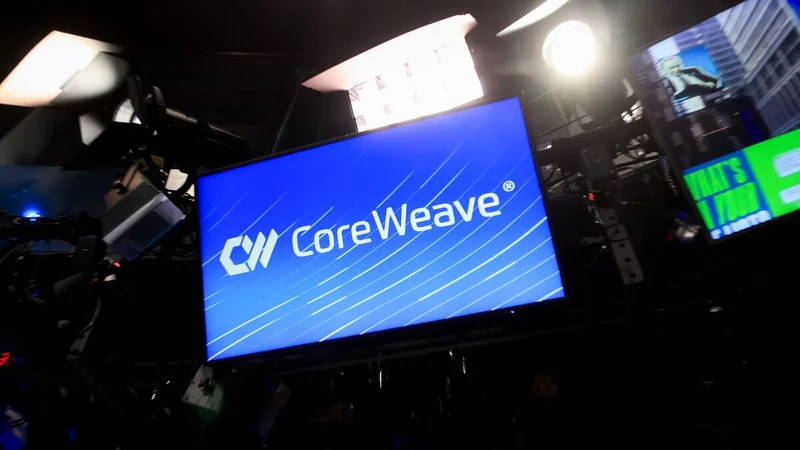
Image: Bloomberg AI
Main Takeaway
CoreWeave returns to junk-bond market for second time in a week after Jane Street pumps $1B equity plus $6B cloud contract, pushing total backing to $7B.
Summary
The $7 billion Jane Street package
Jane Street is handing CoreWeave two checks at once: a fresh $1 billion equity stake and a six-year, $6 billion cloud-computing contract that locks the trading house into CoreWeave’s GPU clusters through 2032. Reuters reports the combined $7 billion package is among the largest single-customer commitments in AI infrastructure history. Jane Street will use the capacity to run ultra-low-latency trading models and large-scale backtests that previously spilled onto public clouds. The deal values CoreWeave at roughly $19 billion post-money, according to QZ calculations, cementing its spot as the largest independent GPU cloud outside the big three hyperscalers.
Why CoreWeave rushed back to junk bonds
Barely a week after raising $1.75 billion in senior unsecured notes at 9.75 %, CoreWeave reopened that same tranche for an extra $300 million on 16 April. Bloomberg notes books were covered in under two hours, a speed rarely seen in high-yield markets outside telecom buy-outs. The new money will fund pre-orders for Nvidia’s next-gen B200 GPUs and expand data-center footprints in Texas and London. Investors shrugged off the double-dip: the original notes actually ticked up a quarter point in secondary trading, according to Yahoo Finance bond desks.
Risk appetite in AI credit markets
The appetite for AI-linked junk debt is approaching dot-com levels. CoreWeave’s bonds priced inside initial guidance despite a CCC+ rating from S&P, a notch reserved for borrowers with "substantial risk." Yet buyers focused on revenue visibility: Jane Street’s contract guarantees $1 billion-plus in annual spend, giving cash-flow cover that typical pre-profit tech issuers lack. The 9.75 % coupon looks juicy next to SoftBank’s recent 8.5 % notes and is miles above the 5-6 % range where hyperscalers borrow. Fund managers told the WSJ they view the paper as "synthetic Nvidia exposure without the equity volatility."
What happens next for GPU financing
Expect copycats. Lambda Labs, Crusoe and Voltage are already sounding banks about similar structures: anchor tenant pre-payments plus high-yield top-ups. The model lets GPU landlords monetize future compute years ahead of delivery, a neat workaround to Nvidia’s allocation rules that favor buyers who can pay cash upfront. But concentration risk looms: Jane Street now accounts for over 30 % of CoreWeave’s forward revenue. Any trading downturn could ripple fast. Meanwhile, Bloomberg warns that reopening bonds twice in one month can signal cash-burn acceleration, a pattern that ended badly for WeWork and other pre-profit unicorns.
Impact on hyperscaler competition
Amazon, Google and Microsoft have quietly raised prices on on-demand H100s three times this year, creating the margin gap CoreWeave exploits. With Jane Street’s volume locked in, CoreWeave can offer 20-30 % discounts to the next wave of hedge funds and biotech labs while still covering its debt service. That pricing pressure could force hyperscalers to negotiate harder on long-term AI contracts or risk losing algorithmic traders who prize raw performance over managed services. If more prop shops follow Jane Street’s lead, the big three may need to defend market share with their own junk-bond arms races.
The broader junk-bond signal
CoreWeave’s success shows the high-yield market is open for anything with an AI wrapper, even sub-investment-grade credits burning cash. That’s great for founders needing quick capital but terrible for discipline: every marginal dollar raised today is tomorrow’s overcapacity if model-training demand plateaus. Watch for covenant-light structures and PIK-toggle clauses that let issuers pay interest with more debt, hallmarks of late-cycle exuberance. For now, the music’s still playing; Jane Street just turned the volume up to eleven.
Key Points
Jane Street committed $7 billion to CoreWeave: $1 billion equity stake plus $6 billion six-year cloud contract.
CoreWeave reopened its 9.75 % junk-bond tranche for an extra $300 million within a week, showing voracious investor demand.
The deal values CoreWeave at ~$19 billion and secures revenue visibility that justifies its CCC+ credit rating.
High-yield AI debt is trading like dot-com paper again, with investors accepting weak covenants for GPU exposure.
Hyperscalers may need to cut AI compute prices or tap junk markets themselves as discount GPU clouds gain scale.
FAQs
About $7.3 billion: $7 billion from Jane Street ($1 billion equity + $6 billion cloud contract) plus an additional $300 million from reopening its junk-bond tranche.
Jane Street’s $6 billion contract provides predictable cash flows that cover interest, offering "synthetic Nvidia exposure" without equity volatility.
Pre-orders of Nvidia’s next-gen B200 GPUs and expansion of data-center capacity in Texas and London.
Yes, according to fund managers cited by WSJ: covenant-light structures and reopening bonds twice in a week mirror late-cycle exuberance seen in prior tech booms.
Source Reliability
50% of sources are highly trusted · Avg reliability: 77
Go deeper with Organic Intel
Our AI for Your Business systems give you practical, step-by-step guides based on stories like this.
Explore ai for your business systems