Artemis II Splashes Down Safely Despite Heat Shield Flaws
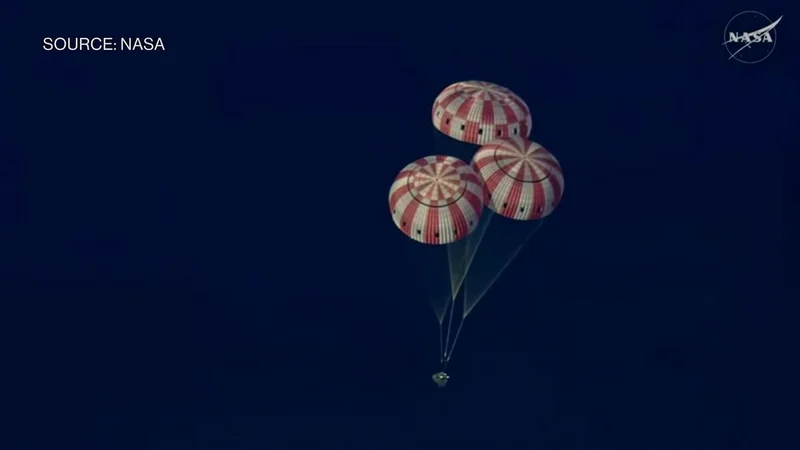
Image: Bloomberg AI
Main Takeaway
NASA's four-person crew returned from the first lunar fly-by since 1972, surviving a perilous 13-minute re-entry with a heat shield engineers knew was.
Summary
What just happened
NASA's Artemis II capsule splashed down in the Pacific Ocean on April 11, completing humanity's first crewed return from the moon in 54 years. The four astronauts endured a white-knuckle 13-minute re-entry sequence that flight director Jeff Radigan described as "13 minutes of things that have to go right" .
The mission, launched April 1 from Kennedy Space Center, looped around the moon before the perilous journey home. Despite a successful splashdown, the achievement came with a known flaw: engineers discovered more than 100 cracks in the Orion heat shield after the uncrewed Artemis I mission in 2022 .
The heat shield problem nobody fixed
NASA knew the heat shield was compromised before launch. During Artemis I, chunks of shield material broke off during re-entry when internal gas pressure built up and burst through the outer layer. The shield is designed to ablate (melt away gradually), not pop off in pieces .
The physics is brutal. As the capsule skips across Earth's upper atmosphere, pyrolysis creates scorching gas inside the shield. When the outer layer hardens, pressure has nowhere to escape. The result: explosive fragmentation that could doom a crew .
NASA flew anyway. They calculated the risk was manageable for a lunar fly-by, betting that the same conditions wouldn't repeat. They were right this time. Next time? That's the $93 billion question .
What's next for lunar exploration
Artemis III is already scheduled for 2027, aiming to land astronauts on the lunar surface. But the heat shield issue must be resolved first. Laurie Leshin, former JPL director, emphasized the stakes: "We're not just going to the moon to visit. We're building a sustained presence" .
The program faces a tight timeline. NASA needs to redesign the heat shield, test it, and integrate changes while maintaining momentum for the 2027 landing. Private contractors like SpaceX (providing the Starship lander) and Boeing (SLS rocket core) are watching closely .
The new space race context
This isn't 1969. Artemis operates in a crowded field where China plans crewed lunar missions by 2030 and private companies like SpaceX already ferry astronauts. The heat shield failure highlights a deeper challenge: NASA's risk calculus has shifted from Apollo's "failure is not an option" to "acceptable risk levels" .
The successful splashdown proves Artemis can work. But it also shows how much rides on engineering fixes that haven't been tested. When the next crew straps in, they'll know exactly what went wrong last time—and trust that NASA got it right .
What this means for commercial partners
SpaceX's Starship lander and Boeing's SLS rocket both depend on Orion's success. A heat shield redesign could ripple through the entire Artemis supply chain, potentially delaying the 2027 landing mission. Lockheed Martin (Orion's prime contractor) faces the most immediate pressure to deliver fixes .
Commercial lunar programs, from Blue Origin's Blue Moon lander to smaller startups, will scrutinize NASA's approach. The heat shield saga becomes a case study in balancing speed versus safety in the new space economy .
Key Points
Artemis II completed first crewed lunar fly-by since 1972 with Pacific splashdown on April 11
Heat shield had known flaw with 100+ cracks discovered during 2022's uncrewed Artemis I mission
Critical 13-minute re-entry phase required precise angle and speed calculations to prevent disaster
NASA proceeded despite knowing heat shield could fail, calculating risk as acceptable for fly-by
Artemis III lunar landing mission scheduled for 2027 depends on heat shield redesign success
FAQs
NASA engineers determined the heat shield cracks posed acceptable risk for a lunar fly-by trajectory, calculating that re-entry conditions would differ enough from the 2022 test to prevent catastrophic failure.
The 13-minute re-entry sequence required precise navigation through Earth's atmosphere. Any deviation in angle or speed could have resulted in crew loss, making this the mission's most critical phase.
NASA must complete heat shield redesign, testing, and integration before Artemis III's planned 2027 lunar landing. This gives roughly 18-24 months to solve a problem that has persisted since 2022.
SpaceX's Starship lunar lander and other Artemis contractors face potential schedule delays while NASA resolves heat shield issues, impacting private lunar program timelines and investor expectations.
Source Reliability
50% of sources are highly trusted · Avg reliability: 79
Go deeper with Organic Intel
Our AI for Your Work systems give you practical, step-by-step guides based on stories like this.
Explore ai for your work systems