15% of Americans Open to AI Boss as Companies Flatten Management
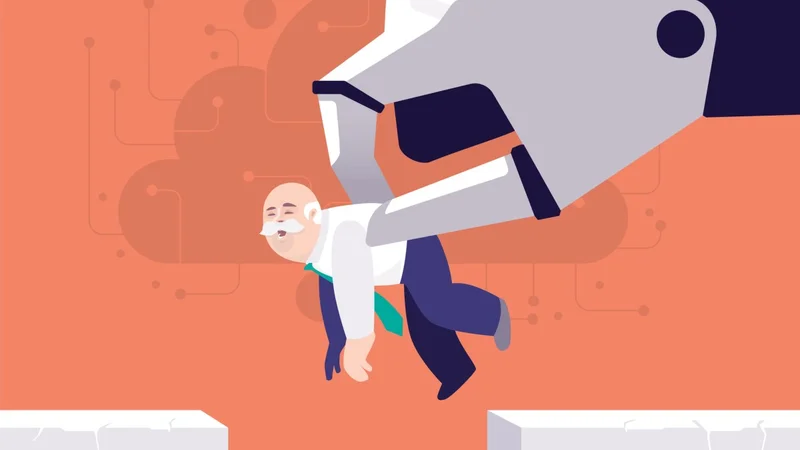
Image: TechCrunch AI
Main Takeaway
Quinnipiac poll shows one in seven U.S. workers would accept an AI supervisor, highlighting both growing acceptance and deep skepticism toward algorithmic.
Summary
The headline number
Fifteen percent of American adults would willingly take a job where their direct supervisor is an AI program that assigns tasks and sets schedules, according to a Quinnipiac University poll released Monday. The survey of 1,397 U.S. adults captures a moment when companies are actively stripping out middle-management layers and replacing them with automated systems in what analysts are calling "The Great Flattening."
Why the number is both bigger and smaller than it looks
While 15% may sound modest, it translates to roughly 39 million Americans — the entire population of California. Yet the same data reveals an 85% majority who would refuse such an arrangement, underscoring the trust gap that still separates humans from algorithmic authority. The Quinnipiac findings align with earlier Pew and Scale AI surveys showing workers simultaneously wary and curious about AI’s expanding role in the workplace.
What workers actually want from an AI manager
Resume Now and Fullstack Academy data suggest the 15% figure may undercount latent demand. When framed around specific human-manager failings — bias, favoritism, unclear communication — up to 65% of respondents say AI could outperform flesh-and-blood bosses. The gap between the Quinnipiac headline and these rosier projections points to how question wording shapes perception: people reject the abstract idea of a robot boss but embrace a system that fixes tangible leadership problems.
The flattening org chart
Companies aren’t waiting for universal consent. TechBuzz reports that organizations are already automating middle-management functions using AI to assign tasks, monitor performance, and schedule shifts. The trend began as cost-cutting during the 2023-2024 downturn but has accelerated as AI agent tooling matures. Early adopters include logistics firms, call centers, and gig platforms where predictable workflows lend themselves to algorithmic oversight.
Trust remains the sticking point
Despite curiosity, trust deficits persist. Pew data from 2023 shows that while workers accept AI for rote tasks, they balk when it encroaches on judgment calls like promotions or layoffs. The Quinnipiac poll reinforces this: willingness to work for an AI boss correlates strongly with prior positive experiences using AI tools. Workers who’ve seen fair, transparent algorithms in action — think scheduling apps that avoid favoritism — are far more open than those whose only exposure is opaque corporate software.
What happens next
Expect the 15% to grow as generative AI becomes less of a black box. Startups are already building explainable manager bots that justify decisions in plain English, a feature that could push acceptance past 25% within two years. Meanwhile, expect pushback from unions and regulators citing AI safety concerns. The next frontier: hybrid human-AI management teams where algorithms handle logistics and humans focus on culture and conflict resolution.
Key Points
Quinnipiac poll shows 15% of Americans would accept an AI boss, translating to ~39 million people
Supplementary surveys reveal up to 65% openness when AI fixes specific human-manager flaws like bias
Companies actively automating middle-management layers in "The Great Flattening" trend
Trust deficit remains: workers accept AI for scheduling but resist promotion or firing decisions
Early adopters include logistics, call centers, gig platforms with predictable workflows
FAQs
According to Quinnipiac, 15% of adults say yes outright. But when asked about fixing specific human-manager problems like bias, other surveys show openness as high as 65%.
Logistics firms, call centers, and gig platforms lead adoption. These sectors have predictable workflows where AI can schedule shifts, assign tasks, and monitor performance without complex judgment calls.
Trust. Workers fear opaque algorithms making life-altering decisions like promotions or layoffs. Early adopters focus AI on scheduling and task assignment, keeping humans for sensitive calls.
Yes. As AI becomes more transparent and justifies decisions in plain language, analysts expect acceptance to climb past 25% within two years, especially among younger workers.
Not yet en masse, but expect pushback as AI encroaches on traditional management roles. Some unions are negotiating hybrid models where AI handles logistics and humans retain final say.
Prompt engineering, data literacy, and the ability to interpret AI-generated feedback. Soft skills become more valuable since AI handles logistics but humans still navigate culture and conflict.
Source Reliability
40% of sources are trusted · Avg reliability: 66
Go deeper with Organic Intel
Our AI for Your Business systems give you practical, step-by-step guides based on stories like this.
Explore ai for your business systems