Chrome’s AI Autofill Searches Gmail for Travel, Orders and Shipping Details
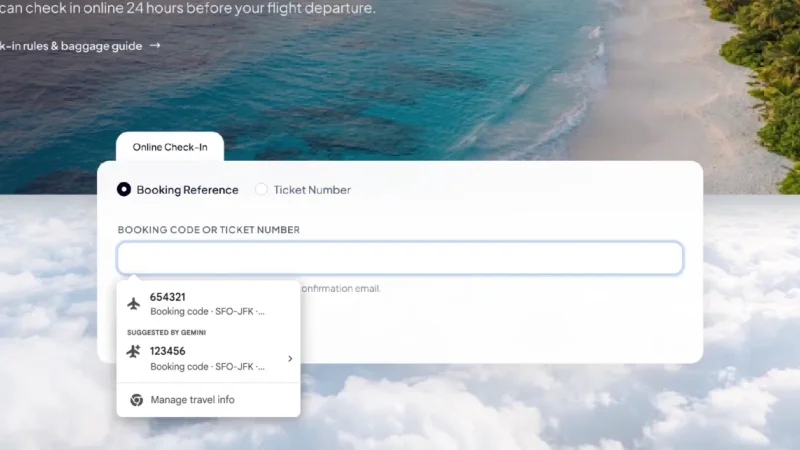
Image: TechCrunch AI
Main Takeaway
Google is expanding Chrome’s AI-powered autofill in the US, allowing Gemini to retrieve travel, order and shipping details from Gmail with user permission.
Jump to Key PointsSummary
Chrome autofill reaches into Gmail
Google is expanding Chrome’s enhanced autofill so it can retrieve details from Gmail and suggest them while users complete online forms. The feature uses Gemini with Personal Intelligence to identify information such as flight booking numbers, hotel reservations, shipment tracking numbers and purchase order numbers.
The update targets a familiar chore: opening an inbox, finding a confirmation or receipt, and copying a number into another website. Chrome can also surface addresses, phone numbers, membership IDs and credit card details when they match a form field. Google announced the rollout on October 28, 2026, with availability beginning in the United States.
How the new feature works
Enhanced autofill connects form completion with information already stored across a user’s Google services. Gmail provides the new source of contextual details, while earlier versions drew on Google Accounts and services such as Google Wallet for names, email addresses, physical addresses and passport numbers.
Gemini identifies relevant content when a form asks for a specific piece of information, then presents a suggestion for the user to accept. The system is designed for situational details rather than a static profile alone, which makes it useful for travel check-ins, returns, shipping forms and order-related requests. The feature builds on Google’s broader Personal Intelligence system, which lets users connect Google applications to Gemini for answers based on their own information.
Privacy controls shape adoption
Google says sensitive information shown through enhanced autofill remains encrypted, and users control whether the Gmail-connected capability is enabled. Chrome settings allow users to manage what the feature can access or turn enhanced autofill off entirely.
That permission model matters because the feature handles information that can identify purchases, travel plans, addresses and financial details. A suggestion appearing at the right time removes friction, but it also makes the browser an active participant in interpreting private communications. Users must weigh that convenience against granting an AI system access to inbox content, even when the displayed result is encrypted.
Google’s browser and AI strategy
The Gmail integration gives Chrome a practical reason to remain connected to Google’s wider software ecosystem. Autofill has traditionally stored predictable fields, while this update reaches into changing, event-specific information that users otherwise retrieve manually. That shift makes the browser more useful at the moment a transaction or reservation requires it.
The experience also extends Google’s push to place Gemini inside everyday workflows. TechCrunch compared the convenience to Apple’s verification-code autofill, where a relevant code appears without requiring users to switch applications. Chrome’s version applies that pattern to a broader set of inbox-derived details, including travel, shopping and delivery information.
Availability and next steps
The enhanced Gmail autofill feature is rolling out to US users across Chrome desktop, Android and iOS, with access tied to Personal Intelligence and Gemini in Chrome. Users who have the setting enabled will see the capability as Google expands the rollout.
Its usefulness will depend on how accurately Gemini matches emails to the fields users are completing and how often people are comfortable granting access to Gmail. Google’s next challenge is making the feature reliable enough for routine use while keeping permissions understandable. Broader availability and additional Google service integrations would extend its reach, but the initial release centers on Gmail-based travel, shopping and shipping details.
Key Points
Google Chrome now uses Gemini to pull travel, shopping and shipping details from Gmail for online forms.
Chrome’s enhanced autofill can suggest flight numbers, tracking codes, hotel reservations and purchase order numbers.
Users control Gmail access through Chrome settings and can disable enhanced autofill entirely.
Google says sensitive information displayed in autofill suggestions remains encrypted during form completion.
The US rollout covers Chrome desktop, Android and iOS with Personal Intelligence enabled.
Questions Answered
Google Chrome’s new feature uses Gemini to find relevant details in Gmail and suggest them in online forms. It can surface travel reservations, tracking numbers, order details and other information without requiring a manual inbox search.
Google Chrome can retrieve flight booking numbers, hotel reservations, shipment tracking numbers and purchase order numbers from Gmail. It can also suggest addresses, phone numbers, membership IDs and other details when they match a form.
Google Chrome’s Gmail autofill is rolling out to users in the United States. It is available across desktop, Android and iOS experiences tied to Gemini in Chrome and Personal Intelligence.
Google Chrome lets users manage enhanced autofill access in its settings or disable the feature completely. Users choose whether the Gmail-connected capability is enabled.
Google says sensitive information displayed by Chrome’s enhanced autofill remains encrypted. The feature still requires users to decide whether Chrome can access relevant Gmail information.
Source Reliability
100% of sources are highly trusted · Avg reliability: 85
Go deeper with Organic Intel
Simple AI systems for your life, work, and business. Each one includes copyable prompts, guides, and downloadable resources.
Explore Systems