China Orders Companies to Ignore U.S. Sanctions in Unprecedented Direct Challenge
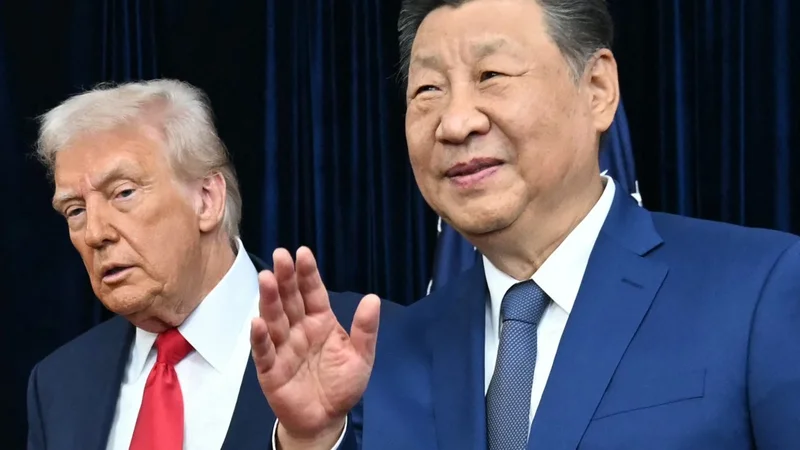
Image: Fortune AI
Main Takeaway
Beijing activates 2021 blocking statute to nullify U.S. sanctions on Iranian oil buyers, setting up banking showdown.
Jump to Key PointsSummary
The legal weapon Beijing just fired
China has activated a dormant 2021 statute to legally prohibit Chinese companies from complying with U.S. sanctions on Iranian oil purchases. The Ministry of Commerce's Announcement No. 21 explicitly orders all Chinese entities to "not recognize, not enforce, and not comply with" U.S. sanctions, marking the first time Beijing has used its Rules on Counteracting Unjustified Extra-Territorial Application of Foreign Legislation since their creation five years ago.
This isn't just diplomatic posturing. The order targets specific U.S. sanctions against five Chinese refiners, including major player Hengli Petrochemical (Dalian) Refinery Co., which Washington sanctioned in April for buying Iranian crude. By invoking this blocking measure, Beijing has essentially declared U.S. sanctions unenforceable on Chinese soil, creating a legal shield that could expose banks and companies to conflicting legal obligations.
The timing is deliberate and confrontational. Beijing issued the announcement just days before President Trump's scheduled May 14-15 meeting with Xi Jinping, ensuring sanctions will dominate the agenda. Chinese state media framed it as "a pivotal step" against U.S. "long-arm jurisdiction," signaling Beijing's willingness to absorb economic pain rather than cede to American pressure tactics.
What this means for global banking
Global banks now face an impossible choice: comply with U.S. sanctions and risk Chinese legal action, or ignore U.S. sanctions and face American penalties. The People's Daily commentary hinted at this trap, noting the measure creates "a private right of action against anyone who complies with U.S. sanctions on Chinese firms."
Major international banks with significant Chinese operations could see their compliance departments thrown into chaos. HSBC, Standard Chartered, and other Asia-focused institutions must navigate between potentially violating Chinese law by honoring U.S. sanctions or violating U.S. law by processing transactions for sanctioned Chinese refiners. This creates what legal experts call "irreconcilable compliance obligations" that could force banks to choose sides in the U.S.-China economic conflict.
The banking sector's exposure is massive. Chinese refiners process millions of barrels of Iranian crude daily, generating billions in transactions that typically flow through dollar-denominated systems. If Beijing's order holds, banks processing these payments could face secondary sanctions from the U.S. Treasury while simultaneously being sued in Chinese courts for complying with American demands.
The sanctions system under strain
Washington's sanctions architecture faces its most serious test since the 1990s. The system relies on the dollar's dominance and banks' fear of being cut off from U.S. markets, but China's move directly challenges both pillars. By providing legal cover for sanctioned transactions, Beijing has potentially created a sanctions-evasion pipeline that could undermine U.S. efforts against Iran, Russia, and Venezuela.
The Trump administration's inconsistent approach to sanctions enforcement has created an opening. As Fortune reports, Washington has "vacillated on curbs against Russia, Venezuela and Iran," weakening the credibility of its threats. China appears to have calculated that the political cost of absorbing U.S. retaliation is now lower than the cost of continued compliance with American sanctions.
This represents a fundamental shift from China's previous approach of quietly allowing compliance to avoid economic blowback. The country has historically preserved access to U.S. financial markets while publicly opposing sanctions, but Beijing's new stance suggests it's willing to sacrifice some market access to assert sovereignty over its economic relationships.
Why this matters for energy markets
Oil markets could see immediate disruption if Chinese refiners ramp up Iranian crude purchases under Beijing's protection. The five sanctioned refiners, led by Hengli Petrochemical, have significant capacity to process Iranian heavy crude that was previously off-limits due to U.S. sanctions.
Iranian oil exports to China have already increased under existing sanctions, but this legal framework could supercharge the trade. Chinese refiners can now purchase Iranian crude without fear of banking restrictions, potentially adding hundreds of thousands of barrels per day to global supply. This could pressure oil prices downward while undermining U.S. efforts to economically isolate Tehran.
The ripple effects extend beyond Iran. If successful, this template could be applied to Russian energy purchases, Venezuelan oil trades, or any other sanctioned commodity flows. Beijing has essentially created a legal framework for sanctions evasion that other countries might replicate, potentially fragmenting the global energy trade into sanctioned and non-sanctioned spheres.
What happens next
The Trump-Xi meeting in Beijing will likely determine whether this escalates into full economic warfare or gets papered over with face-saving compromises. Xi Jinping holds stronger cards than in previous confrontations, given China's reduced dependence on U.S. markets and the global economy's weakened state.
Expect immediate testing of boundaries. Chinese refiners will likely attempt to process Iranian crude payments through Chinese banks, daring the U.S. to sanction major financial institutions. The Treasury Department must decide whether to impose secondary sanctions on Chinese banks, which could trigger retaliatory measures against American companies operating in China.
Long-term consequences could reshape global finance. If successful, China's approach might encourage other countries to develop similar blocking statutes, creating a multipolar sanctions regime where U.S. restrictions lose their universal applicability. This could accelerate the already-growing trend of trade settlement in non-dollar currencies and the development of alternative financial messaging systems beyond SWIFT.
Key Points
China activated dormant 2021 blocking statute for first time to nullify U.S. sanctions on Iranian oil buyers
Announcement No. 21 orders all Chinese entities to "not recognize, not enforce, not comply" with U.S. sanctions
Five Chinese refiners including Hengli Petrochemical Dalian can now legally buy Iranian crude despite U.S. sanctions
Global banks face impossible choice between violating Chinese law or U.S. sanctions
Move timed just before Trump-Xi meeting signals aggressive shift in China's sanctions strategy
Questions Answered
China's Ministry of Commerce issued Announcement No. 21 activating its 2021 Rules on Counteracting Unjustified Extra-Territorial Application of Foreign Legislation. This legally prohibits all Chinese entities from recognizing, enforcing, or complying with specific U.S. sanctions on Iranian oil purchases.
Five Chinese refiners targeted by recent U.S. sanctions, most notably Hengli Petrochemical (Dalian) Refinery Co., plus four smaller producers in Shandong and Hebei provinces. All can now legally continue buying Iranian crude under Chinese law.
Banks processing transactions for these refiners face conflicting legal obligations. They risk Chinese legal action if they comply with U.S. sanctions, or U.S. penalties if they process the transactions. Major banks like HSBC and Standard Chartered with significant China operations are most exposed.
The timing is strategic, coming just before Trump's May 14-15 meeting with Xi Jinping. China appears to have calculated that Trump's inconsistent sanctions enforcement and strained global alliances create an opportunity to assert sovereignty over its economic relationships.
Yes. If successful, China's template could be replicated by other nations facing U.S. sanctions, potentially creating a multipolar sanctions regime and accelerating the development of alternative financial systems outside U.S. control.
Source Reliability
67% of sources are trusted · Avg reliability: 62
Go deeper with Organic Intel
Simple AI systems for your life, work, and business. Each one includes copyable prompts, guides, and downloadable resources.
Explore Systems