Chinese Court Bans AI-Only Layoffs in Landmark Labor Rights Ruling
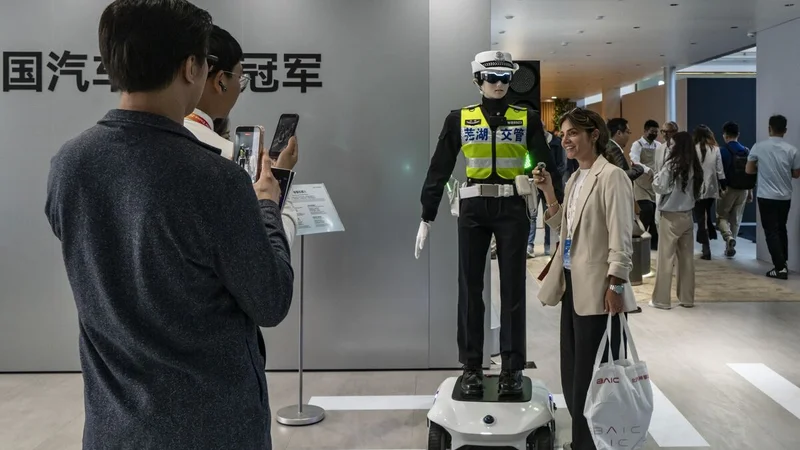
Image: Bloomberg AI
Main Takeaway
Hangzhou court rules companies can't fire workers just to replace them with AI, setting global precedent amid 78,000 tech layoffs.
Jump to Key PointsSummary
What the court actually decided
A Chinese court has ruled that companies cannot terminate employees solely to replace them with artificial intelligence systems, marking the first major legal precedent on AI-driven layoffs worldwide. The Hangzhou Intermediate People's Court found that an AI tech company illegally dismissed a senior quality-assurance employee after his job verifying AI-generated sentences was automated, according to court documents published April 28.
The ruling establishes that AI adoption qualifies as a "controllable business strategy" rather than an "unforeseeable change in circumstances" under China's Labor Contract Law. This distinction prevents employers from claiming AI automation as justification for termination without following proper legal procedures, including offering alternative positions or compensation packages.
Why this matters for global tech workers
While 78,000 tech workers have been laid off globally in 2026 with nearly half attributed to AI automation, China has created a stark contrast with Western markets. The US and EU currently lack equivalent legal protections, leaving workers vulnerable to AI-driven job cuts without recourse.
The Chinese decision reflects broader government priorities: maintaining social stability while competing in the global AI race. By framing AI adoption as a strategic business choice rather than inevitable disruption, courts can force companies to internalize the social costs of automation rather than pushing them onto workers.
This approach could influence labor policies worldwide as governments grapple with AI's employment impact. The ruling suggests that countries prioritizing social stability over pure market efficiency may adopt similar protections.
The case that triggered the ruling
The precedent-setting case involved an employee named Zhou at a Hangzhou-based AI company. After his quality-assurance role checking AI-generated sentences was automated, the company attempted to demote him and cut his salary by approximately 40%. When Zhou refused the demotion, he was terminated.
The Hangzhou Intermediate People's Court ruled this termination illegal, ordering the company to either reinstate Zhou or provide substantial compensation. The court's decision emphasized that AI implementation represents a business risk companies must manage responsibly, not a license to abandon employment obligations.
This case was published alongside other "typical examples" of AI-related labor disputes, indicating Chinese courts are building comprehensive jurisprudence around automation and worker rights.
Impact on Chinese AI companies
The ruling creates immediate compliance challenges for Chinese tech giants racing to automate operations. Companies must now factor potential legal costs and forced reassignments into their AI adoption strategies, potentially slowing automation rollouts.
Smaller AI startups may face particular pressure, as they lack resources to offer alternative positions or extended severance packages. The decision could push companies toward more gradual AI integration, focusing on human-AI collaboration rather than wholesale replacement.
Investment implications are significant. Venture capital firms may become more selective about backing automation-heavy business models, while companies might redirect AI development toward augmentation tools rather than replacement systems.
What happens next globally
Legal experts expect this ruling to influence labor courts worldwide, particularly in countries with strong worker protection traditions. The EU is already drafting AI regulations that could incorporate similar protections, while US labor groups are citing the Chinese precedent in ongoing disputes.
Companies operating internationally will need to navigate diverging legal standards. A firm might automate freely in the US while facing restrictions in China, creating complex compliance requirements for multinational corporations.
The decision also sets up potential tension between China's AI competitiveness goals and its social stability priorities. Future cases will likely test how far courts will go in limiting automation to protect jobs, especially as AI capabilities advance rapidly.
Broader implications for AI governance
This ruling represents more than a narrow labor decision; it signals how major economies might balance AI innovation with social protection. By treating AI adoption as a controllable business risk, China has created a framework that could extend to other AI-related harms.
The approach contrasts sharply with US market-driven automation and EU rights-based regulation, suggesting a third path: managed technological transition with built-in social safeguards. This model could influence everything from algorithmic accountability to data privacy protections.
For AI developers, the message is clear: build human-AI collaboration tools, not just replacement systems. The ruling effectively subsidizes augmentation over automation, potentially steering global AI development toward more socially sustainable paths.
Key Points
Chinese court rules AI automation cannot justify firing workers without following proper labor procedures
First major legal precedent globally on AI-driven layoffs, contrasting with unregulated US/EU approach
Case involved Hangzhou tech worker whose quality-assurance job was automated, leading to illegal termination
Companies must now factor legal costs and forced reassignments into AI adoption strategies
Ruling positions China as testing ground for balancing AI innovation with worker protection
Questions Answered
No. Companies can still adopt AI, but cannot use automation as sole justification for firing workers. They must follow labor laws including offering alternative positions or proper severance.
The US and EU currently lack equivalent protections. Workers can be laid off for AI automation without specific legal recourse, making China's approach unique globally.
Any layoff where the primary reason is replacing human labor with AI systems. Courts will examine whether automation was truly necessary or just cost-cutting.
Potentially yes. Companies may adopt AI more gradually to manage legal risks, focusing on human-AI collaboration rather than wholesale replacement.
While not legally binding internationally, the framework is influencing global policy discussions and may inspire similar protections in other countries.
Workers facing AI-driven layoffs can challenge terminations citing this precedent. Legal consultation recommended, as courts are increasingly sympathetic to such claims.
Source Reliability
50% of sources are trusted · Avg reliability: 72
Go deeper with Organic Intel
Simple AI systems for your life, work, and business. Each one includes copyable prompts, guides, and downloadable resources.
Explore Systems