Trump Offers $2B to Kill Offshore Wind as Companies Scramble to Survive
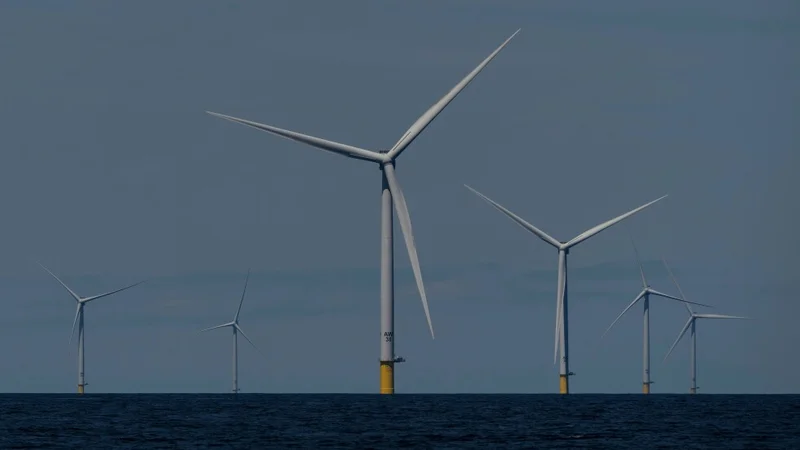
Image: Apnews
Main Takeaway
Trump administration pays nearly $2B to energy companies to abandon offshore wind projects, triggering congressional probe and existential crisis for US.
Jump to Key PointsSummary
Why the White House is paying billions to not build wind farms
The Trump administration has committed nearly $2 billion in taxpayer money to convince energy companies to abandon offshore wind projects, according to Fortune and AP News. This unprecedented approach emerged after federal courts blocked the administration's attempts to cancel existing leases through regulatory action, forcing officials to pivot toward financial incentives instead of legal maneuvers.
Interior Secretary Doug Burgum announced the largest deal in March: a $1 billion payout to French energy giant TotalEnergies to terminate federal leases for wind projects off North Carolina and New York. Combined with $885 million offered to Bluepoint Wind and Golden State Wind, the total commitment approaches $2 billion according to Democratic lawmakers investigating the program.
What this means for renewable energy companies
Energy executives are facing a brutal calculus. "We must adapt," one industry leader told Fortune, acknowledging that accepting Trump's payouts might be more profitable than fighting through years of regulatory hostility. The administration has openly stated its goal: "My goal is to not let any windmill be built. They're losers," Trump reportedly told oil executives in January.
This creates an impossible choice for companies. Accept the buyout and abandon billions in sunk costs, or continue development knowing the federal government will actively obstruct permits, environmental reviews, and grid connections. The New York Times reports clean energy companies are already pivoting toward international markets or fossil fuel investments to survive.
How Democrats are fighting back
Congressional Democrats led by Rep. Jared Huffman of California have launched formal investigations into what Huffman calls "lighting a lot of federal taxpayer money on fire." The probe focuses on whether these payouts represent proper use of federal funds or political favoritism toward fossil fuel interests.
Legal experts cited by Columbia Law School's climate publication suggest the payments could face court challenges. The strategy essentially pays companies to breach their own federal contracts, raising questions about whether taxpayers should subsidize the destruction of viable renewable energy projects.
The economic impact on American consumers
The shutdown of offshore wind projects carries immediate costs for electricity customers. EDF analysis shows canceled projects would have provided affordable power during peak demand periods, potentially raising utility bills across the Eastern seaboard. The irony isn't lost on critics: taxpayers are funding higher energy costs while simultaneously subsidizing fossil fuel expansion.
Canary Media's analysis suggests these cancellations will reverberate for decades, eliminating thousands of manufacturing and maritime jobs while making the grid more vulnerable to fossil fuel price shocks. The administration's own projections show increased reliance on natural gas imports, particularly problematic given current Middle East instability.
What happens next for offshore wind
Industry insiders expect more buyout offers as companies reassess their US portfolios. The precedent set with TotalEnergies creates a template for similar deals across the Atlantic coast. However, some developers are reportedly exploring state-level partnerships or international markets to salvage investments.
The long-term trajectory remains murky. While Trump has vowed to kill the industry entirely, legal challenges and potential policy reversals after 2028 leave companies calculating probabilities. Some executives privately acknowledge they're taking buyouts now while keeping options open for future administrations less hostile to renewable energy.
Key Points
Trump administration committed nearly $2B in taxpayer funds to pay energy companies to abandon offshore wind projects
TotalEnergies received $1B to cancel Atlantic wind leases, setting precedent for similar deals
Congressional Democrats investigating potential misuse of federal funds and political favoritism
Industry executives facing choice between accepting buyouts or fighting hostile regulatory environment
Canceled projects expected to raise utility bills and eliminate thousands of jobs
Questions Answered
After federal courts blocked regulatory attempts to cancel existing wind leases, the Trump administration pivoted to financial incentives, offering billions to companies willing to abandon their projects voluntarily.
French energy giant TotalEnergies accepted $1 billion to cancel Atlantic coast wind projects. Bluepoint Wind and Golden State Wind were offered $885 million combined for similar cancellations.
Canceled wind projects would have provided affordable power during peak demand. EDF analysis suggests utility bills will increase across the Eastern seaboard as consumers rely more on fossil fuel generation.
Legal experts suggest potential challenges based on misuse of federal funds and subsidizing breach of federal contracts. Congressional Democrats are investigating the program's legality.
Industry survival depends on 2028 election outcomes. Some companies taking buyouts now while keeping options open for future policy reversals, others pivoting to international markets.
Canary Media analysis suggests thousands of manufacturing and maritime jobs will be eliminated, with ripple effects across coastal communities that were preparing for offshore wind development.
Source Reliability
43% of sources are highly trusted · Avg reliability: 75
Go deeper with Organic Intel
Simple AI systems for your life, work, and business. Each one includes copyable prompts, guides, and downloadable resources.
Explore Systems