China Expands Passport Controls on AI Researchers at Alibaba, DeepSeek, and Private Firms
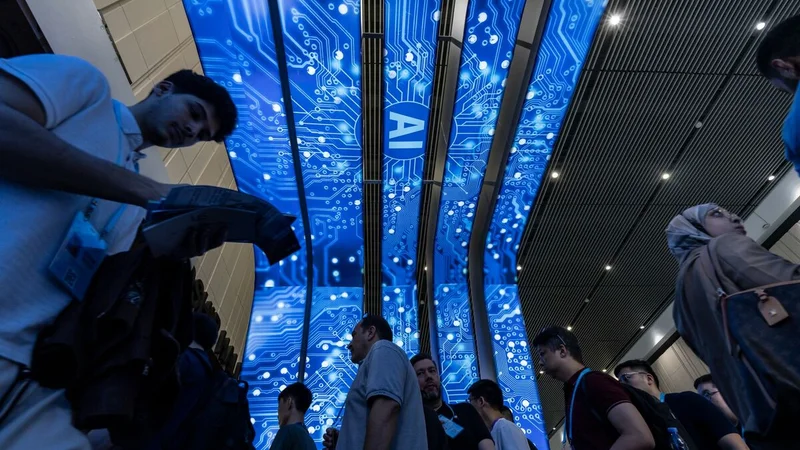
Image: Bloomberg AI
Main Takeaway
China ordered top AI researchers at Alibaba and DeepSeek to surrender passports, widening travel curbs beyond state labs to private companies.
Jump to Key PointsSummary
How the curbs work in practice
Chinese authorities now require senior AI researchers at private companies to obtain official approval before traveling overseas, with some asked to surrender their passports to employers entirely. Bloomberg reports the controls began at DeepSeek earlier this year and have since spread to Alibaba and other private firms working at the frontier of artificial intelligence. The mechanism is informal, not codified in public law, but carries the full weight of state pressure behind it.
The justification offered to affected employees centers on protecting algorithmic secrets and state-sensitive technology. Yet this framing sits awkwardly with the reality that DeepSeek publishes its AI models as open source, a tension critics have quickly seized upon. The passport surrender requirement marks a notable escalation from earlier restrictions that had focused on state-backed research institutions and universities.
Why private firms are now in the crosshairs
Beijing's decision to target private companies signals a shift in how China conceptualizes strategic technology. Previously, travel curbs were reserved for researchers at state-backed institutions and military-adjacent labs. Extending these controls to Alibaba and DeepSeek reflects the government's view that private AI capabilities have become indistinguishable from national security assets.
The timing matters. The U.S.-China AI competition has intensified around export controls on advanced chips, model weights, and now human capital. China's leadership appears to be treating top AI talent as a scarce resource to be hoarded rather than allowed free movement. For companies like Alibaba, which operate globally, this creates immediate friction. Their researchers cannot attend conferences, collaborate with overseas partners, or pursue academic postings without navigating an opaque approval process. The message is clear: your brain is a strategic asset, and the state owns the exit rights.
The open-source contradiction
DeepSeek's inclusion in these curbs has drawn particular scrutiny because of its open-source publishing model. The company releases its model weights publicly, meaning its technical innovations are already downloadable by anyone with an internet connection. Restricting researchers from traveling to protect secrets that are already published strikes many observers as performative rather than practical.
The contradiction points to a deeper logic. Beijing's concern may not be about protecting specific algorithms but about controlling the people who understand them. Talent retention through mobility restrictions serves a political purpose even when technical secrecy is impossible. It also prevents researchers from defecting to competitors or sharing tacit knowledge that cannot be captured in published papers. The open-source critique, while valid, misunderstands the control mechanism.
What this means for the global AI talent market
The restrictions are accelerating a fragmentation that was already underway. Startup Fortune argues the real risk is not a Hollywood-style AI doomsday but a balkanized talent market where cross-border hiring, acquisitions, and joint ventures become prohibitively difficult. Chinese researchers who trained at U.S. universities and worked at American tech firms now face structural barriers to that mobility.
For Western AI companies, the curbs complicate hiring strategies that had relied on poaching talent from Chinese competitors. For Chinese firms, the restrictions may backfire by making their positions less attractive to ambitious researchers who value international conference circuits and collaboration. The global AI race was already fragmenting along hardware, software, and data lines. Adding physical mobility to that list deepens the decoupling in ways that will shape competition for decades.
What happens next
The Bloomberg report, amplified by Reuters and discussed on Bloomberg's own technology programming, suggests these curbs are still expanding. The Wall Street Journal separately reported that Chinese authorities have specifically warned AI leaders to avoid U.S. travel over security concerns, indicating the restrictions are being actively enforced with geopolitical intent rather than applied passively.
We should expect other nations to watch closely and potentially mirror these measures. The U.S. has already investigated Chinese AI researchers for intellectual property violations, and restrictions on Chinese nationals studying AI-related fields at American universities have tightened. A race to lock down talent through mobility controls, rather than just competitive compensation, would represent a troubling new phase in technological nationalism. The researchers caught in the middle face shrinking options and growing surveillance, their careers increasingly subject to state security calculations they did not choose.
Key Points
China expanded passport controls from state labs to private AI firms including Alibaba and DeepSeek
Senior researchers must now obtain approval or surrender passports before overseas travel
DeepSeek's open-source model publication creates tension with stated secrecy justifications
The curbs accelerate global AI talent market fragmentation and restrict cross-border mobility
U.S. travel specifically discouraged as technological nationalism deepens between superpowers
Questions Answered
DeepSeek and Alibaba have been named specifically, with Bloomberg reporting the curbs have spread to additional private firms working at the AI frontier.
Informally, through employer requests for passport surrender and mandatory official approval for overseas travel, without published legislation codifying the rules.
DeepSeek publishes its AI models as open source, making its technical innovations publicly available, though the controls may target tacit knowledge rather than published secrets.
It risks fragmenting the talent market, complicating cross-border hiring and collaboration, and potentially triggering reciprocal restrictions from other nations.
No, but they face an opaque approval process and explicit discouragement of U.S. travel, with unpredictable outcomes for individual requests.
Source Reliability
50% of sources are highly trusted · Avg reliability: 73
Go deeper with Organic Intel
Simple AI systems for your life, work, and business. Each one includes copyable prompts, guides, and downloadable resources.
Explore Systems