Brent Oil Falls to $87.41 on Aug. 26 Despite Remaining Nearly 30% Above Last Year
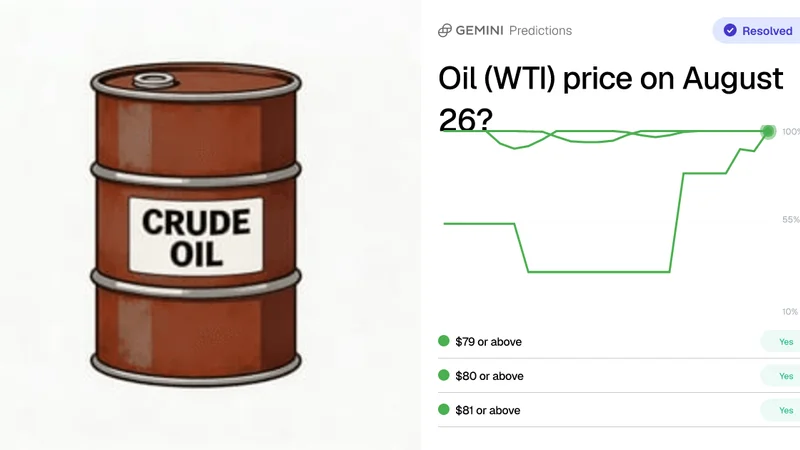
Image: Gemini
Main Takeaway
Brent crude stood at $87.41 per barrel on Aug. 26, down 3.10% from the prior day but nearly 30% higher than a year earlier.
Jump to Key PointsSummary
The Aug. 26 benchmark price
Brent crude oil was priced at $87.41 per barrel at 7:15 a.m. Eastern Time on Aug. 26, 2026. The benchmark had fallen $2.80 from the previous morning, a daily decline of 3.10%, according to Fortune and Yahoo Finance. That snapshot provides the clearest direct reading of the oil market on the date in question.
The price was also below its level a month earlier. Brent stood at $98.69 one month before Aug. 26, putting the monthly decline at 11.42%. By contrast, oil remained far more expensive than a year earlier, when the cited benchmark price was $67.31. The comparison represents a gain of about 29.86% year over year.
Brent and WTI tell different stories
Brent and West Texas Intermediate are separate crude-oil benchmarks, so their prices and settlement dates shouldn't be treated as interchangeable. Brent is widely used as an international reference, while WTI is the U.S. benchmark used in the prediction markets and market contracts cited for Aug. 26.
Robinhood's Aug. 26 contract tracked the front-month WTI settle and assigned high market probabilities to outcomes above $81.49 and $81.99, while assigning only 4% to a result above $89.49. A separate prediction-market record stated that WTI closed higher on Aug. 26, adding a directional signal that differs from the early-morning Brent snapshot. The distinction matters because an intraday Brent quote and a later WTI settlement measure different instruments at different times.
The market had pulled back
The Aug. 26 reading captured a pullback from recent prices rather than a collapse in the broader annual trend. Brent was down 11.42% from its one-month comparison point, yet it was nearly $20 above the year-earlier level. The data point to a market that had cooled from a recent peak while retaining a substantial year-over-year premium.
That combination affects more than fuel traders. Crude prices feed into gasoline, diesel, freight, chemicals, plastics and other industrial inputs, giving sustained annual gains a wider cost effect even when day-to-day prices move lower. Fortune framed oil as a factor in household energy expenses and everyday goods, while Yahoo Finance presented the same benchmark figures and timestamp.
Why the timestamp matters
Oil prices change continuously, so the $87.41 figure is a time-specific quote rather than a full-day closing price. Fortune's Aug. 27 update showed Brent at $89.68 at the same 7:15 a.m. Eastern Time checkpoint, up $2.27 from the prior morning and 2.59% on the day. That next-day movement illustrates why a published daily snapshot can differ from later settlement data.
MarketWatch listed an October 2026 crude futures contract page, but the captured text contains navigation rather than a usable price. Gemini also identified a settled Aug. 26 WTI prediction event without providing a price. Those records add market context, while the direct Brent quote and the WTI settlement references remain the actionable figures for comparing Aug. 26 performance.
What readers should watch next
The next useful indicators are the Brent and WTI closing settlements, the spread between the 2 benchmarks and whether prices remain above year-earlier levels. The Aug. 27 Brent update already showed a rebound to $89.68, while the Aug. 26 WTI market record reported a higher close, establishing that the morning decline in Brent didn't describe the entire session across crude benchmarks.
Consumers and businesses should read the daily numbers alongside their benchmark, timestamp and comparison period. A lower price than the previous day can coexist with materially higher annual energy costs, as the Aug. 26 figures demonstrate. Traders will focus on futures curves and settlement prices; households will feel the change later through fuel and transport costs.
Key Points
Brent crude reached $87.41 per barrel on Aug. 26, 2026, at 7:15 a.m. Eastern Time.
Brent oil fell 3.10% from the prior morning and 11.42% from one month earlier.
Brent remained 29.86% above its year-earlier price of $67.31 per barrel.
WTI prediction markets tracked an Aug. 26 close above $81.99 with high implied probability.
Brent rebounded to $89.68 at the same morning checkpoint on Aug. 27.
Questions Answered
Brent crude was $87.41 per barrel at 7:15 a.m. Eastern Time on Aug. 26, 2026. The price was down $2.80, or 3.10%, from the previous morning.
Brent crude was 29.86% higher than a year earlier on Aug. 26, 2026. The comparison price was $67.31 per barrel, about $20 below the Aug. 26 quote.
WTI crude closed higher on Aug. 26, 2026, according to a settled directional market record. WTI is a different benchmark from Brent and is measured using its front-month settlement.
Brent crude was 11.42% below its one-month comparison price of $98.69 on Aug. 26, 2026. The figures show a recent pullback even though the annual comparison remained strongly positive.
Brent crude rose to $89.68 per barrel at 7:15 a.m. Eastern Time on Aug. 27, 2026. That was $2.27 above the Aug. 26 morning reading, a 2.59% daily increase.
Source Reliability
57% of sources are trusted · Avg reliability: 68
Go deeper with Organic Intel
Simple AI systems for your life, work, and business. Each one includes copyable prompts, guides, and downloadable resources.
Explore Systems