Bending Spoons Buys Airtable for $2.3 Billion in First Post-IPO Deal, an 80% Drop From Its 2021 Peak
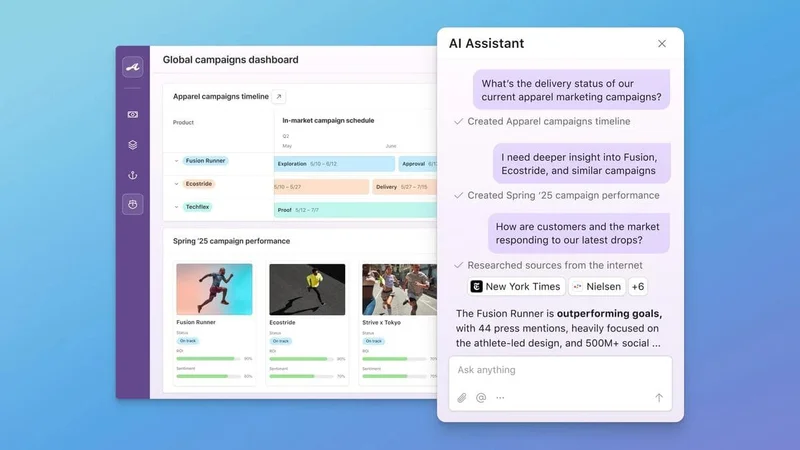
Image: TechCrunch AI
Main Takeaway
Italian app developer Bending Spoons agreed to buy database startup Airtable for $1.28 billion in cash, an equity value of $2.25 billion, marking an 80% decline from its $11 billion peak valuation during the 2021 tech boom.
Jump to Key PointsSummary
The numbers behind the deal
Bending Spoons agreed to purchase Airtable in an all-cash transaction valued at $1.28 billion, according to TechCrunch. When Airtable's net cash balance is included, the equity value reaches approximately $2.25 billion, Bloomberg reports. Fortune notes the deal marks Bending Spoons' first acquisition since the Italian company went public on the Nasdaq in June.
Airtable had raised more than $1.4 billion in venture funding across multiple rounds since its 2013 founding. The company's annual recurring revenue grew over 20% year-over-year to roughly $480 million as of June 2026, TechCrunch reports, citing Bending Spoons. That revenue figure provides critical context: the deal prices Airtable at roughly 4.7 times its annualized revenue, a multiple that reflects how far software valuations have fallen since the zero-interest-rate era.
The valuation collapse from 2021
Airtable was once a poster child of the pandemic-era software boom, reaching an $11 billion valuation at its 2021 peak, according to Fortune and TechCrunch. Even earlier this year, secondary market trades valued the company at around $4 billion, Fortune reports. The Bending Spoons deal values Airtable at less than a quarter of that secondary-market price and roughly a fifth of its 2021 high.
The sharp decline reflects a broader reckoning in the software industry. During 2021, investors priced companies on growth metrics alone, ignoring profitability and cash flow. Those days are over. Airtable's trajectory mirrors other high-flying startups that raised at inflated valuations and later faced down rounds, though this outcome involves an outright sale rather than a recapitalization.
What Bending Spoons gets in the acquisition
Bending Spoons framed the deal as a bet on Airtable's brand and growth trajectory. A Bending Spoons spokesperson told TechCrunch that Airtable is a pioneering brand reshaping how teams organize data and manage critical workflows. The company pointed to that $480 million annual recurring revenue figure and 20% year-over-year growth as evidence of sustained demand.
Airtable's community of users reacted with cautious optimism on the company's official forums. Several users noted that Bending Spoons has a track record of allowing acquired companies to operate independently rather than absorbing them into a single product suite. One user expressed hope the deal does not follow the Broadcom playbook of hiking license costs and stripping assets, while another called the acquisition a net positive for Airtable's future.
Bending Spoons has built its business acquiring and revitalizing software products, including Evernote and WeTransfer, both of which continued operating under their own brands post-acquisition. That pattern suggests Airtable's core product will remain intact, at least in the near term.
Bending Spoons' post-IPO ambitions
This acquisition signals that Bending Spoons intends to use its newly public currency aggressively. The company went public in June and posted 95% year-over-year revenue growth, Fortune reports. Making a billion-dollar-plus acquisition within two months of listing demonstrates a clear appetite for using M&A to expand its portfolio of productivity and collaboration tools.
Bending Spoons has carved out a specific niche: buying established software brands that have large user bases but have struggled to maintain growth or profitability, then applying operational discipline to improve margins. Airtable fits that mold. It has a loyal customer base, strong brand recognition, and meaningful revenue, but its valuation had cratered as growth expectations reset.
Reuters confirmed the deal as an all-cash transaction, which means Bending Spoons is deploying its balance sheet rather than issuing equity to fund the purchase. That structure suggests confidence in its cash position and a desire to avoid shareholder dilution so soon after the IPO.
What happens to Airtable's product and users
Airtable users are watching for any signs that the acquisition will change pricing, feature development, or data portability. The community discussion on Airtable's forums reflects a mix of hope and anxiety. Users pointed to Bending Spoons' history of letting acquisitions operate autonomously as a positive signal, while acknowledging that the acquirer's business model depends on improving unit economics.
Bending Spoons has not disclosed specific plans for Airtable's workforce or product roadmap. TechCrunch reports that the company's statement emphasized accelerating innovation through the combined resources of both companies. The phrase joining forces typically suggests integration rather than standalone operation, but Bending Spoons' past deals offer a counterpoint.
For now, the most likely scenario is continuity. Airtable's product is growing and generating substantial revenue. Radical changes would risk alienating the customer base that makes the acquisition valuable in the first place.
The broader market signal
This deal is a milestone in the tech industry's ongoing valuation reset. A company that raised $1.4 billion at an $11 billion valuation selling for $1.28 billion in cash represents a significant loss for late-stage investors. It also sets a precedent for other unicorns that have not yet found a path to IPO or profitability.
The transaction suggests that the exit environment for overvalued startups is bifurcating. Companies with strong revenue growth and operational discipline can still go public or sell at reasonable multiples. Those that raised at unsustainable valuations without a clear path to profitability face stark choices: sell at a discount, raise dilutive capital, or wind down.
Airtable chose the sale route. The company's $480 million in recurring revenue and 20% growth rate indicate a healthy business by most standards. The problem was never the product. It was the price tag from 2021.
What comes next for Bending Spoons
Bending Spoons is not slowing down. The company's 95% revenue growth and fresh public listing provide both the capital and the confidence to pursue more deals. The Airtable acquisition is likely the first of several as Bending Spoons builds out its portfolio of productivity and creative software brands.
The integration of Airtable will be closely watched by investors, users, and competitors. If Bending Spoons can improve Airtable's margins without alienating its user base, it will validate the company's acquisition playbook and likely accelerate its deal-making pace. If the integration stumbles, it could cool investor enthusiasm for Bending Spoons' strategy.
Either way, the deal sends a clear message: the era of $11 billion valuations for unprofitable software companies is over, and the companies that survive will be those that can build real businesses, not just growth narratives.
Key Points
Bending Spoons bought Airtable for $1.28 billion in cash, an 80% discount from its $11 billion 2021 peak valuation.
The deal marks Bending Spoons' first acquisition since its Nasdaq IPO in June 2026.
Airtable's annual recurring revenue reached approximately $480 million with over 20% year-over-year growth.
Airtable raised more than $1.4 billion in venture funding since its 2013 founding.
Bending Spoons has a track record of acquiring digital products like WeTransfer and letting them operate independently.
Questions Answered
Bending Spoons agreed to buy Airtable for $1.28 billion in cash. When Airtable's net cash balance is included, the total equity value of the deal is approximately $2.25 billion.
Airtable was valued at over $11 billion during the 2021 tech boom, when investors were pricing software companies primarily on revenue growth. The Bending Spoons deal represents roughly an 80% decline from that peak.
Yes, Bending Spoons went public on the Nasdaq in June 2026. The Airtable acquisition is its first deal since completing that IPO.
Airtable's annual recurring revenue grew over 20% year-over-year to approximately $480 million as of June 2026, according to Bending Spoons.
Bending Spoons has not announced specific changes to Airtable's product or workforce. The company's track record with past acquisitions like WeTransfer suggests it tends to let acquired brands operate independently rather than merging them into its existing products.
Source Reliability
50% of sources are highly trusted · Avg reliability: 79
Go deeper with Organic Intel
Simple AI systems for your life, work, and business. Each one includes copyable prompts, guides, and downloadable resources.
Explore Systems