Artificial Turns OpenAI’s Rise Into a Savage Satire With a Factual Warning About AI Power
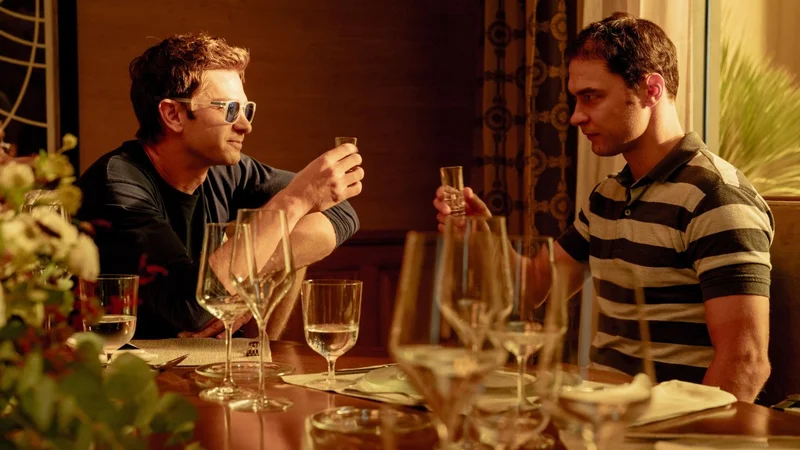
Image: The Verge AI
Main Takeaway
Luca Guadagnino’s Artificial dramatizes OpenAI’s rise and Sam Altman’s brief ouster as a biting, fact-based satire about ambition, power, and artificial intelligence.
Jump to Key PointsSummary
A satire built from real events
Artificial turns OpenAI’s rise into a dark comedy about ambition, personality, and control. Directed by Luca Guadagnino and led by Andrew Garfield as Sam Altman, the film follows the company’s formation, its struggle over artificial intelligence’s direction, and Altman’s brief removal from power. The story stays close to the public record while exaggerating its figures for comic effect, giving familiar events an unnerving theatrical shape.
The film’s central idea is the desire to play God. Guadagnino introduced the movie at the New York Film Festival with that theme, and the narrative repeatedly connects technological ambition with personal power. A recurring image of San Francisco’s Golden Gate Bridge becomes a metaphor for building systems intended to reshape society. Critics described the result as both savage and terrifying, while the film’s comic details keep the warning grounded in recognizable behavior rather than abstract futurism.
Silicon Valley gets the roast
Artificial portrays its technology leaders as vain, awkward, and consumed by status. Garfield gives Altman a buoyant, boyish walk that Altman himself has praised for its accuracy, while Yuri Borisov’s Ilya Sutskever lumbers through scenes with the physicality of a geeky Frankenstein. Ike Barinholtz plays Elon Musk as a swaggering, sunglasses-wearing showman whose jokes, drumrolls, and repeated use of “epic” turn tech celebrity into a running gag.
The supporting characters sharpen the satire. Greg Brockman is presented as an intensely loyal lieutenant focused on money and power, Mira Murati as a brilliant outsider vulnerable to stronger personalities, and Sutskever as an idealist who resists lying and the accumulation of authority. Geoffrey Hinton serves as a wise elder who recognizes the conflicts ahead. The portrayals are exaggerated, but the humor comes from recognizable public personas and the industry’s documented milestones.
Why the facts matter
The film’s force comes from treating the AI boom as a sequence of human decisions rather than a march of inevitable progress. Its dramatization of OpenAI’s creation, internal disputes, Altman’s rise, and his short-lived ouster preserves the basic shape of events while using comedy to expose their absurdity. Power changes hands through persuasion, loyalty, fear, and image management, not through clean technical logic.
That approach separates Artificial from a conventional startup origin story. The Social Network made its technology founders look like formidable builders of the future; Guadagnino’s film strips away much of that grandeur and shows people stumbling through rooms, parties, and strategy sessions. The satire is harsh because the stakes are serious: decisions made by a small group of executives and researchers shape tools used by millions and influence debates about humanity’s technological limits.
The release carries its own drama
Artificial arrived at the New York Film Festival with a controversy that echoed the movie’s subject. AmazonMGM dropped the film after Amazon reached a $50 billion deal with OpenAI, and Neon acquired it afterward. The change in distributor gave the satire an off-screen connection to the corporate relationships it depicts, prompting festival officials to reference the circumstances during the film’s introduction.
That history has become part of how audiences read the movie. A film about OpenAI’s internal power struggles was itself caught in a dispute involving a major technology partnership and a major entertainment company. The release story doesn’t alter the film’s events, but it adds an uncomfortable layer to its examination of influence, access, and institutional pressure. The result is a cultural artifact shaped by the same technology economy it mocks.
What the film says about AI power
Artificial frames artificial intelligence as a political and personal story as much as a technical one. Altman’s bridge metaphor links grand engineering goals to the people trying to direct them, while Sutskever’s discomfort with deception gives the film a moral counterweight. Hinton’s character embodies foresight, but the film treats foresight alone as insufficient when institutions reward control and ambition.
The movie’s warning rests on behavior audiences already recognize: executives competing for authority, scientists wrestling with consequences, and companies presenting internal conflict as a step toward progress. Its dark comedy makes those dynamics visible without turning the film into a lecture. Critics’ strong first reactions reflect that balance, describing a work that is wickedly funny, factually anchored, and frightening because its underlying events are familiar.
What audiences will take away
Artificial presents OpenAI’s history as a cautionary ensemble drama about who gets to define technological progress. The film’s exaggerated walks, costumes, jokes, and personalities create the satire, while the factual sequence of the company’s ascent and crisis supplies its weight. That combination gives the movie relevance beyond celebrity impersonation or startup gossip.
Its broader argument is that the people building powerful AI systems remain subject to ordinary motives: ego, loyalty, fear, money, and the desire to be seen as the person who understood the future first. By keeping those motives at the center, Guadagnino turns a recent corporate history into a warning about concentrated decision-making. The technology may be unprecedented, but the struggle around it is recognizably human.
Key Points
OpenAI’s rise becomes a fact-based satire about Sam Altman, internal power, and artificial intelligence.
Artificial portrays Altman, Elon Musk, Ilya Sutskever, and other AI leaders as exaggerated public personas.
Luca Guadagnino uses the Golden Gate Bridge to symbolize ambitions to build all-powerful AI systems.
The film dramatizes OpenAI’s founding, Altman’s brief ouster, and conflicts over technology’s direction.
AmazonMGM dropped Artificial after Amazon announced a $50 billion deal with OpenAI.
Questions Answered
Luca Guadagnino’s Artificial is a dark comedy-drama about OpenAI’s rise, Sam Altman’s leadership, and the power struggles surrounding artificial intelligence. It follows the company’s formation and Altman’s brief ouster while staying close to public events.
Andrew Garfield plays Sam Altman in Artificial. His performance exaggerates Altman’s boyish manner and physicality while portraying him as an ambitious figure navigating OpenAI’s internal conflicts.
Artificial is based on publicly known events involving OpenAI, including its formation, internal disputes, Altman’s rise, and his brief removal from the company. The film satirizes its characters and heightens their behavior, but its central chronology remains closely tied to real events.
AmazonMGM dropped Artificial after Amazon reached a $50 billion deal with OpenAI. Neon later acquired the film, making its distribution history part of the movie’s broader story about corporate influence and AI power.
Artificial warns that powerful AI systems are shaped by human ambition, loyalty, fear, money, and struggles for control. Its satire focuses on the people directing technological progress as much as on the technology itself.
Source Reliability
67% of sources are trusted · Avg reliability: 82
Go deeper with Organic Intel
Simple AI systems for your life, work, and business. Each one includes copyable prompts, guides, and downloadable resources.
Explore Systems