Anthropic launches Claude Science as flagship AI workbench for researchers, not a new model

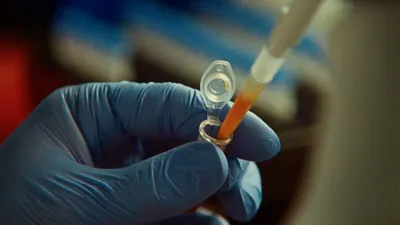
Image: MIT Technology Review AI
Main Takeaway
Anthropic debuted Claude Science, an AI workbench for scientists that runs existing Claude models with no special access or gating required.
Jump to Key PointsSummary
What Claude Science actually is
Anthropic introduced Claude Science on Tuesday as a dedicated environment for computational research, explicitly not a new AI model. According to TechCrunch, the company stated it runs the same Claude models already available to everyone, including Claude Opus 4.8, with no special access and no gating. This positioning marks a deliberate strategy shift: winning scientists through workflow integration rather than model superiority.
The workbench builds directly on Anthropic's October 2025 launch of Claude for Life Sciences, which augmented the Claude chatbot for biology tasks. MIT Technology Review reports that Claude Science, like Claude Code for software engineering, can autonomously carry out meaningful work when given concise, high-level instructions. It is now available to all paid Claude subscribers. Anthropic also announced it will use the product for its own research into drugs for rare, neglected diseases, signaling genuine commitment beyond commercial positioning.
How it keeps research data local
A critical feature for regulated industries is Claude Science's local-first architecture. AI Weekly reports the workbench runs locally on macOS and Linux and connects to HPC clusters via SSH, keeping sensitive research data off Anthropic's servers. This addresses a hard requirement for pharmaceutical companies subject to strict data governance rules.
Every figure ships with full code provenance and environment details, targeting the reproducibility crisis in computational biology where analysis opacity frequently blocks peer review. This design choice reflects hard-won lessons攸� from the scientific community: tools that cannot demonstrate reproducibility fail peer review regardless of output quality. The local execution model also distinguishes Claude Science from cloud-only competitors that require data upload, a friction point that has slowed AI adoption in biotech research.
The Benchling partnership and ecosystem play
Benchling announced a same-day partnership with Anthropic to advance AI in biotech through the Claude for Life Sciences Ecosystem. According to PRNewswire, the collaboration pairs Benchling's data foundation and AI agents with Claude's advanced reasoning capabilities. Scientists can now ask Claude questions directly within Benchling's platform.
This ecosystem approach mirrors strategies from competitors but with a narrower, science-specific focus. The October 2025 Claude for Life Sciences launch already supported connections with scientific tools commonly used in labs during research and development, as CNBC reported. The Benchling integration deepens this connectivity, reducing friction between AI assistance and existing scientific workflows. For Anthropic, partnerships with established scientific platforms may prove more durable than building proprietary tools from scratch.
Anthropic's broader science push
The launch fits into a pattern of deepening investment in scientific applications. In April 2026, Anthropic announced the acquisition of Coefficient Bio, a stealth drug-discovery biotech, in an all-stock deal valued at approximately $400 million, according to IntuitionLabs. The founders, former Genentech scientists, joined Anthropic's life science team.
MIT Technology Review notes this is not Anthropic's first foray into AI for science, referencing the October plug-ins that helped Claude make use of scientific tools. The cumulative effect is a coherent strategy: acquire domain expertise, build workflow integration, and position Claude as the default AI layer for scientific computation. This runs parallel to Anthropic's rapid product cadence in 2026, with one observer counting 29 distinct product updates between January and May.
What scientists get and what it costs
Anthropic is funding up to 50 research projects with $30,000 in credits each through December 2026, with applications closing July 15, according to AI Weekly. This direct academic-pipeline strategy builds goodwill while generating case studies and publication opportunities that validate the platform.
Access to Claude Science itself requires a paid Claude subscription, placing it in the tier below enterprise licensing but above free consumer tools. The pricing reflects Anthropic's positioning: serious enough for professional research, accessible enough for individual labs without IT procurement processes. Whether this price point accelerates adoption or creates friction against free alternatives from OpenAI or academic institutions remains an open question.
What happens next in AI for science
Claude Science enters a competitive field where workflow integration increasingly matters more than raw model capability. Anthropic's bet is that scientists will prioritize tools that respect their existing processes, data constraints, and reproducibility requirements over marginally smarter models that大略 disrupt them.
The coming months will test whether local execution and code provenance are sufficient differentiators against cloud-native competitors with deeper scientific datasets. Anthropic's own research into rare diseases, announced alongside the product launch, provides a benchmark for evaluating whether Claude Science delivers on its promises or remains a promising interface over conventional capabilities.
Key Points
Anthropic launched Claude Science, an AI workbench for computational research available to paid subscribers
Claude Science runs locally on macOS and Linux, keeping sensitive data off Anthropic's servers
The workbench is not a new model and uses existing Claude capabilities including Opus 4.8
Benchling partnered with Anthropic to integrate Claude's reasoning into biotech workflows
Anthropic acquired Coefficient Bio for $400 million to strengthen drug discovery expertise
Questions Answered
No, Claude Science is not a new AI model. Anthropic explicitly states it runs the same Claude models already available to everyone, including Claude Opus 4.8, with no special access or gating. It is a workbench environment designed for scientific workflow integration rather than a model upgrade.
Claude Science runs locally on macOS and Linux and connects to HPC clusters via SSH. This architecture keeps sensitive research data off Anthropic's servers, addressing a critical requirement for regulated pharmaceutical research and institutions with strict data governance rules.
Claude Science builds on and replaces the earlier Claude for Life Sciences launch from October 2025. While the earlier offering augmented the Claude chatbot for biology tasks, Claude Science provides a dedicated, standalone environment for that work with deeper tool integration and local execution capabilities.
Claude Science is available to all paid Claude subscribers. Additionally, Anthropic is funding up to 50 research projects with $30,000 in credits each through December 2026, with applications closing July 15, 2026.
Anthropic acquired Coefficient Bio, a stealth drug-discovery biotech, in April 2026 for approximately $400 million in an all-stock deal. The founders, former Genentech scientists, joined Anthropic's life science team to deepen the company's expertise in pharmaceutical applications and drug discovery.
Source Reliability
43% of sources are highly trusted · Avg reliability: 65
Go deeper with Organic Intel
Simple AI systems for your life, work, and business. Each one includes copyable prompts, guides, and downloadable resources.
Explore Systems