AI Super PACs Spent Millions on the 2026 Midterms, but Their Biggest Bets Mostly Failed
Image: Csmonitor
Main Takeaway
AI-focused super PACs spent up to $79 million across dozens of 2026 races, yet Democrats won Congress and several of the industry’s biggest bets lost.
Jump to Key PointsSummary
A $100 million political experiment
Leading the Future entered the 2026 midterms with roughly $100 million from Silicon Valley backers, including Andreessen Horowitz, Palantir co-founder Joe Lonsdale and OpenAI co-founder Greg Brockman. The network finished with more than $20 million unspent, while its affiliated groups supported dozens of winning congressional candidates.
That topline obscures the network’s limited influence. Spending concentrated on candidates who already held strong advantages, while the group’s more consequential bets in competitive contests produced a mixed record. Across the wider AI political network, spending reached tens of millions of dollars and marked the industry’s first major attempt to shape federal regulation through campaign finance. The Christian Science Monitor reported that AI-linked groups had spent nearly $60 million by October after backing or opposing candidates in 65 races.
Where the money went
AI-focused political groups spent heavily before November, especially in primary contests where a single race could determine which lawmakers reached Congress. Industry groups spent $79 million across 68 House and Senate seats during the cycle, according to figures cited by Yahoo Finance. Leading the Future spent more than $8.1 million opposing New York Assemblymember Alex Bores in a Democratic primary, while the rival Public First group spent about $15 million supporting him.
The spending reflected a deliberate effort to build bipartisan influence. Leading the Future operated through affiliated groups for Democratic and Republican candidates, while American Mission and Building the Future formed its Republican-facing spending operation. The network’s approach mirrored the strategy used by major single-issue political organizations: back allies in both parties, target candidates who could affect policy, and establish a presence before lawmakers write major AI rules.
Competitive races exposed the limits
The AI industry’s most visible spending produced poor returns in several competitive races. American Mission and Building the Future spent a combined $4.8 million supporting South Carolina Senate candidate Darline Graham, who lost. Leading the Future also spent millions in high-profile primary fights, including its campaign against Bores, while other heavily funded candidates failed to convert outside support into victories.
The pattern mattered because safe-seat spending offers little evidence that super PAC money changed an outcome. Leading the Future could claim a roster of successful candidates, but much of that roster consisted of lawmakers who faced limited electoral danger. Wired found that the network’s picks mostly lost in the small number of genuinely competitive races it entered. The result left the group with money, access and a national profile, but a weaker case that its spending delivered legislative control.
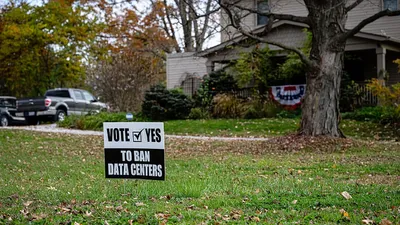
Voters turned data centers into an issue
Public resistance to AI infrastructure complicated the industry’s political strategy. Data centers became a ballot-box issue in several states, with concerns about electricity demand, water use, noise and local control crossing party lines. Democrats won control of both chambers of Congress, according to Gizmodo and TechCrunch, creating a federal environment less receptive to unrestricted industry expansion.
The election results give lawmakers more room to scrutinize data-center permitting and the effects of AI development on communities. The conflict won't be limited to Washington. Local governments still control many siting decisions, while congressional leaders can influence tax policy, energy rules and environmental oversight. The Intercept described growing backlash over data centers as one reason AI political groups began adjusting their tactics before Election Day.
A bipartisan strategy meets a divided agenda
AI donors sought influence across party lines, but bipartisan spending didn't produce bipartisan agreement on the industry’s core demands. Republicans retained the White House, while Democrats gained control of Congress, setting up disputes over regulation, energy and industrial policy. Candidates who welcomed AI investment still faced voters concerned about infrastructure costs and corporate power.
Crypto groups faced a similar reckoning. AI and crypto super PACs spent $112 million supporting and opposing candidates in the general election alone, according to Gizmodo, while a broader analysis from Americans for Financial Reform put combined AI and crypto spending at at least $100 million between January 2025 and July 2026. The figures use different time periods and scopes, but they point to the same shift: technology money became a major force in midterm politics without guaranteeing favorable results.
What happens before 2028
The AI political network is likely to keep operating, but its next phase will focus more closely on public opinion, local opposition and policy coalitions. A large cash reserve gives Leading the Future the ability to fund future primaries, lobbying and voter messaging, even after its weaker-than-advertised showing in competitive races.
The immediate test is whether Congress imposes new limits on data-center development or demands greater community control. AI companies will need allies who can defend deployment while addressing electricity, water and land-use concerns. The midterms showed that money can buy visibility and a place in the conversation, but it can't erase an unpopular local project or guarantee that voters will follow an industry’s preferred candidate.
Key Points
Leading the Future spent millions on 2026 races, but its competitive candidates mostly lost.
AI super PACs backed candidates from both parties while seeking influence over federal regulation.
More than $20 million remained with Leading the Future after the midterms.
Data-center opposition became a cross-party election issue tied to energy and local control.
Democratic control of Congress sets up tougher fights over AI infrastructure and regulation.
Questions Answered
Leading the Future and its affiliated groups spent tens of millions of dollars during the 2026 election cycle. Estimates for AI-focused spending vary by timeframe and group, with one tally reaching $79 million across 68 House and Senate races.
Leading the Future had limited demonstrated influence in the most competitive races. The network supported many winning candidates, but those candidates were often already favored, while several major bets lost.
South Carolina Senate candidate Darline Graham lost after American Mission and Building the Future spent a combined $4.8 million supporting her. Her defeat was one of the clearest setbacks for the AI industry’s election strategy.
Data centers became a political issue because voters raised concerns about electricity demand, water use, noise, land use and local decision-making. Those concerns crossed party lines and could drive congressional debates after the election.
AI donors and super PACs retain substantial resources and are expected to remain active before 2028. Their strategy will face pressure to address local opposition and prove that spending can deliver victories in genuinely competitive races.
Source Reliability
50% of sources are trusted · Avg reliability: 72
Go deeper with Organic Intel
Simple AI systems for your life, work, and business. Each one includes copyable prompts, guides, and downloadable resources.
Explore Systems