Voters Reject Data Center Expansion as Democrats Win Control of Congress
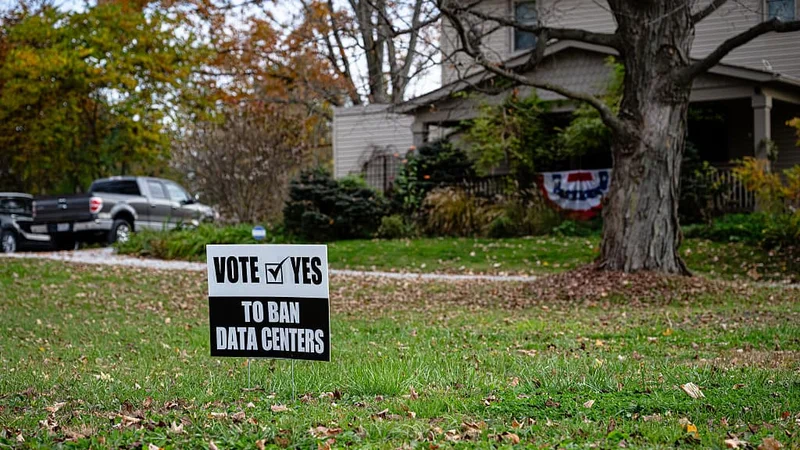
Image: Time
Main Takeaway
Democratic victories and dozens of local ballot measures put new limits on data center construction, rattling AI infrastructure investors across the United States.
Jump to Key PointsSummary
The election delivered a clear rebuke
Voters turned opposition to data centers into a national political force during the 2026 midterms, backing Democratic candidates and local measures that favor tighter controls on AI infrastructure. NBC News exit polling found that 75% of voters opposed data centers in their communities, according to The Verge AI and Time. Democrats won control of Congress, while candidates who campaigned against large computing facilities prevailed in several states where the industry has expanded rapidly.
The result gives data center developers a tougher political environment at both federal and local levels. The national vote does not automatically cancel approved projects, but it strengthens calls for moratoriums, stricter permitting, utility reviews, and limits on public subsidies. The Verge AI, Euronews, and Politico described the election as a significant setback for the sector’s expansion plans.
Texas became the biggest test
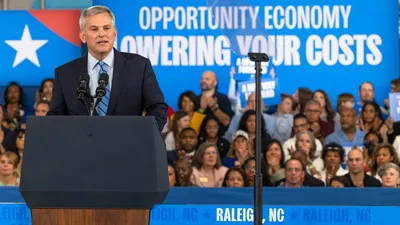
Texas voters elected Democrat Gina Hinojosa as governor, creating a direct challenge for a state that had promoted itself as a center of AI development. Hinojosa campaigned on halting or restricting new data center construction, and her victory puts state permitting, tax incentives, and energy policy under new scrutiny. Texas has attracted major projects because of available land, business incentives, and electricity capacity, making the state central to the AI industry’s buildout.
The political shift also carries symbolic weight. Elon Musk, a prominent Republican donor and technology executive, posted that “data centers in space” looked appealing after the results, according to Euronews. Investors interpreted the Texas outcome as a warning that projects relying on fast approvals and favorable subsidies face more friction. Euronews, Businessinsider, and Trendingtopics described Texas as a pivotal battleground for the future of AI infrastructure.
Ohio showed the local backlash
Ohio voters rejected data center development across much of the state, where at least 14 municipalities passed bans or other restrictions. The state had 21 local ballot measures focused on AI infrastructure, and it already had 125 local data center moratoriums, according to Fortune. Tomshardware cited 33 restriction measures nationwide, while other election coverage counted as many as 45 data center-related measures on ballots.
The Ohio results show why the industry faces a permitting problem that national policy alone can't solve. Residents have focused on electricity demand, water consumption, noise, land use, and the prospect of higher utility costs. Democrat Sherrod Brown made opposition to data centers a central theme in his Ohio campaign, and his victory gave the issue a prominent statewide champion. Fortune, Tomshardware, Wired AI, and Fortune AI connected the local votes to wider concerns about affordability and community control.
Virginia and Georgia face pressure
Virginia's Data Center Alley also produced warning signs for developers after Democratic gains and local resistance. The region has become one of the world's largest concentrations of data centers, but its expansion has generated disputes over transmission lines, water use, tax breaks, and strain on the electric grid. Businessinsider reported major swings in Virginia districts where data center growth had become a political liability.
Georgia joined Texas and Ohio as another state where candidates pledged to slow development. The pattern crosses traditional party lines: some Republicans also moved toward restrictions as residents connected data centers with power costs and industrial expansion. That broadens the issue beyond a fight between Democrats and the technology industry. Rfi, Businessinsider, and Fortune described the political response as a reaction to the physical costs of AI infrastructure, especially in communities hosting new facilities.
Markets repriced the AI buildout
Data center and AI infrastructure stocks fell after Democrats secured control of Congress, while clean-energy shares rallied as investors repositioned around tougher oversight and changing policy priorities. Reuters reported the market rotation through Finance.yahoo, and separate coverage from Bloomberg AI, Finance.yahoo, and Foxbusiness linked the selloff to concerns about permitting delays, reduced tax incentives, antitrust scrutiny, and higher compliance costs.
The market reaction reflects a change in expected project economics rather than an immediate shutdown of AI development. Developers still have large corporate customers and long-term demand for computing capacity, but projects now face greater political risk, especially where they require public subsidies or major grid upgrades. Bloomberg AI and Foxbusiness also described a split among investors: tighter rules could slow growth, while clearer standards could improve predictability for companies that secure approval.
Washington will set the next terms
Democratic control of Congress gives lawmakers an opportunity to examine federal incentives, energy use, environmental effects, and market concentration in AI infrastructure. It also puts pressure on the administration's reliance on industry self-regulation. The election doesn't guarantee passage of a national data center law, because permitting remains heavily local and state-based, but it gives opponents greater leverage over hearings, budgets, and agency oversight.
The AI industry entered the election with well-funded accelerationist groups seeking to preserve rapid development. Time and CNBC reported that those efforts failed to convert spending and billionaire influence into broad voter support. The next phase will be shaped by negotiations over electricity, water, tax policy, and project siting. Developers that can address community costs and secure local consent will have a clearer path; projects built around speed alone face a much rougher road.
Key Points
Democratic victories placed data center construction under tougher federal, state, and local political scrutiny.
Ohio voters approved restrictions across at least 14 municipalities amid widespread opposition to AI infrastructure.
Texas governor-elect Gina Hinojosa threatens the state’s strategy of attracting large AI data center projects.
AI infrastructure stocks fell as investors priced in permitting delays, subsidy changes, and regulatory oversight.
Community concerns center on electricity demand, water use, noise, land consumption, and higher utility costs.
Questions Answered
Voters opposed AI data centers because of concerns about electricity demand, water consumption, noise, land use, grid strain, and higher utility costs. NBC News exit polling found that 75% opposed data centers in their communities.
Gina Hinojosa's Texas victory puts the state's data center expansion strategy under direct political pressure. Her campaign supported halting or restricting new projects, raising uncertainty around permits, tax incentives, and energy policy.
At least 14 Ohio municipalities passed data center bans or other restrictions during the midterms. Fortune also reported that Ohio already had 125 local data center moratoriums before the election.
AI data center stocks fell after Democrats won control of Congress. Investors reacted to concerns about tighter regulation, permitting delays, changes to technology tax incentives, and antitrust scrutiny.
The midterm results won't stop AI data center construction nationwide, but they raise political and financial risks for new projects. Developers face stronger local opposition, closer state review, and possible federal scrutiny over energy, environmental, and subsidy policies.
Source Reliability
44% of sources are highly trusted · Avg reliability: 80
Go deeper with Organic Intel
Simple AI systems for your life, work, and business. Each one includes copyable prompts, guides, and downloadable resources.
Explore Systems