Zhang Yiming Overtakes Gautam Adani as Asia’s Richest Person on ByteDance AI Surge
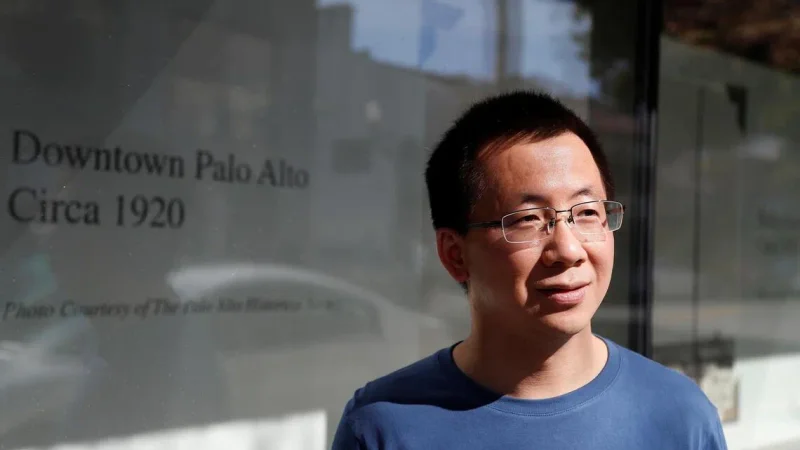
Image: Straitstimes
Main Takeaway
ByteDance founder Zhang Yiming has overtaken Gautam Adani to become Asia’s richest person, with his fortune rising above $105 billion as AI lifts the company’s value.
Jump to Key PointsSummary
Zhang Yiming takes the top spot
Zhang Yiming, the founder of ByteDance, has become Asia’s richest person for the first time, overtaking Indian industrialist Gautam Adani as the value of the TikTok parent and its artificial intelligence businesses climbed. Bloomberg’s Billionaires Index places Zhang’s fortune above $105 billion, while Adani’s fortune stands at about $117.4 billion in the earlier June rankings, indicating that the ranking changed as ByteDance’s valuation and Zhang’s holdings were reassessed. Livemint, Free Press Journal and Bloomberg describe the shift as a milestone for a technology fortune built around short video and AI.
The rise marks a sharp change from March 2019, when Bloomberg first began tracking Zhang’s wealth at about $13 billion. His fortune has since expanded roughly eightfold. Zhang, 43, stepped back from ByteDance’s daily leadership in 2021, but retains a major stake in the company, which owns TikTok internationally and Douyin in China.
From second place to regional leader
Zhang’s ascent to the top follows an earlier jump past Reliance Industries chairman Mukesh Ambani. In June, Zhang was valued at $92.8 billion, ahead of Ambani’s $86.9 billion and behind Adani’s $117.4 billion, according to the Bloomberg Billionaires Index. Business Times, Straitstimes and Indianexpress all described that move as Zhang’s arrival at Asia’s second position.
The rankings illustrate how quickly private technology valuations can reorder billionaire lists. Ambani’s businesses span energy, telecommunications and retail, while Adani’s holdings cover ports, infrastructure and commodities. Zhang’s wealth is tied primarily to ByteDance equity, so changes in the company’s estimated value have a direct effect on his position. Bhaskarenglish and Mathrubhumi placed the June ranking in the same order: Adani first, Zhang second and Ambani third.
ByteDance’s AI engine
ByteDance’s AI expansion has become a central driver of the company’s valuation and Zhang’s wealth. The company’s Doubao chatbot has gained attention in China, adding an AI business to the advertising, commerce and recommendation systems that power TikTok and Douyin. The combination gives ByteDance several large consumer distribution channels for AI products, rather than relying on a standalone chatbot launch.
The June coverage connected Zhang’s $92.8 billion valuation to ByteDance’s higher estimated worth and progress in AI. TikTok’s global reach remains the company’s most visible asset, while Doubao provides a newer source of growth and a direct test of ByteDance’s ability to compete in generative AI. Bloomberg’s September coverage framed the broader shift as a surge in fortunes tied to AI, with technology founders moving ahead of owners of traditional industrial groups.
Why the ranking matters
Zhang’s rise reflects a wider repricing of technology ownership across Asia. A founder’s fortune can increase rapidly when investors assign a higher value to software, data and AI products, even when the underlying stake remains private and difficult to sell. That makes the headline wealth figure an estimate of equity value, not a cash payout.
The change also highlights ByteDance’s unusual position in the global technology market. TikTok reaches users worldwide, Douyin dominates China’s short-video market, and ByteDance’s recommendation technology supports advertising and commerce. Regulatory scrutiny remains part of the company’s valuation story, particularly around TikTok’s operations in the United States. The June figures were widely interpreted as showing that investors had placed a smaller discount on ByteDance’s regulatory risks as its AI prospects strengthened, although the exact calculation described in one low-reliability account was not independently supported by the other coverage.
The limits of billionaire rankings
Zhang’s position can change with ByteDance’s private-market valuation, currency movements and assumptions about his ownership. The different milestones reported in June and September show how quickly the ranking can move without a public stock price providing a continuous benchmark. Bloomberg’s index is the common reference across the coverage, but the articles do not present a single detailed valuation model.
That distinction matters for readers comparing Zhang with Adani and Ambani. Zhang’s wealth is concentrated in one technology company, while the Indian billionaires hold interests across several business groups and listed assets. A higher ranking signals the market’s assessment of ByteDance’s value and growth prospects, not a permanent transfer of economic power. Moneycontrol’s excerpt was largely inaccessible, and News18’s page returned an access-denied notice, leaving those entries without usable independent detail.
What comes next for ByteDance
ByteDance’s next test is turning AI momentum into durable revenue while preserving TikTok’s global reach. Doubao must compete in a crowded Chinese chatbot market, and ByteDance must continue funding models, computing capacity and product distribution without weakening the businesses that already support its valuation.
For Zhang, the ranking puts a public number on the success of a company he founded and still owns, but it also ties his standing to ByteDance’s next valuation cycle. Continued AI adoption, TikTok growth and progress on regulatory questions would support the company’s position. A weaker AI business, renewed political pressure or a lower private valuation would push the ranking in the opposite direction. The immediate story is a billionaire reshuffle, but the larger signal is the growing financial weight assigned to AI-enabled consumer platforms in Asia.
Key Points
Zhang Yiming has overtaken Gautam Adani as Asia’s richest person, with wealth above $105 billion.
ByteDance’s valuation rose as TikTok performance and Doubao AI growth strengthened investor expectations.
Zhang passed Mukesh Ambani in June, reaching Asia’s second-richest position before taking the lead.
Zhang’s fortune consists mainly of ByteDance equity and can shift with private valuation estimates.
The ranking reflects AI’s growing influence on Asian technology wealth and billionaire fortunes.
Questions Answered
Zhang Yiming’s estimated fortune has risen above $105 billion. The Bloomberg Billionaires Index valued him at $92.8 billion in June before ByteDance’s valuation gains lifted him past Gautam Adani.
Zhang Yiming became Asia’s richest person as ByteDance’s estimated value increased on TikTok’s performance and the growth of its Doubao AI chatbot. His large ByteDance stake directly links his wealth to the company’s valuation.
Zhang Yiming passed Mukesh Ambani before overtaking Gautam Adani. In June, Zhang ranked second in Asia with $92.8 billion, while Ambani ranked third at $86.9 billion.
Zhang Yiming remains a major shareholder in ByteDance, the company behind TikTok, Douyin and Doubao. He left ByteDance’s daily leadership in 2021 but retains a substantial ownership interest.
Zhang Yiming can lose the title if ByteDance’s estimated valuation falls or if Gautam Adani’s wealth rises. Because Zhang’s fortune is largely private-company equity, the ranking can change with valuation assumptions and market conditions.
Source Reliability
62% of sources are trusted · Avg reliability: 72
Go deeper with Organic Intel
Simple AI systems for your life, work, and business. Each one includes copyable prompts, guides, and downloadable resources.
Explore Systems