ZEISS SMT Chief Puts China 15 Years Behind in Advanced Chipmaking Tools
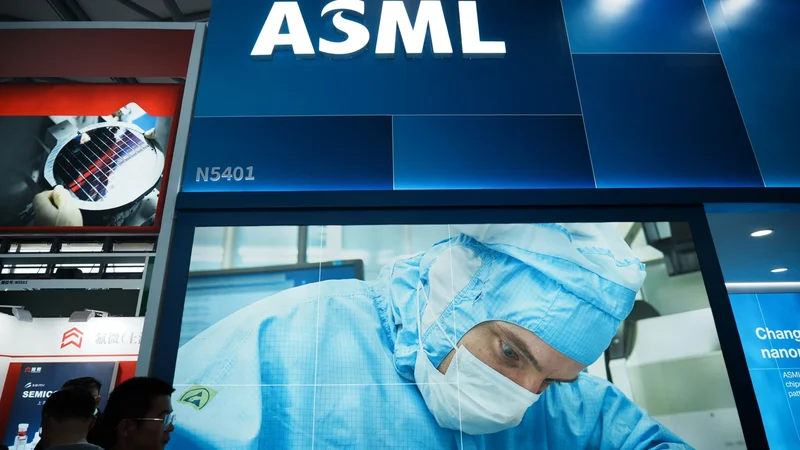
Image: Cnbc
Main Takeaway
ZEISS SMT CEO Frank Rohmund says China remains 15 years behind in advanced chipmaking tools, despite rapid investment and growing domestic equipment production.
Jump to Key PointsSummary
The central technology gap
China remains about 15 years behind the leading suppliers of advanced chipmaking equipment, ZEISS SMT CEO Frank Rohmund said in a Bloomberg interview. ZEISS SMT supplies the precision optics used in ASML’s extreme-ultraviolet lithography systems, giving Rohmund a close view of the capabilities required for leading-edge semiconductor production.
The assessment concerns top-tier tools, especially EUV lithography, rather than every part of China’s semiconductor industry. Chinese companies have expanded in etching, deposition, testing and other equipment categories, but access to EUV systems remains restricted. Separate assessments have placed China’s domestic EUV effort around ASML’s technological level in 2004, while another analysis described a roughly 20-year gap in lithography.
Why EUV remains the bottleneck
EUV lithography is the key constraint because it enables chipmakers to print the smallest features used in advanced processors. ASML remains the only commercial supplier of EUV scanners, and export controls prevent Chinese manufacturers from acquiring them. The restrictions leave Chinese chipmakers reliant on older deep-ultraviolet equipment, multiple patterning and process adaptations to produce advanced chips.
An EUV system is an unusually difficult industrial product. ASML’s machine depends on about 5,100 suppliers, roughly 100,000 parts and specialist components from several countries, including ZEISS optics. It is shipped in dozens of containers and assembled at the customer’s cleanroom. Replicating the scanner therefore requires progress in optics, light sources, vacuum systems, precision mechanics, software and supply-chain coordination at the same time.
China’s domestic response
Chinese semiconductor executives have called for a more coordinated national effort to build a domestic alternative to ASML. Leaders associated with SMIC, YMTC and Naura described the existing equipment sector as too small, fragmented and weak to close the gap through isolated company efforts. The call reflects a shift from individual corporate development toward state-backed industrial coordination.
China already has a substantial group of equipment makers, including NAURA, AMEC, SMEE and ACM Research. Domestic firms are expanding across etching, deposition, cleaning and related tools, while the government continues to direct capital toward semiconductor self-sufficiency. That progress improves resilience in mature and some less advanced manufacturing stages, but it doesn't yet reproduce the integrated capabilities required for EUV.
Progress, caveats and competing claims
Reports in 2026 described China as mass-producing a critical lithography tool in a market long dominated by ASML. The news briefly pressured ASML shares, but analysts questioned whether the development represented a production-ready competitor or a narrower achievement. The distinction matters because a prototype, a limited-production scanner and a tool that delivers high-volume manufacturing yields are different milestones.
The more measured assessments place China’s EUV work far behind ASML while pointing to immersion DUV as the nearer-term target. Chinese companies are expected to focus first on producing such systems at scale and deploying them in real chip factories. That path can support domestic production and reduce exposure to foreign restrictions, even as it leaves leading-edge performance below the best available tools.
Export controls and the next phase
Export controls are slowing China’s access to the equipment and components needed for advanced manufacturing, but they are also concentrating investment on domestic substitutes. Rohmund said additional restrictions accelerate Chinese innovation, creating a tension at the center of the technology conflict: controls preserve the lead of existing suppliers while strengthening Beijing’s incentive to build an independent supply chain.
The timetable depends on more than a single breakthrough. Chinese firms must qualify tools with chipmakers, improve uptime and yields, build specialist components and coordinate a supplier base capable of supporting high-volume manufacturing. Analysts cited by Tom’s Hardware expect meaningful progress in immersion DUV over the next 2 to 5 years, while EUV remains a much longer project. The gap is therefore both a technical measurement and a race to build industrial depth.
What the gap means globally
The assessment reinforces ASML’s strategic importance and the central role of ZEISS optics in the global chip equipment chain. It also gives semiconductor companies and policymakers a reason to distinguish between China’s broad equipment progress and its limited access to the most advanced lithography platform.
For chipmakers, the near-term result is continued reliance on complex workarounds, overseas equipment networks and carefully managed production plans. For China, domestic equipment growth remains a national priority, with mature-node capacity and DUV localization providing practical gains before EUV arrives. For competitors and suppliers, the contest will shape equipment orders, export policy and investment across the semiconductor industry for years.
Key Points
ZEISS SMT says China trails leading suppliers by 15 years in advanced semiconductor manufacturing tools.
ASML remains the only commercial supplier of EUV lithography scanners for leading-edge chip production.
Chinese executives seek coordinated national investment to replace foreign semiconductor equipment suppliers.
China’s nearer-term target is mass production of immersion DUV lithography systems.
Analysts distinguish Chinese lithography prototypes from reliable high-volume manufacturing tools.
Questions Answered
ZEISS SMT CEO Frank Rohmund said China is about 15 years behind leading suppliers in advanced chipmaking tools. His assessment focuses on top-tier equipment, especially EUV lithography, rather than every semiconductor manufacturing category.
China is behind ASML because it lacks access to commercial EUV systems and must recreate a highly complex industrial ecosystem. The challenge spans precision optics, light sources, vacuum systems, mechanics, software and supplier coordination.
China is focusing first on immersion DUV lithography and other semiconductor tools that are less advanced than EUV. Domestic companies are also expanding in etching, deposition, cleaning, testing and related equipment.
China has reportedly begun mass-producing a critical lithography tool, but analysts questioned whether it matches ASML’s production performance. A prototype or limited-production system differs from a scanner that delivers high-volume manufacturing yields and uptime.
Export controls restrict China’s access to advanced chipmaking tools and components. They also increase Beijing’s incentive to coordinate investment and develop domestic substitutes across the semiconductor supply chain.
Source Reliability
23% of sources are established · Avg reliability: 52
Go deeper with Organic Intel
Simple AI systems for your life, work, and business. Each one includes copyable prompts, guides, and downloadable resources.
Explore Systems