Nvidia Plans $3.5 Billion MediaTek Investment as Desktop and AI Partnerships Expand
Main Takeaway
Nvidia plans to invest $3.5 billion in MediaTek through convertible bonds as the companies expand work on desktop chips, AI systems and automotive technology.
Jump to Key PointsSummary
Nvidia’s planned investment
Nvidia plans to invest $3.5 billion in MediaTek, marking a significant financial commitment to a Taiwanese chip designer already working with Nvidia across several markets. The investment will take the form of bonds that convert into MediaTek shares, according to Bloomberg AI. The arrangement deepens a relationship that reaches beyond a single product and gives Nvidia a direct financial stake in a partner whose chips are used across consumer, connectivity and automotive systems.
The transaction arrives as Nvidia broadens its strategy around the data center ecosystem. The company has spent years encouraging chipmakers and system vendors to build products that connect with its accelerated-computing platform. MediaTek brings expertise in Arm-based system design and high-volume semiconductor development, while Nvidia supplies AI computing, graphics and software technology. MediaTek’s own press materials and Nvidia’s newsroom have highlighted cooperation in AI factories and other computing platforms.
Desktop chips take center stage
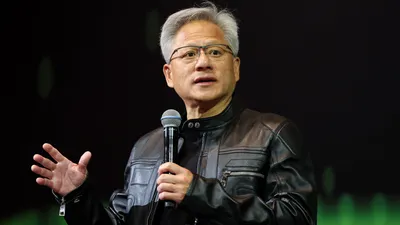
The investment is closely tied to plans for a desktop chip designed through the Nvidia-MediaTek relationship. Nvidia Chief Executive Jensen Huang said the companies have plans for a desktop processor, Reuters AI reported. Coverage from CIO Eletsonline and Investing.com also focused on that announcement, placing the desktop effort alongside the financial deal rather than treating the investment as a stand-alone transaction.
A MediaTek desktop platform connected to Nvidia graphics or AI capabilities would extend the partnership into a market dominated by Intel and AMD. The companies have already shown a related direction through RTX Spark, a MediaTek collaboration with Nvidia, while the GB10 platform has reinforced interest in compact Arm-based systems with Nvidia computing. The exact specifications, launch timing and commercial structure for the desktop chip remain undisclosed.
AI infrastructure gains a new layer
The partnership gives Nvidia another route into systems built around its AI stack. Nvidia’s description of MediaTek’s AI factory work centers on accelerating development, integrating MediaTek engineering with Nvidia computing and software. That model fits Nvidia’s push to make its platform useful across complete systems, rather than limiting its role to the main accelerator.
MediaTek’s position as a designer of application processors, connectivity chips and specialized silicon makes it a useful partner for products that need a mix of compute functions. Analysis from Futurum Group connected the collaboration to a wider commercial opportunity, while GuruFocus coverage linked MediaTek partnerships to an AI supercomputer effort. Those interpretations point to wider system ambitions, though the public details establish collaboration and investment rather than a confirmed sales forecast or a completed product roadmap.
Cars and edge devices broaden the deal
Automotive computing is another established part of the Nvidia-MediaTek relationship. Nvidia’s blog describes MediaTek partnering with the company to transform automobiles through connected and intelligent vehicle systems. That work places the companies in a market where automakers want centralized computing, advanced graphics, driver assistance and in-car software delivered through a single architecture.
The same relationship can support edge devices that need efficient processors alongside AI or graphics acceleration. MediaTek’s semiconductor portfolio gives Nvidia access to product categories outside traditional data centers, while Nvidia’s software ecosystem gives MediaTek a way to add higher-end computing capabilities. The RTX Spark announcement and Nvidia’s AI factory materials show the partnership spanning consumer, enterprise and automotive use cases, even though each program has a different product path.
Market reaction and strategic stakes
Investors treated the deal as a meaningful signal for MediaTek. Yahoo Finance coverage said the Nvidia AI chip partnership added fuel to MediaTek’s share performance, reflecting expectations that a deeper alliance could increase the Taiwanese company’s visibility in AI hardware. The proposed investment also strengthens Nvidia’s position as a platform company that shapes surrounding components and systems through partnerships, financing and software integration.
Commentary about a possible $73 billion MediaTek valuation or acquisition reflects speculation rather than the announced $3.5 billion investment. Wccftech and Techovedas tied the figure to a broader discussion of Nvidia’s Arm strategy and the commercial value of MediaTek’s technology. Nvidia’s separate reported $5 billion investment in Intel, covered by NBC Bay Area, adds context to the company’s interest in reshaping the chip supply chain, but it is a distinct transaction and should not be conflated with the MediaTek deal.
What happens next
The next milestones are the terms of the convertible bonds, Nvidia’s eventual ownership percentage and concrete details about the planned desktop chip. Investors and hardware makers will also watch for evidence that the partnership produces shipping products, new customers or meaningful revenue beyond joint announcements. MediaTek’s official press channels have publicized cooperation with Nvidia, but the available product descriptions remain broader than a full commercial roadmap.
For Nvidia, the deal extends a pattern of building an ecosystem around its processors, networking and software. For MediaTek, it creates a closer path into AI computing while preserving its role as an independent chip designer. The arrangement also gives desktop, automotive and edge-device manufacturers another Arm-centered option tied to Nvidia technology, increasing competitive pressure on incumbent PC and embedded-chip suppliers.
Key Points
Nvidia plans a $3.5 billion convertible-bond investment in Taiwanese chipmaker MediaTek.
Nvidia and MediaTek are developing a desktop chip aimed at expanding Arm-based computing options.
MediaTek’s AI factory collaboration connects its chip design expertise with Nvidia accelerated computing.
Nvidia and MediaTek are also working on automotive systems involving AI, graphics and connected vehicles.
Speculation about a $73 billion MediaTek valuation exceeds the announced investment and remains unconfirmed.
Questions Answered
Nvidia plans to invest $3.5 billion in MediaTek through convertible bonds. The bonds are designed to convert into MediaTek shares, giving Nvidia a direct financial stake in the Taiwanese chipmaker.
Nvidia is investing in MediaTek to deepen cooperation across desktop chips, AI systems and automotive computing. The deal supports Nvidia’s wider effort to build a larger ecosystem of processors and systems connected to its computing platform.
Nvidia and MediaTek have plans for a desktop chip, according to statements attributed to Nvidia CEO Jensen Huang. The companies haven’t disclosed full specifications, pricing or a launch date.
Nvidia and MediaTek are collaborating on desktop computing, AI factory systems, RTX Spark and automotive technology. Their work combines MediaTek processor and system-design expertise with Nvidia graphics, AI computing and software.
Nvidia isn’t buying MediaTek for $73 billion based on the announced transaction. The confirmed plan is a $3.5 billion convertible-bond investment, while the larger valuation figure comes from speculative commentary.
Nvidia and MediaTek must clarify the bond terms, resulting ownership stake and desktop-chip roadmap. Investors will then look for shipping products, customers and revenue tied to the expanded partnership.
Source Reliability
43% of sources are established · Avg reliability: 72
Go deeper with Organic Intel
Simple AI systems for your life, work, and business. Each one includes copyable prompts, guides, and downloadable resources.
Explore Systems