Nvidia CEO Jensen Huang Links AI Safety to Chip Access While Rejecting Doomsday Fears
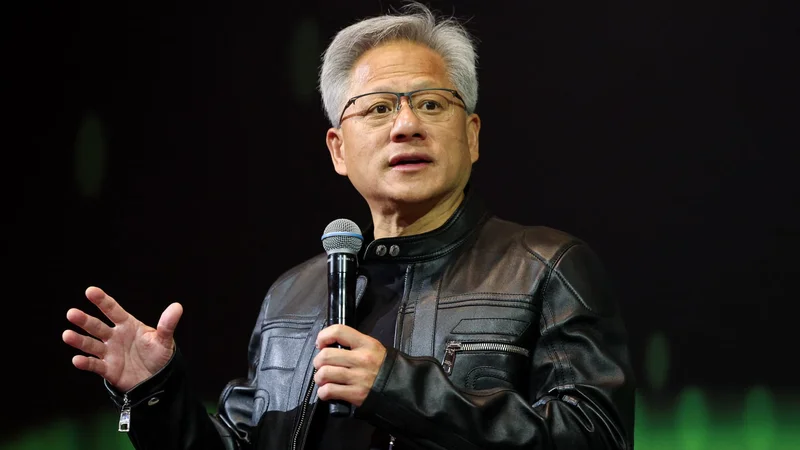
Image: Cnbc
Main Takeaway
Nvidia CEO Jensen Huang said the company would stop supplying chips to customers building unsafe AI, while opposing broad limits on development and exports.
Jump to Key PointsSummary
Huang draws a line on buyers
Nvidia CEO Jensen Huang said he would stop supplying chips to a customer developing unsafe AI software, making hardware access part of his company’s stated safety posture. He described the scenario as hypothetical during an interview with Bloomberg in London, but answered yes when asked whether Nvidia would cut off an irresponsible developer. Bloomberg reported the exchange as an exclusive interview.
The position gives Nvidia an unusually powerful gatekeeping role because its processors underpin much of the AI industry. Huang’s statement sits alongside his demand for zero AI cybersecurity incidents and his argument that companies building dangerous systems should face consequences. Startup Fortune and Active Investor Mag both linked the comments to Nvidia’s dominant position in AI chips, though their accounts provide less detail than Bloomberg’s interview excerpt.
Safety without a development pause
Huang supports stronger engineering and testing while rejecting calls to slow AI development across the industry. He has argued that AI safety is a real concern, but that companies should address it through technical safeguards rather than broad new rules or coordinated development limits.
That stance also shaped his response to warnings about catastrophic AI outcomes. Huang told CBS News that claims AI will cause human extinction by 2030 are irresponsible and said there is “0% chance” that 2030 will be the end of the world, according to Fox Business. CNBC reported a similar argument in September, when Huang criticized Anthropic’s proposal for an antitrust waiver that would let AI companies coordinate around slowing advanced-model development. His message combines confidence in rapid progress with a willingness to punish individual customers that cross a safety line.
Nvidia’s power over the market
Nvidia’s ability to impose such a cutoff rests on its central position in AI computing. The company’s GPUs remain the leading foundation for training and running large models, while its business is expanding toward complete AI factories that combine processors, networking, software and data-center systems. Finance Yahoo described that shift as a move beyond selling individual chips toward selling entire AI infrastructure platforms.
That scale turns Huang’s hypothetical policy into a meaningful commercial signal. A cutoff would affect a customer’s ability to train models, expand computing capacity and compete for developers. Shattered framed the issue more sharply, arguing that unsafe labs could face shutdown pressure because Nvidia supplies the hardware on which leading AI experiments depend. The company has not published a detailed enforcement process, definition of unsafe AI or list of customers subject to such action.
Export policy complicates the message
Huang’s safety position arrives as Nvidia continues pressing Washington to loosen restrictions on AI-chip exports. He said the United States should accelerate the global diffusion of American AI technology so U.S. businesses can capture more of the market, according to Fortune. That argument reflects Nvidia’s commercial interest in selling advanced computing overseas, including to customers affected by shifting China rules.
U.S. controls have already damaged Nvidia’s position in China. CNBC reported in 2025 that Huang said the restrictions cut Nvidia’s China market share from 95% to 50% and called the policy a failure. Built In described the Trump administration’s subsequent reversals and licensing changes around Nvidia’s H20 processors as evidence of an unstable export regime. The contrast is clear: Nvidia wants fewer blanket limits on legitimate buyers, while Huang reserves the right to deny supply to customers judged individually unsafe.
What happens next
Nvidia’s next challenge is turning Huang’s principle into a credible operating rule. The company would need to define unsafe behavior, establish an evidence standard, decide whether customers receive warnings and explain how a cutoff would work across cloud providers, resellers and international data centers. Without those details, the statement remains a high-impact commitment rather than a formal compliance program.
The broader debate will focus on who should make that judgment. Huang favors engineering controls, testing and company responsibility, while critics of fast AI development seek stronger public oversight and coordination. His comments to Fortune about Pope Leo XIV’s concerns show an effort to acknowledge safety criticism without accepting a broad development brake. Nvidia’s leverage means the company’s position will be watched by model developers, regulators and investors as AI infrastructure becomes more concentrated.
Key Points
Nvidia CEO Jensen Huang said the company would cut off customers developing unsafe artificial intelligence systems.
Jensen Huang supports engineering safeguards while rejecting broad pauses or antitrust exemptions for AI development.
Nvidia’s dominant GPU position gives any customer cutoff significant consequences for model training and expansion.
Huang urged Washington to loosen export rules despite Nvidia’s willingness to deny chips to unsafe developers.
Nvidia’s China market share fell from 95% to 50% after U.S. semiconductor restrictions, CNBC reported.
Questions Answered
Nvidia CEO Jensen Huang said the company would stop supplying chips to a customer developing unsafe AI software. He described the situation as hypothetical and did not provide a formal enforcement process.
Jensen Huang believes AI safety should be handled through engineering, testing and cybersecurity controls rather than broad development limits. He has also rejected coordinated slowdowns and antitrust exemptions for AI companies.
Nvidia controls a leading share of the GPUs used to train and run advanced AI models. A supply cutoff could restrict a customer’s ability to expand computing capacity and compete.
Jensen Huang rejected predictions that AI will end humanity by 2030. He called those warnings irresponsible and said there is a 0% chance that 2030 will be the end of the world.
Nvidia CEO Jensen Huang said U.S. restrictions reduced Nvidia’s China market share from 95% to 50%. Policy reversals and licensing changes have since affected whether Nvidia can resume sales of some processors.
Source Reliability
33% of sources are trusted · Avg reliability: 62
Go deeper with Organic Intel
Simple AI systems for your life, work, and business. Each one includes copyable prompts, guides, and downloadable resources.
Explore Systems