Why AI Food Images Look Uncanny, Unappetizing, and Strangely Alike
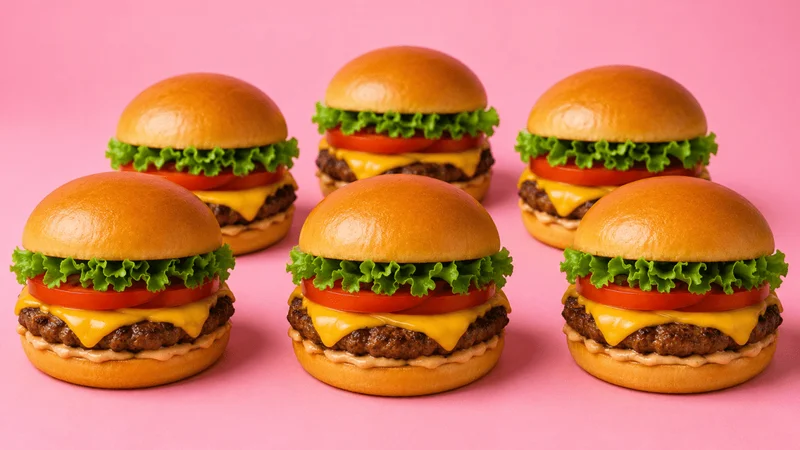
Image: TechCrunch AI
Main Takeaway
AI-generated food images often produce flawless but distorted dishes because image models favor familiar visual patterns over the physical logic of real cooking.
Jump to Key PointsSummary
The uncanny plate problem
AI-generated food images look unappetizing because they combine polished presentation with details that violate how food actually behaves. Restaurant menus and advertisements increasingly show symmetrical sandwiches, smooth pastries, and dishes whose ingredients blur into one another, creating an immediate sense that something is wrong.
The effect is especially striking because food photography depends on texture, irregularity, and recognizable structure. A bagel should have a specific crumb, a noodle should bend and overlap, and a sandwich should compress under its fillings. When those cues are replaced by glossy surfaces, identical shapes, or impossible attachments, the image stops communicating freshness and starts resembling a synthetic object. Examples circulating online include shrimp shaped like donuts, wormlike noodles, and chicken rendered as strings.
Why the details go wrong
Image generators produce food by predicting visual patterns, not by modeling ingredients, cooking processes, or three-dimensional structure. Their output can therefore preserve the broad appearance of a dish while losing the relationships that make it physically credible. Holes, cracks, layers, and repeated forms become unstable because the model treats them as image features rather than consequences of a real object.
That failure explains why AI food often contains noodles that merge into pastries, fillings that pass through bread, or surfaces that look unnaturally uniform. The Verge highlighted worms, holes, cracks, and other recurring defects as signs of the technology's weaknesses. Research on the visual appeal of real and AI-generated food images gives the problem a more formal setting, while discussions of differences among AI tools point to variation in training data, model design, prompting, and image processing.
Perfection becomes a warning sign
The problem isn't only obvious glitches. AI food images also look wrong when every dish shares the same attractive finish. Excessive symmetry, evenly distributed toppings, identical lighting, and frictionless surfaces create a narrow visual style that reads as manufactured rather than appetizing.
That sameness matters for restaurants because menus are supposed to distinguish dishes and establish trust. A cafe showing several sandwiches with the same geometry and sheen can make the food appear generic before a customer takes a bite. The pattern reflects a broader concern about generative AI: systems trained on popular images tend to reproduce a safe, pleasing aesthetic, sanding away the quirks that make a plate look specific. Big Technology has described this broader issue as AI's sameness problem, and restaurant-focused coverage connects it directly to consumer discomfort.
Food imagery carries physical cues
People judge food images through more than color and composition. They look for signals of moisture, crispness, softness, weight, heat, and freshness. A crust has to look brittle, sauce has to settle in believable places, and a cut surface has to reveal layers rather than a smooth digital gradient.
When those cues conflict, the viewer's reaction becomes visceral. A glossy bun can look plastic, a noodle can resemble a worm, and a cracked surface can suggest contamination instead of texture. Eater's focus on the unappetizing quality of AI food photography aligns with the more graphic reactions described by Pajiba and The Verge. Visual appeal research also indicates why technical errors matter commercially: an image can be colorful and well lit while still failing at the basic task of making food desirable.
The cost for restaurants and brands
Restaurants using generated menu art trade production speed for a credibility problem. A synthetic image can be made quickly and adapted to many dishes, but visible errors make customers question whether the pictured meal exists as shown. That risk is sharper for independent restaurants, where a menu image often serves as a first impression of quality.
Brands face a related identity problem. If competing businesses use the same model-driven lighting, composition, and ingredient styling, their promotions become interchangeable. Wired's warning that unattractive AI food photos are only an early stage places the restaurant examples inside a larger shift in commercial image production. The immediate lesson is practical: real photography remains valuable when texture, authenticity, and local character matter more than speed.
What better AI food requires
Improving AI food imagery requires more than adding adjectives to a prompt. Models need stronger handling of object boundaries, repeated structures, ingredient relationships, and the physical effects of cooking. Users also need review processes that inspect every image for distorted anatomy, impossible geometry, and misleading presentation.
Different tools will continue to produce different results because their training data and rendering methods vary, but no model can replace judgment about whether a dish looks edible and accurately represented. Research comparing real and generated food images can help measure those gaps, while public examples provide a steady catalog of failure modes. For restaurants, the safest workflow is human-led: use generation for concepts or layouts, then verify the final image against a real dish before publication.
The broader sameness problem
AI food imagery exposes a wider tension in generative design: visual polish is easy to reproduce, while specificity is harder. Models can create an instantly legible plate, but they often struggle with the irregular details that carry meaning, craft, and trust.
That tension will shape how restaurants, advertisers, and other businesses use image generators. The technology is effective at producing a mood board or filling a blank layout, yet its repeated aesthetic can flatten differences between brands. Food makes the failure unusually visible because people have years of experience recognizing what a real meal looks and feels like. The plate becomes a simple test of whether an image merely resembles its subject or understands the cues that make the subject believable.
Key Points
AI image generators distort food textures and structures while preserving a polished overall appearance.
Restaurant menus increasingly use synthetic food imagery that customers perceive as uncanny or unappetizing.
Wormlike noodles, merged ingredients, cracks, holes, and glossy surfaces expose image model weaknesses.
AI systems favor symmetrical, uniform aesthetics that make competing restaurant brands look interchangeable.
Real food photography remains valuable because it communicates texture, freshness, weight, and cooking detail.
Questions Answered
AI-generated food looks unnatural because image models predict visual patterns rather than simulating ingredients, cooking, and physical structure. The images preserve recognizable outlines while producing impossible textures, merged components, and overly smooth surfaces.
AI food images contain worms, holes, and cracks because generators treat these features as visual patterns instead of physical structures. Noodles, fillings, pastry layers, and porous surfaces are especially difficult to render consistently.
AI-generated restaurant menus look similar because models favor familiar, visually pleasing patterns found throughout their training data. Repeated symmetry, glossy lighting, centered compositions, and uniform toppings create a common synthetic style.
Restaurants can use AI for concepts and layouts, but accurate food photography requires human review and comparison with the actual dish. Generated images can misrepresent ingredients, portions, textures, and preparation.
Real food photography remains important because it captures physical cues that make dishes look edible and trustworthy. Texture, moisture, crispness, irregularity, and authentic presentation are difficult for image generators to reproduce reliably.
Source Reliability
36% of sources are trusted · Avg reliability: 66
Go deeper with Organic Intel
Simple AI systems for your life, work, and business. Each one includes copyable prompts, guides, and downloadable resources.
Explore Systems