UK deploys HMS Dragon to Middle East ahead of Hormuz security mission
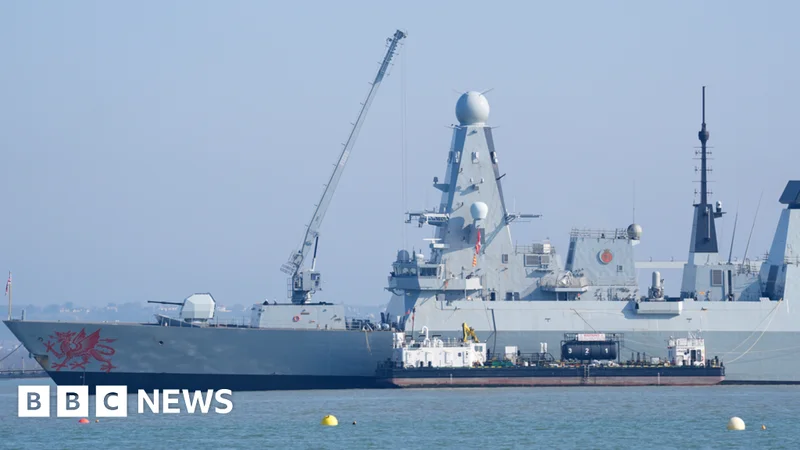
Image: Bbc
Main Takeaway
UK sends Type-45 destroyer HMS Dragon to Middle East for potential multinational mission protecting Strait of Hormuz shipping once ceasefire holds.
Jump to Key PointsSummary
What the UK just deployed
HMS Dragon, a Type-45 air defense destroyer, is en route to the Middle East according to the Ministry of Defence. The ship will pre-position in the region ahead of a potential UK-French led maritime security mission in the Strait of Hormuz. Dragon had been operating in the eastern Mediterranean since March, helping defend Cyprus during the ongoing Iran conflict.
The destroyer specializes in destroying guided missiles and can track 2,000 targets simultaneously at ranges over 250 miles. Its deployment signals serious preparation for what officials describe as a strictly defensive operation to protect commercial shipping through the vital waterway that handles 20% of global oil supplies.
How this fits the broader Hormuz plan
Britain and France have been building this mission since April, when Prime Minister Keir Starmer and President Emmanuel Macron announced joint leadership of a European-led naval effort. The plan only activates once a sustained ceasefire or peace deal emerges from the ongoing US-Iran conflict that began earlier this year.
The mission represents a shift toward European military autonomy in securing critical shipping lanes. Unlike previous US-led operations, this would operate under UK-French command with multinational participation. France has already deployed its carrier strike group to the southern Red Sea as part of the same defensive strategy.
Why Hormuz matters right now
The Strait sits at the mouth of the Persian Gulf, making it the chokepoint for oil exports from Iran, Iraq, Kuwait, Saudi Arabia and the UAE. Recent US strikes on Iranian tankers attempting to breach the naval blockade have made commercial insurers nervous, driving up shipping costs and threatening global energy markets.
Any disruption here hits consumers directly at the gas pump. The 21-mile wide passage sees 18 million barrels of oil daily. European nations, heavily dependent on Gulf oil, have calculated that securing the strait is cheaper than dealing with energy price spikes that could trigger recession.
The ceasefire wild card
A fragile month-old ceasefire held through Friday despite US forces striking two Iranian tankers. Washington maintains the ceasefire remains in effect while awaiting Iran's response to the latest peace proposal. The UK mission cannot proceed until this diplomatic dance resolves.
Meanwhile, Bahrain (home to the US Navy's Fifth Fleet) arrested dozens alleged to have Iranian Revolutionary Guard links, suggesting tensions remain high. The Royal Navy's presence serves dual purposes: preparing for the security mission while providing immediate deterrence against further escalation that could sink the entire plan.
What happens next
HMS Dragon will likely join other European naval assets already staging in the region. The ship's advanced radar and missile systems make it ideal for the point-defense role required in crowded shipping lanes. Final approval depends entirely on diplomatic progress between Washington and Tehran.
If the ceasefire holds, expect announcements within weeks about participating nations and operational details. If talks collapse, Dragon and other European ships could find themselves drawn into active conflict rather than peacekeeping. The next 30 days will determine whether this becomes a textbook maritime security operation or something far more complex.
Key Points
HMS Dragon dispatched to Middle East for potential UK-French Hormuz security mission once ceasefire holds
Type-45 destroyer specializes in air defense with 250-mile missile tracking range and 2,000 target capacity
Strait handles 20% of global oil supply through 21-mile passage, making security mission critical for energy markets
Deployment contingent on sustained US-Iran ceasefire after recent tanker strikes and ongoing diplomatic negotiations
European nations taking lead role independent of US Navy's Fifth Fleet based in Bahrain
Questions Answered
A Type-45 air defense destroyer, one of six in the Royal Navy, equipped with advanced radar and missile systems capable of tracking 2,000 targets simultaneously at ranges over 250 miles.
Only after a sustained ceasefire or peace deal is reached between the US and Iran. The UK Ministry of Defence emphasizes this is contingent on diplomatic conditions being met.
The UK and France are leading the effort, with other European nations expected to participate. Exact participant list remains undisclosed pending final diplomatic approvals.
It's the only sea passage from the Persian Gulf to the open ocean, handling 18 million barrels of oil daily (20% of global supply) from Iran, Iraq, Kuwait, Saudi Arabia and UAE.
No, this operates independently of the US Navy's Fifth Fleet based in Bahrain. It represents European nations taking direct responsibility for securing their energy supply routes.
The security mission would be postponed indefinitely. HMS Dragon and other European ships could potentially be drawn into active conflict rather than peacekeeping operations.
Source Reliability
44% of sources are trusted · Avg reliability: 68
Go deeper with Organic Intel
Simple AI systems for your life, work, and business. Each one includes copyable prompts, guides, and downloadable resources.
Explore Systems