Uber Surges 8% on Q2 Guidance Beat, US Ride Demand Defies Global Headwinds
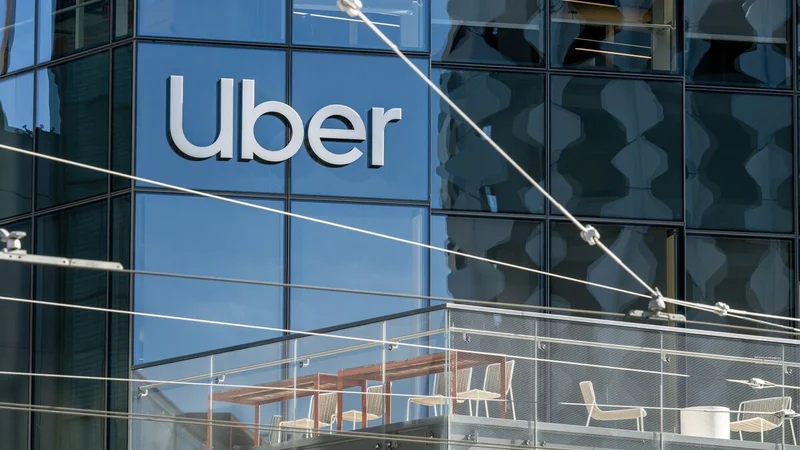
Image: Bloomberg AI
Main Takeaway
Uber raises Q2 bookings to $57B, beating Street by ~$2B, as US commuters and travelers shrug off Middle-East jitters.
Jump to Key PointsSummary
What the numbers say
Uber told investors to expect second-quarter gross bookings between $56.25 billion and $57.75 billion, the midpoint of which is roughly $2 billion above Wall Street's prior consensus. First-quarter gross bookings came in at $53.7 billion, already the high end of management’s own $52.0-$53.5 billion range, while revenue rose 14% year-over-year to $13.2 billion. Adjusted EBITDA jumped 44% to about $2.5 billion, and free cash flow hit $2.29 billion, giving the company plenty of room to fund its autonomous-driving roll-out and buy back stock.
Why US demand is driving the beat
CEO Dara Khosrowshahi told analysts the core U.S. rideshare business is now accelerating through the year, with easing insurance costs in California and Texas helping to lift trip growth in previously pressured cities like San Francisco and Los Angeles. CFO Balaji Krishnamurthy added that domestic commuters and travelers are “more than offsetting” any softness tied to Middle-East geopolitical tensions, suggesting that discretionary travel budgets remain intact despite broader macro worries.
Autonomous ride momentum builds quietly
While headline investors focused on the headline bookings beat, Uber also disclosed that it now offers live autonomous rides in eight cities and plans to expand to as many as 15 by year-end. The company has signed ten new robotaxi partnerships this quarter, including deals with Rivian, Zoox, Motional, and Lucid, positioning itself as the neutral network layer rather than owning the vehicles outright. Management framed the hybrid human-plus-AV fleet as a margin-expansion lever once utilisation rates climb past the pilot phase.
Lyft and the competitive read-through
Shares of rival Lyft rose in sympathy, up roughly 4% in after-hours trading, as investors interpreted Uber’s robust guide as evidence that overall U.S. ride-hail demand is healthier than feared. Because both companies source drivers from the same labour pool and price trips off similar algorithms, Uber’s commentary on moderating insurance inflation and strong airport volumes is seen as a leading indicator for the entire sector.
What the Street is watching next
Analysts will now scrutinise weekly airport throughput data and driver-supply metrics for confirmation that the booking strength extends into the summer travel season. Uber’s own guidance embeds roughly 20% year-over-year trip growth; any upside would likely flow straight to EBITDA given the company’s fixed-cost leverage. The next catalyst arrives in July when Uber updates its full-year outlook and gives a first peek at third-quarter trends.
Key Points
Uber guided Q2 gross bookings to $56.25-57.75B vs. ~$55B consensus, sparking an 8% after-hours rally.
US rideshare demand is accelerating, with easing insurance costs boosting growth in CA and TX markets.
Q1 gross bookings hit $53.7B and adjusted EBITDA rose 44% to $2.5B, underscoring operating leverage.
Autonomous ride network now spans 8 cities; 10 new AV partnerships signed, targeting 15 cities by year-end.
Middle-East geopolitical tensions had minimal impact on bookings, per CFO commentary.
Questions Answered
The midpoint of Uber’s new Q2 guidance is roughly $2 billion above the prior Wall Street consensus.
Management credits moderating insurance costs in California and Texas, which had previously pressured fares and driver economics in key cities like San Francisco and Los Angeles.
Eight cities are live today; the company targets expansion to 15 by the end of 2026 through partnerships with Rivian, Zoox, Motional, and others.
According to CFO Balaji Krishnamurthy, robust domestic demand from US commuters and travelers more than offset any softness tied to Middle-East uncertainty.
Weekly airport throughput data and driver-supply metrics through the summer travel season; the next formal update arrives with July’s full-year guidance revision.
Source Reliability
46% of sources are trusted · Avg reliability: 69
Go deeper with Organic Intel
Simple AI systems for your life, work, and business. Each one includes copyable prompts, guides, and downloadable resources.
Explore Systems