U.S. Reopens Mexican Cattle Trade as Screwworm Reaches Chosen Sonora Crossing
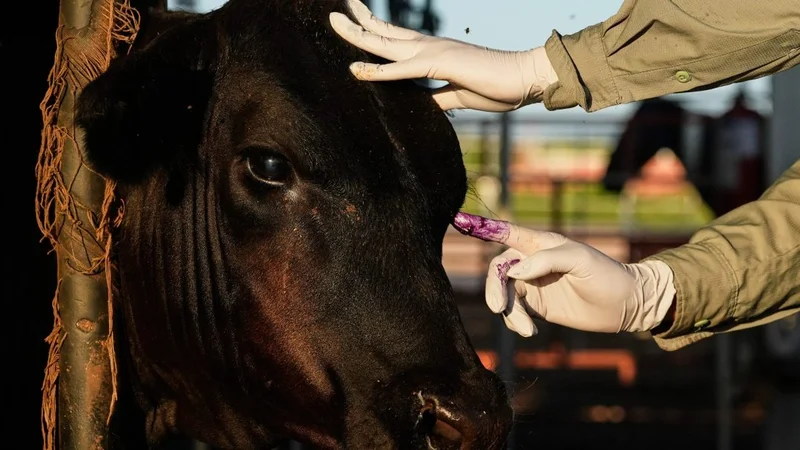
Image: Fortune AI
Main Takeaway
The United States will resume limited Mexican cattle imports at Douglas, Arizona, despite Sonora’s first screwworm case days before the planned reopening.
Jump to Key PointsSummary
Border reopening meets a new case
The United States is set to resume limited livestock imports from Mexico on Aug. 24 through the Douglas, Arizona, crossing, even after Sonora recorded its first confirmed screwworm case. Sonora had been selected as the reopening point because officials considered it free of the flesh-eating parasite. The case was reported roughly 325 miles from the U.S. border, according to Fortune.
The decision ends a yearlong halt on Mexican cattle imports while keeping trade narrow and heavily controlled. Agriculture officials are balancing the need to restore a major livestock corridor against the risk that screwworm larvae, which infest animal tissue, could spread into U.S. herds. The reopening therefore marks a test of containment rather than a return to normal commerce.
Why screwworm threatens cattle
Screwworm is a parasitic fly whose larvae enter wounds in cattle and other warm-blooded animals, feeding on living tissue. Untreated infestations can kill livestock and impose steep costs through veterinary care, inspections, quarantines and lost production. The parasite was eliminated from the United States decades ago through sterile-fly releases, making any reintroduction a serious animal-health concern.
Mexico’s outbreak has already disrupted cattle movement and forced ranchers to hold animals that would ordinarily cross into U.S. feedlots and breeding programs. The controls accompanying the reopening address that risk through inspections and restrictions on eligible shipments. Coverage from ABC13 Houston, Insurance Journal and AP describes the outbreak as ongoing, with eradication requiring more time even as response measures show progress.
Tight controls shape the trade
Mexican ranchers will resume sales under a screening system designed to keep infected animals from crossing. The selected route, shipment eligibility and border inspections are central safeguards, while authorities continue monitoring livestock and fly populations on both sides of the border. Officials have not treated the reopening as evidence that the outbreak has ended.
For ranchers such as Martín Alfonso Ibarra, the decision restores access to a critical market for cattle raised in northern Mexico. His herd includes 16 prized calves that he hopes to send north, a concrete example of how the ban reached individual operations. The rules also mean producers face added delays, compliance costs and the possibility that a detected case could close the corridor again.
American ranchers remain divided
The reopening has split U.S. cattle interests. Importers, feedlot operators and businesses dependent on Mexican feeder cattle gain access to animals after a year of constrained supply. Those sales can support market liquidity and give Mexican producers a route to customers that has been closed since the ban.
Some American ranchers remain wary because the parasite is still present in Mexico. Their concern centers on disease control, inspection reliability and the cost of containing an infestation after entry. CNN’s reporting highlights that the reopening has not produced uniform support among U.S. producers, while Texas Tribune and WFAA frame the move as a limited resumption rather than an unrestricted border opening.
The economic stakes for both countries
The cattle ban has strained Mexican ranchers and interrupted a longstanding supply relationship with U.S. buyers. Reopening even one crossing provides relief, but the narrow channel limits how quickly trade can recover. Producers still need to meet health requirements, and authorities must maintain confidence that animals crossing the border are clean.
The United States also has an economic interest in restoring supply without importing a costly animal-health crisis. Beef producers, livestock markets, transport companies and insurers all face different exposures as shipments restart. The Washington Examiner, Wisfarmer and Insurance Journal each describe the reopening as a response to the prolonged halt while emphasizing that screwworm controls remain central to the policy.
What happens after Douglas
The Douglas reopening will function as an operational test for broader trade. Officials will watch inspection results, animal-health reports and evidence of parasite spread before expanding access to additional crossings or categories of livestock. A new case near the border, a failed inspection system or a rise in infestations would place the reopening under immediate pressure.
Mexico’s response will also determine whether the trade can scale. Sterile-fly programs, surveillance and treatment must continue while ranchers adapt to documentation and inspection requirements. The immediate outcome is a controlled restart, with the border open to selected cattle shipments but the screwworm campaign still underway.
Key Points
U.S. cattle imports from Mexico resume at Douglas, Arizona, under strict screwworm inspections and shipment controls.
Sonora’s first screwworm case emerged days before officials planned to reopen the selected border crossing.
Mexico’s yearlong cattle export ban disrupted ranchers, feedlots, livestock markets and cross-border supply chains.
American ranchers are divided between restored cattle access and concern over parasite reintroduction.
Screwworm eradication continues through surveillance, treatment and sterile-fly control programs.
Questions Answered
The United States is reopening limited Mexican cattle imports to restore trade while using strict controls to manage disease risk. The Douglas, Arizona, crossing was selected for a controlled restart, and the outbreak remains under surveillance.
Mexican cattle imports will resume through the Douglas, Arizona, border crossing. The route was chosen after Sonora was identified as a suitable reopening area, although Sonora has since confirmed its first screwworm case.
Screwworm is a parasitic fly whose larvae feed on living tissue inside animal wounds. Untreated infestations can kill cattle and create major veterinary, inspection and production costs.
The Mexican cattle import ban lasted about a year. It was imposed after concerns that screwworm could spread into U.S. livestock populations.
No, the United States is restarting limited imports under tight controls rather than reopening unrestricted trade. Officials will use inspections and disease monitoring before considering broader access.
U.S.-Mexico cattle trade will be evaluated through the Douglas crossing before officials expand imports. Inspection results, new screwworm cases and the effectiveness of Mexico’s eradication efforts will shape the next decision.
Source Reliability
46% of sources are trusted · Avg reliability: 66
Go deeper with Organic Intel
Simple AI systems for your life, work, and business. Each one includes copyable prompts, guides, and downloadable resources.
Explore Systems