Oura Delays IPO at the Last Minute as Market Volatility Tests Wearable Tech Valuations
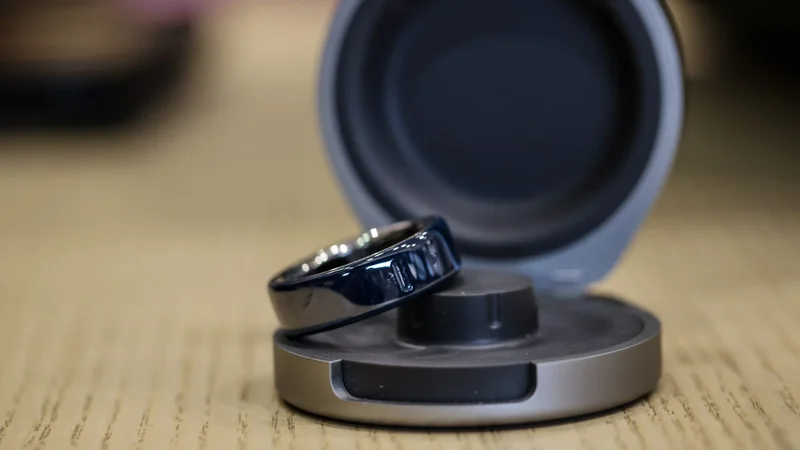
Image: Cnbc
Main Takeaway
Oura postponed its planned Nasdaq IPO after marketing up to $2.2 billion in shares, citing market uncertainty despite reported strong investor demand.
Jump to Key PointsSummary
Oura pulls back before pricing
Oura postponed its planned U.S. initial public offering on Sept. 29, hours before investors expected the smart-ring maker to price its shares. CEO Tom Hale cited “uncertainty in the IPO market,” ending a closely watched listing process that had formally launched on Sept. 21. CNBC and Reuters both reported that Oura said demand remained strong and that the business had strengthened during the offering process.
The delay followed a high-profile roadshow and left the company without a public valuation. Oura had marketed 50 million shares at an indicated price of $40 to $44, a structure that could have raised as much as $2.2 billion for the company and selling shareholders. The decision also dented hopes that the traditional fall IPO window would revive activity after a strong start to the year.
Market conditions overshadowed demand
Oura’s explanation points to broader pressure across the IPO market rather than an operational setback at the company. Investors have been reassessing technology valuations as enthusiasm around artificial intelligence cools, interest-rate concerns return and geopolitical turmoil raises the cost of risk, Reuters reported. A company can attract interest during a roadshow and still face resistance when investors must commit to a final price.
The wider numbers show that gap. U.S. companies filed 122 IPO registrations in the third quarter, up from 111 in the second, but only 76, or 62%, priced and set offering dates, according to Wall Street Horizon. That was the lowest completion rate since the fourth quarter of 2025. Oura was among 3 quarterly postponements, matching a record in Wall Street Horizon’s data, while 5 companies withdrew their filings outright.
Valuation questions remain unresolved
The last-minute withdrawal raised questions about whether investors accepted Oura’s proposed valuation, even with reported demand. Fortune’s analysis focused on 3 possible pressures: valuation expectations, the deal’s inclusion of existing shareholders seeking liquidity, and competition in the wearable-health market. IPOX Vice President Kat Liu said companies rarely attribute a withdrawn offering publicly to valuation concerns, making the market-uncertainty explanation compatible with private resistance to the proposed price.
The offering’s size gave investors several issues to weigh at once. Oura was seeking capital while existing holders marketed shares, creating a possible cash-out signal just as public investors assessed the company’s growth, recurring revenue and exposure to consumer spending. Competition also extends beyond specialist wearables. Apple has resources to expand health tracking across devices, while other technology companies continue to build ecosystems around sleep, fitness and biometric data.
Oura’s category faces a tougher test
Oura’s delay matters because the company had become a test of whether a focused consumer health product could command public-market attention during an AI-dominated IPO cycle. The ring tracks health and sleep data, giving Oura a recognizable product and a position between consumer electronics, wellness subscriptions and digital health. That blend can attract interest, but it also complicates comparisons with hardware companies, software businesses and medical-technology firms.
The company’s reported business momentum did not remove those valuation questions. Investors must judge hardware demand, subscription retention, product differentiation and the durability of health-data advantages together. A stalled offering leaves private wearable companies with less clarity about the prices public markets will accept, while competitors gain another reference point for fundraising and exit planning.
A warning for the fall IPO window
Oura’s postponement adds to evidence that a busy filing pipeline does not guarantee a busy market for completed offerings. Wall Street Horizon counted 356 filings through the first 3 quarters, yet the weaker conversion from registration to pricing shows issuers are willing to wait when market conditions shift. Reuters linked the slowdown to uncertainty around AI-led valuations, monetary policy and geopolitical risk.
The effect reaches beyond Oura. A delayed listing can preserve flexibility for management and shareholders, but it also extends private-market uncertainty and keeps employees, investors and underwriters from receiving a public trading benchmark. The stalled offerings tracked by The Wall Street Journal and the broader fall-market concerns reinforce the same message: investors are still open to new companies, but they are demanding sharper prices and clearer paths to durable returns.
What happens next for Oura
Oura can return to the market when volatility eases, revise its valuation, change the mix of primary and secondary shares, or continue operating privately. The company’s statement that demand was strong preserves a more favorable public narrative, but a future launch will face the same questions about price, growth and competitive durability.
The next attempt will also reveal whether the delay was chiefly a timing decision or a deeper disagreement over value. A successful relaunch would give Oura a public currency for expansion and acquisitions; another postponement would deepen concerns about the company’s fit with public-market expectations. For now, Oura has made its IPO a barometer for consumer health technology and for the fragile recovery of the U.S. listings market.
Key Points
Oura postponed its Nasdaq IPO after marketing 50 million shares at $40 to $44 each.
Oura cited IPO-market uncertainty despite reporting strong demand and improved business performance.
The proposed offering could have raised as much as $2.2 billion for Oura and existing shareholders.
Investors questioned Oura’s valuation, shareholder cash-out structure and exposure to wearable competition.
Only 62% of third-quarter U.S. IPO filings reached pricing, according to Wall Street Horizon.
Questions Answered
Oura delayed its IPO because it cited uncertainty in the public offering market. The company said demand was strong and its business had improved, but market volatility made proceeding less attractive.
Oura was seeking as much as $2.2 billion through its IPO. The proposed transaction involved 50 million shares marketed at $40 to $44 each, including shares sold by existing investors.
Oura did not publicly identify valuation as the reason for the delay. Fortune and IPOX commentary raised valuation expectations, the offering structure and investor cash-out concerns as possible factors behind the decision.
Oura’s delay shows that a large filing pipeline can coexist with weak IPO completion rates. Wall Street Horizon counted 122 third-quarter filings, but only 76 priced and established offering dates.
Oura can return to the market after conditions improve, revise its valuation or change the balance between new and existing shares. The company has not announced a new pricing date.
Source Reliability
38% of sources are highly trusted · Avg reliability: 63
Go deeper with Organic Intel
Simple AI systems for your life, work, and business. Each one includes copyable prompts, guides, and downloadable resources.
Explore Systems