OpenAI Expands ChatGPT Advertising With Visual Formats, Measurement Tools and Broader Market Plans
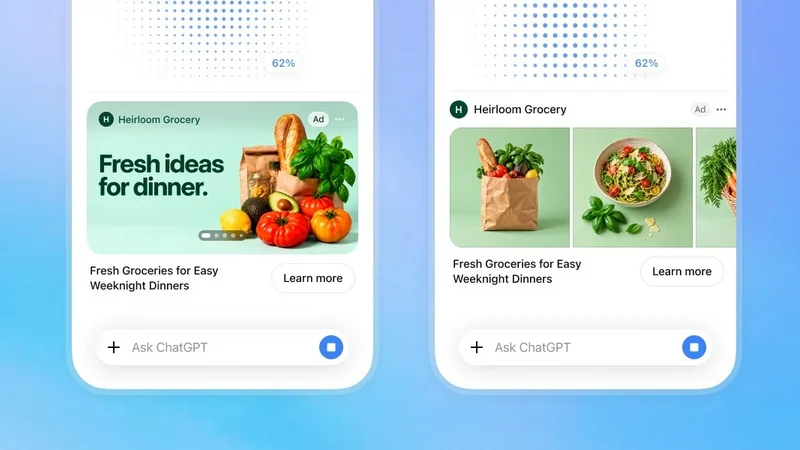
Image: The Verge AI
Main Takeaway
OpenAI will test visual sponsored-product ads in ChatGPT in the United States later this month while expanding advertiser measurement and buying tools.
Jump to Key PointsSummary
OpenAI expands ChatGPT advertising
OpenAI is adding visual sponsored-product and service placements to ChatGPT, marking a broader push to turn the chatbot into an advertising channel. The company says it will begin testing the format in the United States later this month, with ads initially appearing when users generate images. The announcement also covers new measurement capabilities, attribution partnerships and brand-suitability controls for marketers. OpenAI describes the effort as advertising designed around how people use AI, rather than a direct copy of traditional search ads. The Verge and Finance.yahoo both describe the rollout as an initial test, while OpenAI’s announcement frames it as a wider advertising infrastructure expansion.
The format places imagery associated with sponsored products or services on the user’s screen. That gives advertisers a more prominent canvas than a text link, while putting commercial content inside a conversational workflow where users ask for recommendations, create images and explore products. The precise appearance, targeting rules and launch timetable remain tied to the test phase.
How the new ad format works
ChatGPT ads are being built around user intent and visual interaction. The first described placement connects sponsored products and services to image generation, a setting where users already express preferences about objects, styles, brands and scenes. The approach shifts advertising from matching isolated keywords toward interpreting what a person is trying to accomplish in a conversation. Adsmurai’s analysis identifies that intent-based model as a central change, while Jumpfly and Trimarkdigital place the development in the longer transition from search advertising to AI-mediated discovery.
OpenAI’s planned controls are meant to separate paid placements from ChatGPT’s answers and protect advertisers from unsuitable contexts. The company is also expanding tools that measure exposure, action and attribution, giving marketers a way to connect campaigns with outcomes beyond an impression. Those features address a basic weakness of conversational advertising: users may receive useful recommendations without making clear which part of the experience influenced a purchase.
Advertisers gain new buying tools
OpenAI is building a fuller commercial system around ChatGPT, including new ways to buy ads and expanded measurement services. Stackadapt’s offering indicates that advertisers are already being connected to ChatGPT inventory through established advertising technology channels. Marketingbrew reports that the rollout is set to reach 31 additional markets, extending the business beyond an isolated United States experiment.
The commercial pitch rests on access to high-intent conversations. Users turn to ChatGPT to compare products, plan purchases, create visual concepts and solve practical problems, giving advertisers a context-rich environment. That value depends on keeping commercial recommendations visibly distinct from neutral answers. The Current’s question about whether advertisers are ready to enter the channel reflects the early stage of the market, while Digiday focuses on the measurement and visual systems needed to make it viable at scale.
Trust and ad integrity concerns
OpenAI is creating an integrity function for ChatGPT advertising, a sign that trust is becoming a central operating requirement. Businessinsider reports that the company is building an “Integrity Team” for ads, while OpenAI’s own announcement emphasizes brand suitability and clearer measurement relationships. The safeguards must address both sides of the marketplace: advertisers need protection from unsafe placements, and users need confidence that paid content isn't quietly steering answers.
ChatGPT’s conversational setting makes those questions sharper than they are on a conventional display page. An ad can appear next to an answer, influence a recommendation or enter a visual creation session, so labeling and separation matter to the product experience. OpenAI’s Help Center documentation provides the user-facing foundation for explaining where ads appear and how the system handles them. The integrity effort will be judged by visible disclosures, consistent enforcement and whether commercial incentives affect responses.
Pressure on search and AI platforms
ChatGPT advertising puts OpenAI closer to the business model that has financed traditional search for decades. Trimarkdigital and Adsmurai describe the shift as a move toward intent-based discovery, where an AI system mediates the path between a question and a commercial decision. That model challenges the value of keyword auctions because the platform can interpret a complete request rather than wait for a short search phrase.
The change also raises competitive pressure across AI and search companies. Google already combines conversational AI with a large advertising operation, while Microsoft has ties to both search and OpenAI. Meta and Amazon compete for budgets tied to product discovery, and Stackadapt’s involvement shows how advertising technology firms are positioning themselves around new inventory. OpenAI’s ability to preserve user trust while increasing revenue will shape how quickly rivals copy the format.
What happens next
OpenAI’s next test will determine whether visual ads can fit inside ChatGPT without making the product feel like a shopping feed. The company has the pieces of a commercial platform in place: visual placements, buying access, measurement, attribution, brand-safety controls and an integrity team. Expansion into 31 markets would give advertisers more reach, but it would also expose the system to different regulatory standards, consumer expectations and enforcement challenges.
For users, the practical issue is simple: sponsored content will occupy more of the ChatGPT experience, beginning with image generation and extending as OpenAI tests additional formats. For marketers, the opportunity is access to intent-rich interactions with new performance data. The long-term outcome depends on whether ads remain clearly identified and whether ChatGPT continues to serve the user’s request before the advertiser’s goal.
Key Points
OpenAI is adding visual sponsored-product ads to ChatGPT, beginning with US image-generation tests later this month.
ChatGPT advertising will include measurement, attribution, brand-suitability and new ad-buying tools for marketers.
OpenAI’s reported integrity team will oversee trust, disclosure and safety issues surrounding commercial ChatGPT content.
The rollout reflects a shift from keyword advertising toward AI-driven targeting based on conversational user intent.
OpenAI plans to expand ChatGPT ads into 31 additional markets as its commercial platform develops.
Questions Answered
OpenAI will begin testing visual ads in ChatGPT in the United States later this month. The initial placements are tied to image generation and feature sponsored products or services.
OpenAI is adding visual sponsored-product and service placements to ChatGPT. The company is also developing broader buying, measurement, attribution and brand-suitability tools for advertisers.
OpenAI is building an advertising business around ChatGPT’s high-intent conversations. The platform can interpret requests involving product discovery, recommendations, planning and image creation, giving marketers a context-rich channel.
OpenAI says ChatGPT ads will be separated from the assistant’s answers and supported by brand-suitability controls. The company is also reported to be creating an integrity team to address trust, disclosure and commercial influence concerns.
ChatGPT advertising targets conversational intent rather than relying only on short keyword queries. The system can use the broader context of a user’s request to connect sponsored products or services with an activity such as image creation or shopping research.
OpenAI plans to roll ChatGPT advertising into 31 additional markets, according to Marketingbrew. The expansion follows the initial United States test and will increase the importance of local advertising rules and user expectations.
Source Reliability
29% of sources are highly trusted · Avg reliability: 68
Go deeper with Organic Intel
Simple AI systems for your life, work, and business. Each one includes copyable prompts, guides, and downloadable resources.
Explore Systems