U.S. Inflation Hits 4.2% on Energy Surge as New Fed Chair Warsh Faces First Test
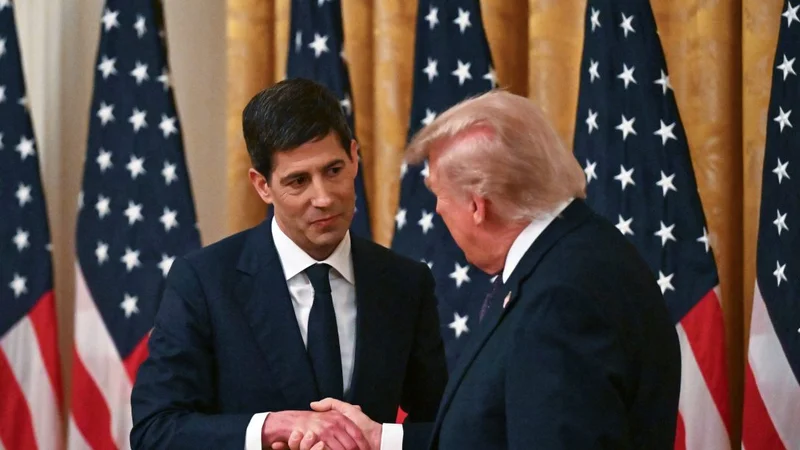
Image: Fortune AI
Main Takeaway
U.S. consumer prices jumped to 4.2% annually in May, with energy costs driving over 60% of the monthly increase as new Federal Reserve Chair Kevin Warsh.
Jump to Key PointsSummary
Why headline inflation spiked
Consumer prices rose 0.5% in May, pushing annual inflation to 4.2% from 3.8% the prior month, according to the Bureau of Labor Statistics. That marks the first time inflation has cleared 4% since 2023. The monthly increase was the sharpest in months, catching some analysts off guard and immediately reshaping the debate at the Federal Reserve.
The culprit was almost entirely energy. Energy costs accounted for more than 60% of May's price increase, with gasoline surging 7% from April and 40.5% year over year. The spike traces directly to the war in Iran, which has choked traffic through the Strait of Hormuz and sent global oil prices climbing. Without that energy shock, the inflation picture looks markedly different, a distinction that has become central to how policymakers and politicians are framing the data.
What core inflation tells us
Strip out food and energy, and the story changes completely. Core CPI rose just 0.2% in May and 2.9% over the year, softer than economists had forecast. That gap between headline and core, now more than a full percentage point, is the widest it has been in some time and carries real implications for monetary policy.
The core reading suggests underlying price pressures remain contained. Services inflation has moderated, and goods prices have stabilized after years of pandemic-era volatility. For the Federal Reserve, this creates a genuine puzzle: raise rates to combat a headline number that may be temporary, or hold steady and risk letting energy-driven inflation become entrenched? The answer depends heavily on how long the Iran conflict lasts and whether oil markets settle.
Trump's surprising embrace of the numbers
President Donald Trump greeted the inflation report with enthusiasm that caught markets off guard. "I love the inflation," he told reporters in the Oval Office, calling the numbers "great." He dismissed concerns about the 4.2% figure, arguing the data merely reflected energy price spikes tied to the Iran war and would normalize once a ceasefire became permanent.
The comments represent a striking rhetorical reversal for a president who has historically blasted inflation under Democratic administrations. They also signal White House pressure for rate cuts despite elevated headline inflation. Trump's framing, that energy-driven spikes are transitory and should be looked through, mirrors arguments some dovish economists have made. Whether that view prevails at the Fed is another question entirely.
Warsh's Fed faces a policy dilemma
Kevin Warsh, newly installed as Federal Reserve Chair, now confronts one of the trickiest openings for any central banker in recent memory. He inherits an economy where headline inflation is flashing red but core inflation is approaching the Fed's target zone. Markets are pricing in rate cut expectations, yet the 4.2% headline number gives hawks ammunition to demand patience.
According to CBS News and The Economist, Warsh's main challenge is threading this needle without appearing political or behind the curve. He has historically favored tighter monetary policy than some of his predecessors, but he also understands the damage of overtightening into a supply shock. His early decisions will set the tone for the Fed's credibility and independence during a polarized period. How he navigates the June and July meetings will be watched intensely by global markets.
What markets and consumers should watch
Consumer sentiment has already begun deteriorating as gas prices bite into household budgets, Virginia Business reports. That divergence, between statistical core inflation and felt economic pain at the pump, creates political and economic risks that pure data analysis misses. For the average consumer, the 40.5% year-over-year jump in gasoline prices is not an abstract energy component, it is a weekly budget shock.
Markets have reacted with unusual volatility, unsure whether to price for rate cuts on soft core data or rate holds on sticky headline numbers. The dollar has wobbled, and Treasury yields have seesawed as traders recalibrate. The next few CPI reports, and any developments in Iran, will determine whether May was an energy blip or the start of a more troubling inflationary phase. For now, the safest read is that the economy is more fragile than either the headline or core number alone captures.
What happens next for Fed policy
The June Federal Open Market Committee meeting, Warsh's first as chair, was already freighted with expectations before this inflation print. Now it has become a defining moment. Most analysts expect the Fed to hold rates steady while signaling flexibility, but the statement's language on energy and inflation will be parsed word by word.
The risk of a policy error runs in both directions. Cut too soon, and the Fed could lose control if energy prices keep climbing or spill into broader inflation. Hold too long, and a slowing economy could tip into unnecessary recession. Warsh's challenge is to communicate that the Fed sees both risks clearly and is not hostage to either political pressure or mechanical rules. His success or failure will shape not just the U.S. economy, but the global financial architecture that still looks to the Fed for leadership.
Key Points
U.S. annual inflation reached 4.2% in May, the highest since 2023, driven by energy costs.
Energy prices accounted for over 60% of the monthly CPI increase, with gasoline up 7% from April.
Core CPI rose only 0.2% monthly and 2.9% annually, below forecasts and suggesting contained underlying inflation.
President Trump praised the inflation data and dismissed concerns, blaming temporary energy shocks from the Iran war.
New Fed Chair Kevin Warsh faces a policy dilemma between headline inflation pressure and soft core readings.
Questions Answered
Energy costs drove U.S. inflation to 4.2% in May 2026, with gasoline surging 7% monthly and 40.5% annually due to the war in Iran disrupting oil shipments through the Strait of Hormuz. Energy alone accounted for over 60% of the monthly price increase.
President Trump praised the May 2026 inflation report because he viewed the energy-driven spike as temporary and tied to the Iran war, predicting prices would normalize after a permanent ceasefire. His comments also reflected political positioning to pressure the Federal Reserve toward rate cuts.
Kevin Warsh must decide whether to raise, hold, or cut interest rates when headline inflation is elevated at 4.2% but core inflation is soft at 2.9%. This supply-shock scenario tests his ability to maintain Fed credibility and independence amid political pressure for easier monetary policy.
Markets are uncertain about rate cuts after the mixed May 2026 inflation data, with headline inflation supporting hawkish patience but soft core readings and political pressure favoring cuts. Most analysts expect the Fed to hold rates steady at the June meeting while signaling future flexibility.
Source Reliability
44% of sources are trusted · Avg reliability: 76
Go deeper with Organic Intel
Simple AI systems for your life, work, and business. Each one includes copyable prompts, guides, and downloadable resources.
Explore Systems