Trump Says U.S. and Canada Reached Tariff Deal, but Public Terms and Final Commitments Remain Unclear
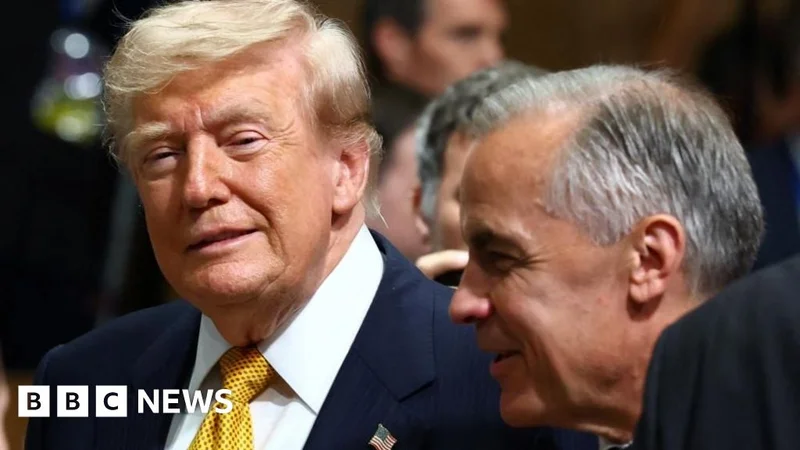
Image: Bbc
Main Takeaway
Donald Trump paused threatened 50% tariffs on $20 billion in Canadian goods after announcing a tentative U.S.-Canada deal whose terms remain undisclosed.
Jump to Key PointsSummary
A tariff deadline produces a pause
The United States and Canada reached a tentative understanding that paused threatened 50% tariffs on roughly $20 billion of Canadian goods, but neither government released public terms. Donald Trump announced the agreement and said the tariffs would be suspended for 3 days, while Canadian Prime Minister Mark Carney described the negotiations as unfinished.
The deadline had covered products ranging from hockey sticks to tongue depressors, turning a high-level dispute into a direct threat to manufacturers, retailers and consumers. The pause prevented an immediate escalation, but it left businesses with no clear schedule for implementation, exemptions or enforcement. The Globe and Mail described the arrangement as tentative, while NBC News reported Trump's statement that the United States and Canada had a deal.
What the proposed agreement covers
The emerging arrangement is centered on avoiding the 50% duties rather than announcing a fully documented trade settlement. A senior Canadian official called the terms “a very good deal for Canada,” according to Fortune, but officials continued negotiations after Trump's announcement. Carney and his team have framed the process as a continuing effort to protect Canada's access to the U.S. market.
The threatened tariffs were tied to Trump's complaints about unequal treatment of U.S. cars, dairy and alcohol, while earlier disputes also involved Canada's trade relationship with China. In January, Trump threatened 100% tariffs if Canada proceeded with a China trade deal, and in 2025 he threatened a 35% tariff. Those episodes established a pattern in which tariff deadlines function as negotiating pressure.
Why the terms remain undisclosed
The lack of published terms makes the announcement politically significant but commercially incomplete. Canadian negotiators had spent about a week in Washington seeking an agreement before the tariff deadline, and Carney faced pressure to secure relief without offering broad concessions. Canadian officials said important work remained, even as Trump presented the outcome as a deal.
The United States has used the tariff threat to gain leverage before the broader North American trade framework is reconsidered. That creates a second deadline behind the immediate 3-day pause. The Congressional Research Service’s treatment of U.S.-Canada trade relations provides broader institutional context for the countries’ deeply integrated economic relationship, while BBC coverage described the talks as intense and difficult.
The economic stakes for both countries
The immediate risk falls on companies that depend on cross-border supply chains and predictable customs treatment. A 50% duty on Canadian imports would raise landed costs, force pricing decisions and invite retaliation, even if the affected goods represent a limited portion of total bilateral commerce. Consumers would face the clearest effects in product categories directly covered by the tariff list.
Canada has strong reasons to preserve access to the U.S. market, its dominant trading partner, but the negotiations also test Carney's ability to resist demands viewed as politically costly at home. Trump benefits from keeping tariff authority available as leverage. The earlier 35% and 100% threats show how quickly the stakes have risen across successive disputes, increasing uncertainty for companies planning production and investment.
What happens during the 3-day pause
The next phase is a compressed negotiation over the concessions, exclusions and legal language hidden behind the announcement. U.S. and Canadian negotiators are expected to continue meetings while officials try to convert a political understanding into written commitments. Until that happens, importers cannot treat the pause as a permanent tariff exemption.
Carney has said Canada is prepared to intensify talks and examine its options, while Trump retains the ability to restore the threatened duties if negotiations fail. The public messaging therefore serves 2 purposes: it prevents an immediate market shock and preserves pressure on negotiators. CBC coverage described the parties as signaling that a deal was in the works, but the published record still points to an unfinished agreement rather than a completed treaty.
A temporary truce with wider consequences
The episode reinforces the idea that North American trade policy is being negotiated through short deadlines, public threats and temporary pauses. That approach gives political leaders room to claim progress, but it leaves businesses and consumers managing uncertainty between announcements and enforceable rules.
For Canada, the immediate objective is tariff relief while limiting concessions on trade, China policy and domestic economic priorities. For the United States, the objective is leverage before the next review of regional trade arrangements. The final test will be whether the undisclosed terms become a durable framework or another pause before a new tariff deadline.
Key Points
Donald Trump paused threatened 50% tariffs on $20 billion of Canadian goods after announcing a tentative trade deal.
Canada and the United States released no public terms, leaving tariff exemptions and enforcement details unresolved.
Mark Carney described negotiations as unfinished despite Trump’s claim that Washington and Ottawa reached a deal.
Earlier U.S. tariff threats against Canada escalated from 35% to 100% over separate trade disputes.
The 3-day pause gives negotiators time to convert a political announcement into enforceable written commitments.
Questions Answered
Donald Trump announced a tentative U.S.-Canada trade deal and paused threatened 50% tariffs for 3 days. The duties targeted about $20 billion of Canadian goods, but the agreement’s terms were not released.
Mark Carney did not describe the Canada-U.S. arrangement as final. Canadian officials said negotiations continued and that important work remained after Trump announced the tariff pause.
Donald Trump tied the 50% Canada tariffs to complaints about unequal treatment of U.S. cars, dairy and alcohol. The threat also served as leverage in wider negotiations over North American trade and Canada’s international trade policy.
The United States and Canada must settle written terms before the 3-day pause expires or risk renewed tariffs. The unresolved issues include exemptions, enforcement, concessions and the timetable for implementation.
A 50% U.S. tariff would raise the cost of covered Canadian imports and disrupt cross-border supply chains. Canadian exporters, U.S. retailers, manufacturers and consumers would face pricing and planning uncertainty.
Source Reliability
73% of sources are highly trusted · Avg reliability: 86
Go deeper with Organic Intel
Simple AI systems for your life, work, and business. Each one includes copyable prompts, guides, and downloadable resources.
Explore Systems