Trump Proposes US Government Take Equity Stakes in Leading AI Labs
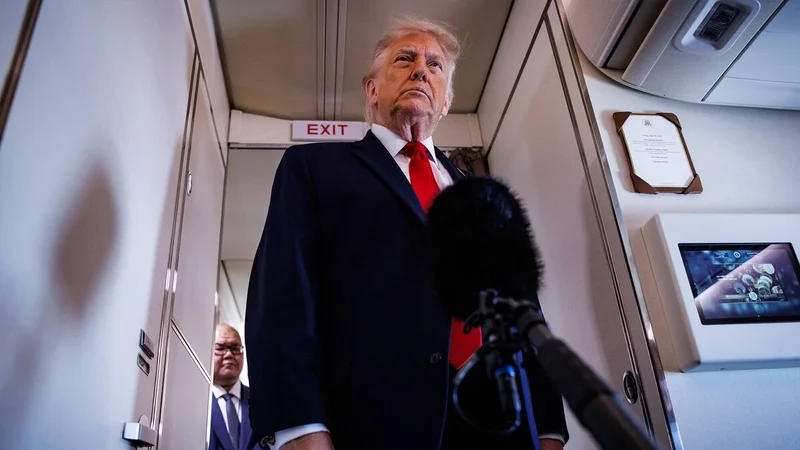
Image: Bloomberg AI
Main Takeaway
Trump told reporters the US may take direct equity stakes in OpenAI, Anthropic, and xAI, calling government partnership in AI a beautiful thing.
Jump to Key PointsSummary
What Trump Actually Proposed
President Donald Trump told reporters on Friday that the US government may take direct equity stakes in leading artificial intelligence developers. "You make them a partnership in this revolution," Trump said. "It would be a beautiful thing." The comments signal a dramatic shift in how the federal government might engage with the AI industry, moving from regulation and procurement to direct ownership positions in the companies building the most powerful AI systems.
The proposal targets major AI labs including OpenAI, Anthropic, and xAI according to Fortune's reporting. Trump indicated he planned to discuss the idea of partnership with AI companies, though specific deal structures or timelines were not detailed in his remarks. The comments came during a period of intensifying competition between the US and China over AI supremacy, with both nations treating advanced AI as a strategic national asset.
The Strange Political Bedfellows This Creates
Trump's proposal places him in unexpected alignment with Senator Bernie Sanders, who had articulated similar populist arguments for public ownership in AI just days earlier. Fortune described this as "the strangest political convergence of 2026," noting that the MAGA base has been building fears about AI for months. The Sanders-Trump overlap on this issue transcends typical left-right divides, tapping into a shared skepticism of unconstrained corporate power over transformative technology.
The convergence also includes OpenAI CEO Sam Altman, who has separately discussed public ownership concepts. Money.usnews highlighted this triangle of figures from across the political spectrum all converging on public ownership as a framework for AI governance. This rare alignment suggests the idea may gain traction beyond partisan boundaries, though for starkly different underlying reasons. Sanders approaches it from anti-corporate populism; Trump from nationalist economic competition; Altman from a desire to legitimize AI's social contract.
Why National Security Officials Are Pushing This Framing
The equity stake model reframes AI companies as quasi-strategic assets comparable to defense contractors or critical infrastructure rather than conventional technology firms. Government ownership would provide direct visibility into model development, training data, and safety practices without relying on voluntary disclosure or adversarial regulation. It also creates a mechanism for the US to capture financial upside from AI breakthroughs, rather than simply taxing profits after the fact.
This approach mirrors how some nations structure stakes in energy, telecommunications, or finance sectors deemed essential to national interest. For AI specifically, direct ownership would give the government board-level influence over companies whose products could reshape military capability, labor markets, and information ecosystems. The model differs sharply from existing US technology policy, which has relied on export controls, procurement contracts, and indirect funding through research grants.
What This Means for AI Lab Independence
Direct government equity would fundamentally alter the governance and incentive structures of companies like OpenAI, Anthropic, and xAI. These labs have operated with substantial autonomy, even when taking investment from individual government-affiliated entities or accepting contracts. Federal ownership stakes would introduce new oversight layers, potentially complicating rapid iteration, commercial partnerships, and international expansion.
The structure also raises questions about competitive neutrality. If the US government owns stakes in some AI labs but not others, or if ownership varies by company, it could distort market dynamics and create perceived or actual advantages for government-backed firms. Anthropic and xAI have positioned themselves as alternatives to OpenAI; federal equity in all three would collapse some competitive distinctions while potentially accelerating consolidation.
The China Competition Angle
Trump's proposal arrives as the US-China AI rivalry intensifies, with both nations treating frontier model development as a zero-sum contest. Government equity stakes would give the US a direct mechanism to steer AI development toward national security applications and away from capabilities or partnerships perceived as benefiting Chinese interests. This mirrors Beijing's approach, where state-backed funds and state-owned enterprises play central roles in AI development.
The competitive framing may help explain why a Republican president would embrace what might otherwise be criticized as industrial policy or even socialism. By wrapping equity ownership in nationalist rhetoric, the proposal attempts to defuse ideological opposition. Whether this framing holds among free-market conservatives remains an open question, particularly as details emerge about implementation and scope.
What Happens Next on Capitol Hill
Congressional reaction will determine whether Trump's comments translate into policy. The proposal would require legislation to authorize federal equity purchases, appropriate funds, and establish governance frameworks. Given the Sanders-Trump overlap, there may be unexpected bipartisan support, though details would likely fracture any coalition. Democrats may demand worker ownership components, environmental conditions, or profit-sharing mechanisms that Republicans would resist.
Legal and constitutional questions also loom. The federal government has limited experience with direct equity stakes in fast-moving technology companies, and existing mechanisms like the Defense Production Act or strategic investment funds would need significant adaptation. The AI labs themselves have not publicly endorsed the proposal, and their response will shape whether this advances beyond rhetorical positioning into serious policy development.
Key Points
Trump proposed US government take direct equity stakes in OpenAI, Anthropic, and xAI.
Sanders, Trump, and Altman have all recently discussed public ownership of AI infrastructure.
Government equity would give federal officials board-level influence over AI development priorities.
The proposal requires new legislation and faces uncertain congressional reception.
Direct ownership marks a sharp break from existing US technology policy approaches.
Questions Answered
Trump told reporters the US may take direct equity stakes in AI companies including OpenAI, calling it a potential partnership. He did not announce a completed deal or specific terms, only that he planned to discuss the idea with AI companies.
Sanders previously articulated populist arguments for public ownership in AI, though from anti-corporate rather than nationalist motivations. Both figures share skepticism of unconstrained private control over transformative technology, despite divergent political frameworks.
No detailed mechanism has been proposed. Federal equity purchases would require congressional authorization for funding and governance structures. The model would likely resemble state investment in strategic sectors like energy or defense rather than conventional regulation.
None of the AI labs have publicly endorsed or rejected Trump's proposal. Their response will determine whether the idea advances beyond presidential rhetoric into concrete policy negotiations and potential deals.
Yes, the proposal emerges amid intensifying US-China AI rivalry. Government equity would give the US direct steering capacity over AI development toward national security applications, mirroring elements of Beijing's state-backed AI development model.
Source Reliability
64% of sources are highly trusted · Avg reliability: 81
Go deeper with Organic Intel
Simple AI systems for your life, work, and business. Each one includes copyable prompts, guides, and downloadable resources.
Explore Systems