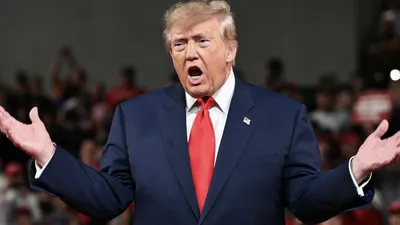
Trump Administration Sides With OpenAI as NYT Copyright Fight Tests AI Training Rules
Image: Theguardian
Main Takeaway
The Trump administration filed a 20-page brief supporting OpenAI’s fair-use defense in the New York Times copyright lawsuit over AI model training.
Jump to Key PointsSummary
The government enters the case
The Trump administration has entered The New York Times’ copyright lawsuit against OpenAI, arguing that using copyrighted works to train artificial intelligence models can qualify as fair use. Federal officials filed a 20-page statement of interest in Manhattan federal court, placing the government behind OpenAI’s defense as the case approaches a potentially important test of copyright law.
The filing frames continued AI development as a national economic and technological priority. It says the United States has a strong interest in building a competitive AI industry that sets global standards for how the technology is developed and used. The intervention gives OpenAI an ally beyond the private companies already involved in the dispute, including Microsoft.
Why the New York Times sued
The New York Times sued OpenAI and Microsoft in December 2023, alleging that the companies copied and used its journalism without permission to train systems behind ChatGPT. The newspaper seeks billions of dollars in damages and says its articles received particular emphasis in the companies’ model development and chatbot responses.
The legal fight concerns more than whether individual articles appeared in training data. It also addresses whether large-scale machine learning can transform copyrighted expression into a training resource without a license, and whether AI-generated answers that reproduce or closely summarize published work harm publishers’ markets. The Guardian described the lawsuit as an attempt to stop the companies from free-riding on the newspaper’s investment in journalism, while other coverage places the dispute within a broader group of claims from news organizations.
OpenAI’s fair-use position
OpenAI has consistently argued that training AI models on publicly available copyrighted material falls within fair use, a doctrine that permits some unlicensed copying for purposes such as commentary, research, and transformation. The administration’s filing supports that general legal position, rather than resolving whether every use of copyrighted material by every AI system is lawful.
OpenAI made the policy argument directly to the Trump administration in March 2025, urging Washington to codify protections for AI training on copyrighted data. The company said restrictions would weaken American technological leadership and called for rules that avoid burdens it viewed as unnecessary. The government’s court filing now gives that policy campaign a direct role in the New York Times litigation, linking the company’s earlier lobbying effort with its current courtroom defense.
Publishers challenge OpenAI’s conduct
The government’s support arrives as news organizations are pressing their own allegations against OpenAI. The New York Times, Daily News, and other publishers have asked a federal judge to sanction OpenAI, claiming the company is withholding evidence that matters to the copyright dispute. That request raises a separate discovery fight alongside the central fair-use question.
Publishers argue that AI companies benefit from enormous bodies of journalism while competing with the organizations that pay to produce it. The outcome will affect licensing negotiations, publisher access controls, chatbot attribution, and the financial value of online archives. OpenAI has called the New York Times’ lawsuit meritless and has maintained that its training practices are protected by copyright law, according to NewsNation coverage.
What the ruling could change
A decision in the case will help define how United States copyright law applies to foundation-model training. A ruling favoring OpenAI would strengthen the position of AI developers that large datasets can be used without individual licenses, while a ruling favoring the Times would increase pressure to negotiate permissions or pay rights holders before training models.
The government’s filing won't decide the case by itself. The judge must still evaluate the record, including how OpenAI acquired and used the material, how its systems reproduce or summarize Times content, and whether the use affects the newspaper’s existing or future markets. The sanctions request adds another near-term dispute over evidence. Together, the court proceedings will shape commercial strategy for model developers, publishers, and companies building products on top of large language models.
The next phase of the fight
The case now combines a courtroom battle over specific alleged uses with a national policy argument about American competitiveness. OpenAI has sought clear federal support for AI training, and the administration has supplied it while presenting fair use as compatible with continued growth in the sector.
The New York Times and other publishers will continue challenging the use of their journalism, the handling of evidence, and the market effects of chatbot systems. The next significant developments will come from the judge’s treatment of the sanctions request and the court’s analysis of whether model training and output behavior satisfy fair-use standards. Any decision will reverberate through AI licensing deals, news publishing, and future federal copyright policy.
Key Points
OpenAI received Trump administration support for its fair-use defense in the New York Times copyright lawsuit.
The U.S. government argues copyrighted material can be used to train AI models under fair-use principles.
The New York Times seeks billions from OpenAI and Microsoft over unlicensed use of its journalism.
Publishers are asking a federal judge to sanction OpenAI over allegedly withheld evidence in discovery.
OpenAI previously urged the Trump administration to codify fair-use protections for AI training data.
Questions Answered
The Trump administration supports OpenAI because it argues AI training on copyrighted material can qualify as fair use and serves U.S. competitiveness. Its court filing says the country has a strong interest in developing a leading AI industry.
The New York Times accuses OpenAI and Microsoft of using its journalism without permission to train AI systems behind ChatGPT. The newspaper seeks billions of dollars and says its content received particular emphasis in the companies’ practices.
OpenAI argues that training language models on copyrighted material is generally protected by fair use. The company says AI training transforms the material for model development, although the court must assess the specific uses and their market effects.
Yes, OpenAI asked the Trump administration in March 2025 to codify fair-use protections for AI training on copyrighted data. The company said burdensome restrictions could weaken U.S. leadership in artificial intelligence.
The judge will consider the government’s position, the core fair-use claims, and a request from publishers to sanction OpenAI over allegedly withheld evidence. The court’s eventual ruling will affect licensing, publisher compensation, and AI training practices.
Source Reliability
50% of sources are established · Avg reliability: 72
Go deeper with Organic Intel
Simple AI systems for your life, work, and business. Each one includes copyable prompts, guides, and downloadable resources.
Explore Systems