Treasury Bond Intervention Fades as Traders Attack Bessent’s Strategy Amid Venezuela Dollarization Push
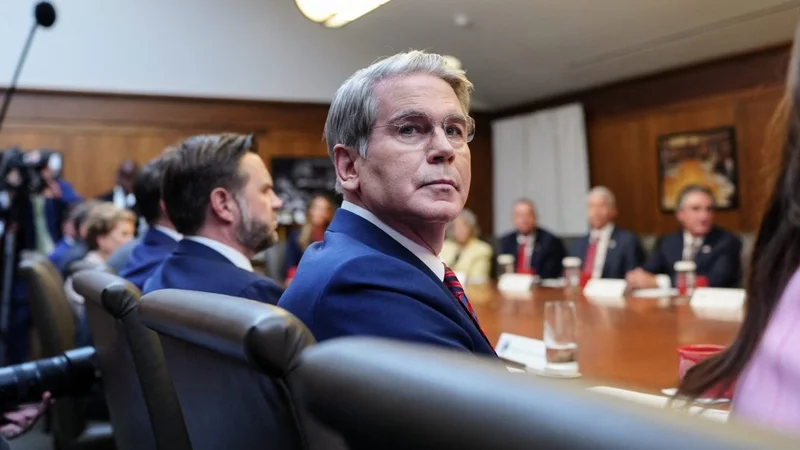
Image: Fortune AI
Main Takeaway
U.S. Treasury yields rose back toward pre-intervention levels as bond traders criticized Scott Bessent’s purchases of long-dated debt and Venezuela weighed full dollarization.
Jump to Key PointsSummary
Treasury intervention loses momentum
Long-term Treasury yields moved back toward their starting levels after Treasury Secretary Scott Bessent announced plans to double purchases of long-dated government debt, weakening the immediate impact of the intervention. The move was framed as a short-term effort to calm bond markets, but traders characterized it as a temporary fix rather than a durable response to the forces driving yields higher.
The criticism reflects concern that official buying can smooth market conditions without addressing the government’s broader borrowing needs, inflation pressures, or investor demand for compensation on long-maturity debt. Fortune’s coverage described the intervention as a “band-aid,” while market participants quoted in the report used far harsher language, calling it “a heinous financial crime.” The sharp reaction underscores how sensitive bond investors are to policies that blur the line between market support and debt financing.
Why long-term yields remain central
The 30-year Treasury yield is the key pressure point because it captures investors’ view of inflation, fiscal borrowing, and the risks of holding government debt over decades. When yields rise, prices fall, increasing financing costs for the federal government and pushing up borrowing costs across mortgages, corporate debt, and other long-term credit markets.
Bessent’s planned purchases targeted that segment directly, but the market’s quick reversal showed that traders were looking beyond the operation itself. Buying bonds can affect supply and prices at the margin, yet it doesn't erase concerns about persistent deficits or the volume of debt the Treasury must issue. The episode also revives a familiar debate over whether government intervention stabilizes markets or distorts price signals that investors rely on.
The available details identify the purchases and the market response, but they don't establish the program’s size, duration, or broader policy framework. Those details will determine whether the operation becomes a continuing market tool or remains a brief attempt to contain volatility.
Venezuela’s dollarization proposal
Venezuela is pursuing a radically different monetary intervention: replacing the bolivar with the U.S. dollar and abolishing its central bank. The National Assembly named Johns Hopkins University economist Steve Hanke as a special adviser on economic, monetary, and energy affairs as the country confronts annual inflation of about 400%, described in Fortune’s coverage as the world’s highest.
Hanke’s proposal removes the government’s ability to finance spending by expanding the domestic money supply. He told Fortune that he puts the odds of approval at 50% to 80%, making the plan a live political project rather than an implemented policy. The proposal arrives as Venezuela rebuilds after Nicolás Maduro’s ouster and as the dollar already plays a significant role in everyday economic activity.
Dollarization would also surrender independent monetary policy. Venezuela would gain a stable foreign currency but lose the ability to set its own interest rates, issue money during crises, or adjust its exchange rate to absorb economic shocks. The plan therefore links price stability to fiscal discipline and access to enough dollars to support the economy.
Hanke’s record shapes the debate
Hanke’s argument draws on a long record of advising countries that replaced unstable currencies or tied them tightly to the dollar. He persuaded Montenegro to abandon the Yugoslav dinar for the Deutschemark in 1999 and advised Ecuador during its 2000 transition to the U.S. dollar. He also served as an informal adviser in Zimbabwe, where dollarization initially helped restrain inflation before a later government abandoned the policy in 2013.
Those cases provide both evidence and caution. Dollarization can halt the domestic money creation that fuels hyperinflation, but it doesn't repair weak institutions, public finances, or shortages of foreign currency. Zimbabwe’s return to hyperinflation after dropping the dollar is central to Hanke’s case for maintaining the arrangement once stability has been restored.
Venezuela presents an especially large test. Hanke previously promoted a currency-board plan there in the mid-1990s, but it failed to win majority support in the National Assembly. He now describes full dollarization as the biggest switch from a domestic currency to an alternative since the euro’s introduction in 1999.
Two competing lessons for policy
The bond-market episode and Venezuela’s currency proposal point to the same underlying question: does a policy tackle the cause of instability or only manage its symptoms? Treasury bond purchases address market pressure by influencing demand for long-term debt. Venezuela’s dollarization plan seeks to remove the monetary mechanism that allowed rapid currency creation, but it requires political approval and fiscal restraint.
For investors, the Treasury episode puts renewed focus on the durability of long-term yield relief and the limits of targeted purchases. For Venezuelan households and businesses, dollarization would offer a path away from a collapsing bolivar while creating dependence on dollar availability and government discipline. Both policies carry consequences beyond their initial announcement, and both will be judged by whether they change economic behavior rather than simply alter market prices for a short period.
The next decisions are political and operational. U.S. officials must show whether bond purchases form part of a sustained strategy, while Venezuela’s National Assembly must decide whether to abandon its currency and central bank. Until those steps occur, the market intervention remains temporary and dollarization remains a proposal.
Key Points
Scott Bessent’s Treasury bond purchases failed to keep 30-year yields near their initial post-announcement levels.
Bond traders criticized Bessent’s intervention as a temporary fix that leaves fiscal and inflation concerns unresolved.
Venezuela appointed Steve Hanke to advise on replacing the bolivar with the U.S. dollar.
Steve Hanke estimates Venezuela has a 50% to 80% chance of approving full dollarization.
Venezuela’s proposed currency switch would abolish the bolivar and central bank amid 400% inflation.
Questions Answered
Scott Bessent’s Treasury bond intervention lost momentum as 30-year yields climbed back toward their pre-announcement levels. The Treasury planned to double purchases of long-dated debt, but traders questioned whether buying alone could address fiscal and inflation concerns.
Bond traders criticize Scott Bessent’s strategy because targeted purchases can support long-term bond prices without resolving heavy government borrowing or inflation risks. The intervention was described as a temporary “band-aid” in Fortune’s coverage.
Venezuela has proposed adopting the U.S. dollar, but the plan still requires approval from the National Assembly. The proposal would replace the bolivar and abolish the central bank amid annual inflation of about 400%.
Steve Hanke is a Johns Hopkins economist advising Venezuela on monetary policy. He proposes full dollarization to prevent money creation from financing government spending and estimates a 50% to 80% chance of approval.
Full dollarization would give Venezuela the U.S. dollar as its official currency and eliminate the bolivar and central bank. The country would gain monetary stability while losing control over interest rates, money creation, and exchange-rate policy.
Source Reliability
50% of sources are trusted · Avg reliability: 58
Go deeper with Organic Intel
Simple AI systems for your life, work, and business. Each one includes copyable prompts, guides, and downloadable resources.
Explore Systems