'Together Tech' Startups Emerge as Counter-Programming to AI's Screen Dominance

Image: Mitsloan.mit
Main Takeaway
Founders raise millions for offline social experiences as investors bet against AI's isolation effect.
Jump to Key PointsSummary
Why founders are building away from screens
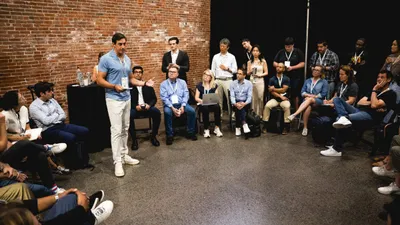
A growing cohort of entrepreneurs is deliberately designing products that pull users away from digital interfaces. Brynn Putnam, founder of Mirror, raised $20 million for Board, a startup creating in-person games and social experiences. The company has already sold thousands of units, suggesting market appetite for analog connection. This movement represents a direct counter-programming to the AI and social media ecosystems that optimize for engagement time.
The trend extends beyond single companies. Cyberdeck creators are going viral on TikTok for crafting whimsical DIY computers that reject big tech's polished ecosystems. These projects tap into a cultural fatigue with always-on connectivity, even as venture capital continues pouring record sums into AI infrastructure. According to TechCrunch, the AI fundraising machine keeps breaking its own records, with Alphabet recently closing an record-breaking $85 billion raise for Google's AI business. Yet some founders see opportunity in the backlash.
How 'together tech' fits the 2026 startup landscape
The startup environment in 2026 remains heavily AI-dominated. Failory's ranking of top United States startups features OpenAI and Anthropic prominently, with the two companies having raised a combined total of over $100 billion. Other fields like fintech and robotics continue growing, but AI commands disproportionate attention and capital allocation.
Against this backdrop, 'together tech' occupies a narrow but potentially lucrative niche. It doesn't compete with AI on infrastructure or model performance. Instead, it offers emotional and social value propositions that large language models cannot directly provide. Innovest predicts that most changes in the tech industry during 2026 will be incremental, with foundations laid in prior years. In such an environment, genuine differentiation through human-centric design becomes more valuable than marginal AI improvements. The bet is that consumers will pay for products that respect their attention rather than exploit it.
Where institutional support is flowing
Despite the anti-screen positioning, together tech companies are not rejecting venture capital. Board's $20 million raise demonstrates that traditional investors see commercial potential in offline experiences. The Hello Tomorrow Challenge, which selected 100 deep tech finalists from 4,800 applications across 108 countries, includes companies building breakthrough technologies in healthcare, energy, and advanced computing. While not exclusively focused on social connection, the competition's jury, including L'Oréal, ASML, and Breakthrough Energy Discovery, signals broad institutional interest in technologies with tangible human impact.
MIT's startup pipeline offers additional data points. Blue Sarah, featured in MIT Sloan, uses AI to simplify shopping and exclude counterfeit products, showing how even technology-forward startups can orient toward reducing friction rather than creating dependency. The company consolidates multiple carts into a single checkout, a practical utility that doesn't demand ongoing attention. This pattern, technology as servant rather than master, aligns with together tech's philosophical underpinnings.
What distinguishes viable together tech from lifestyle branding
Not every product marketed around wellness or disconnection represents a genuine business opportunity. The difference lies in whether the offering creates durable social infrastructure or merely sells aspiration. Board's early sales traction suggests the former, a product people use repeatedly with others rather than display as identity signaling.
Good Tech Together, a summit focused on practitioner-led innovation in social sectors, emphasizes implementation over ideology. Its programming covers AI in immigration services, conservation, and education, areas where technology serves community needs rather than extracting engagement. This operational focus distinguishes sustainable together tech from companies that merely adopt anti-tech postures for marketing purposes. The sector's credibility depends on building products that function better precisely because they are not designed for scale at all costs.
What happens next for investors and builders
The together tech wave faces structural headwinds. Venture capital's incentive structure rewards rapid scaling, while offline social experiences often grow through geographic density and word-of-mouth. Companies in this space must either accept slower growth trajectories or find hybrid models that use technology for logistics and community management without becoming the product itself.
TechCon SoCal 2026's programming reflects this tension. The conference covers AI, fintech, and smart mobility alongside scaling strategies and investment navigation. Speakers address how to operate within a rapidly evolving landscape without committing exclusively to any single technological paradigm. For together tech founders, the challenge is to secure patient capital and resist pressure to add screen-based features that compromise their core value proposition. The most intriguing startup bet of 2026 may be whether this discipline can be maintained as the companies mature.
Key Points
Brynn Putnam's Board raised $20 million for in-person games and has sold thousands of units.
Cyberdeck creators on TikTok are rejecting big tech through whimsical DIY computer projects.
OpenAI and Anthropic have raised over $100 billion combined, dominating 2026 startup attention.
Hello Tomorrow selected 100 deep tech finalists from 4,800 applications across 108 countries.
Together tech faces structural tension between venture scaling demands and organic offline growth.
Questions Answered
Together tech refers to startups building products that deliberately pull users away from screens and toward in-person social experiences. The movement is emerging as a direct response to AI and social media ecosystems that optimize for engagement time, with founders like Brynn Putnam raising significant capital for offline products.
Early indicators suggest genuine commercial potential. Board has already sold thousands of units, and institutional investors including traditional venture capital firms are backing these companies. However, the sector faces structural challenges because venture capital typically rewards rapid scaling while offline experiences often grow through geographic density and word-of-mouth.
Unlike previous movements that rejected technology entirely, together tech companies often use technology for logistics and community management while keeping the core experience offline. This hybrid approach distinguishes viable companies from those merely adopting anti-tech postures for marketing purposes.
Board, founded by Mirror's Brynn Putnam, is a prominent example with $20 million raised and thousands of units sold. Cyberdeck creators on TikTok represent a grassroots DIY branch. MIT pipeline companies like Blue Sarah demonstrate how technology can reduce friction without creating dependency.
The primary challenge is navigating venture capital's scaling imperatives while maintaining the offline-first value proposition that defines the category. Companies must either accept slower growth trajectories or find hybrid models that use technology behind the scenes without compromising the human connection that customers are paying for.
Support comes from traditional venture capital firms backing companies like Board, deep tech competitions like Hello Tomorrow with corporate jurors including L'Oréal and ASML, and university pipelines such as MIT's Startup Exchange. Events like Good Tech Together and TechCon SoCal also provide platforms for these companies.
Source Reliability
38% of sources are established · Avg reliability: 59
Go deeper with Organic Intel
Simple AI systems for your life, work, and business. Each one includes copyable prompts, guides, and downloadable resources.
Explore Systems